
Trumansburg budget preview shows gap as utilities, benefits and salaries rise
Get AI-powered insights, summaries, and transcripts
Subscribe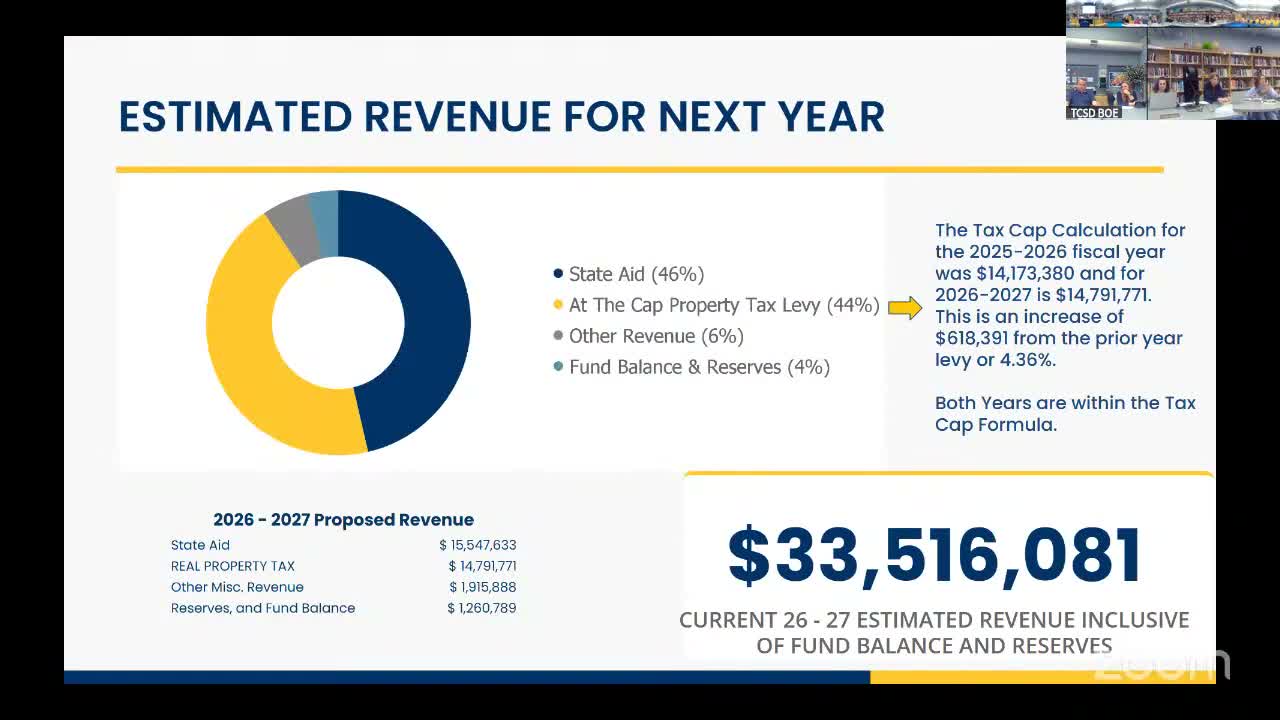
Summary
At a March 3 board meeting, a district staff member presented initial budget projections showing expenditures exceeding projected revenue, driven by rising utilities, benefits and salary costs; the board was told the numbers are preliminary and work continues ahead of April finalization.
A district staff member presenting initial budget projections to the Trumansburg Central School District Board of Education on March 3 warned that projected expenditures currently exceed projected revenue, creating a budget gap that administrators will work to close before the April final budget submission.
The presenter emphasized the figures are preliminary: “These are projections. These are not proposals,” and said state aid currently makes up about 46% of the district’s projected revenue. The staff member said the presentation assumes the district will close the year with the same fund balance and reserves as the prior year and that the draft includes a reserve/fund-balance contribution to fill part of the gap.
Officials flagged several drivers of higher costs. Benefits tied to payroll are increasing, the presenter said, citing prescription costs (including higher use of GLP-1 medications) as a key factor in rising health-insurance expenses. The presentation noted an estimated 55.42% year-to-year increase in a salary-related line after some reallocation to grants, and the presenter said negotiations remain open with two bargaining units (the teachers’ association settlement is already included; other units remain in negotiations).
BOCES-related expenditures showed mixed movement: elimination of one high-cost BOCES program reduced the district’s BOCES spending by about $180,000, the presenter said, but district leaders also noted that many BOCES services and aid calculations can change as final service requests and enrollments are confirmed.
Other specific costs called out in the slides included an unanticipated equipment estimate of about $50,000 for a transportation-systems replacement (described generally as an outdated fuel-management system) and a projected 50% increase in utilities to account for underbudgeting and expected rate changes.
The staff member said the budget draft does not include requests for new positions and that the district is attempting to place salaries covered by grant funds (for example, UPK and other federal grants) where appropriate. The presenter closed by outlining a short timeline: additional analysis will continue this week and next, and the board will review further numbers at meetings on March 11 and March 17 ahead of the April finalization.
The board did not vote on a final budget at the March 3 meeting; members were asked to review the slides and return with questions as administrators continue to refine revenue and expenditure estimates.