Get AI Briefings, Transcripts & Alerts on Local & National Government Meetings — Forever.
Lawmakers consider compromise to allow limited direct EV sales and split higher documentary fee for rebates
Loading...
Summary
Gross Substitute Senate Bill 6354 would let qualifying new electric‑vehicle manufacturers obtain dealer licenses for in‑state sales and service, raise the negotiable documentary service fee from $200 to $250 temporarily with a later scheduled reduction, and direct part of the increase to instant EV rebates and multimodal accounts; the bill drew support from EV makers, climate groups and some dealers and opposition from legacy automakers and dealer advocates demanding additional consumer protections.
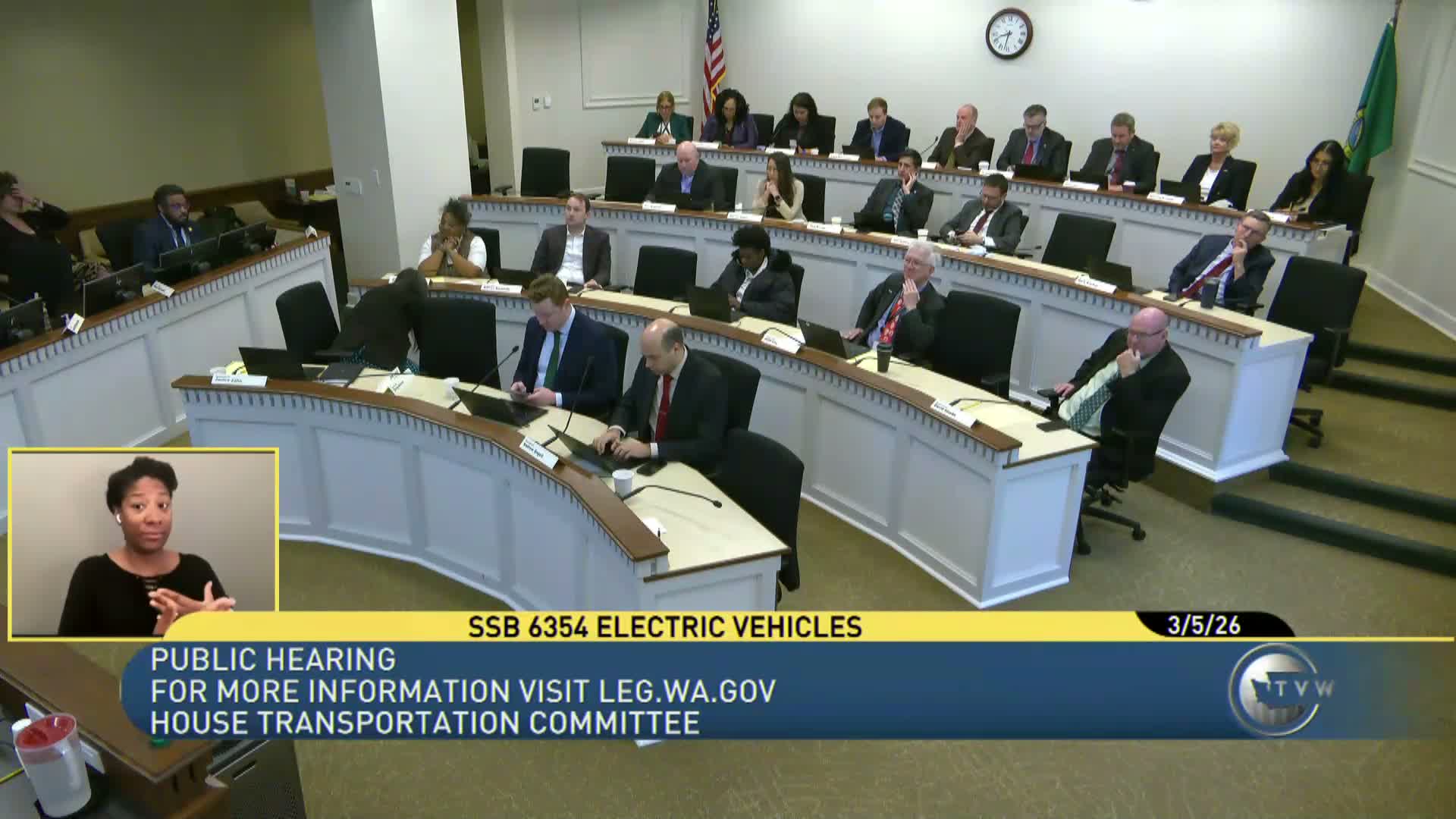
Mark Mattson, staff to the committee, described Gross Substitute Senate Bill 6354 as a three‑part compromise: (1) strengthen prohibitions that prevent manufacturers from competing with their franchise dealers, (2) allow a limited exemption permitting qualifying new‑market EV manufacturers to obtain vehicle dealer licenses if they meet specified criteria, and (3) modestly increase the negotiable documentary service fee with a statutorily required split to fund EV rebates and multimodal transportation accounts.
Under staff's summary, a qualifying manufacturer must be incorporated in the United States, have never entered into a franchise agreement with a dealer, have operated at least one service facility in Washington as of Jan. 1, 2026, and have at least 300 battery electric vehicles registered in the state before the effective date. A manufacturer that ceases to meet those criteria would have its dealer license revoked within 30 days, and the bill includes a $10,000 civil penalty for each unlawful retail sale or lease consummated by a prohibited manufacturer.
On fees, Mattson said the negotiable documentary service fee would increase from $200 to $250 on the bill's effective date and later be reduced by statute at a scheduled date (staff briefing noted the temporary increase and later reduction). The bill directs the first $25 of the increase to be split 35% to an electric‑vehicle account for instant rebates for vulnerable populations (administered by the Department of Commerce) and 65% to multimodal transportation accounts. Staff estimated roughly 800,000 applicable transactions and an order‑of‑magnitude annual revenue of about $20 million from the fee split for program funding, while acknowledging the Department of Licensing views actual collections as indeterminate because the fee is negotiable.
Industry testimony split: Abigail Ramsden (Rivian) and Daniel Witt (Lucid) supported the bill, saying it provides a clear regulatory path for direct‑sale EV manufacturers to obtain dealer licenses and expand service footprints. “This bill would permit Rivian to obtain a dealer license and sell directly to consumers ensuring we can provide seamless customer service,” Ramsden said. Climate advocacy groups supported the instant rebate funding as a tool to help low‑income buyers access EVs.
Dealers and dealer advocates described the measure as a negotiated compromise and urged stronger enforcement and clarity. Scott Hazelgrove (Washington State Auto Dealers Association) said the bill strengthens prohibitions on manufacturers competing with dealers while providing a narrow exemption for certain new EV entrants.
Legacy automakers and trade associations opposed or offered guarded critiques, warning the carve‑out risks creating two sets of rules. Craig Rollin (American Honda Motor Company) and representatives from Toyota, Ford, General Motors and the Alliance for Automotive Innovation urged consumer protections including service obligations, bonding or other guardrails to protect consumers and local dealer networks if direct‑sale exemptions are allowed.
John Flanagan (Port of Seattle) said the measure could aid port decarbonization by increasing EV availability for port operators. Committee members asked staff to follow up on service‑and‑warranty requirements and departmental reporting/verification details. The committee closed the public testimony and adjourned for the day without taking a final vote.