House rejects $17,000 cap on accreditation fee; bill granting Department of Health accreditation authority passes
Loading...
Summary
Lawmakers debated an amendment to cap accreditation fees for opioid‑treatment programs at $17,000; Representative Marshall said the figure reflected the Department of Health's estimate but the amendment failed and Substitute Senate Bill 5988 passed on final reading, 62‑34‑2.
The Washington State House debated and rejected an amendment that would have capped accreditation fees for opioid‑treatment programs at $17,000, then approved Substitute Senate Bill 5988 to authorize accreditation services by the Department of Health.
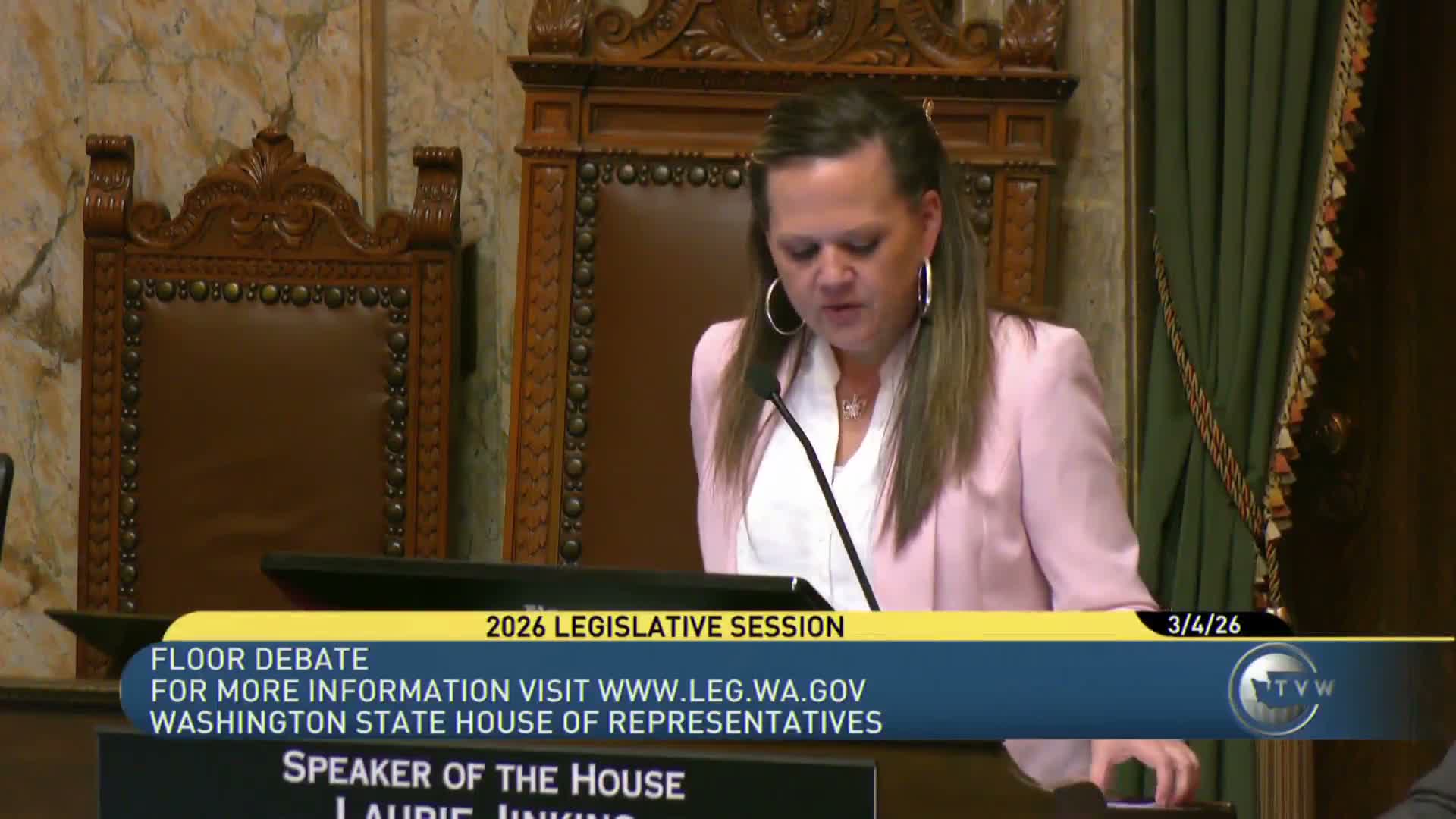
Representative Marshall (2nd District) introduced Amendment 2336, saying the $17,000 cap was based on the Department of Health’s $16,600 cost estimate and would provide an upper limit so fees do not “continue to expand with no limits.” Marshall told colleagues some opioid treatment facilities operate on annual budgets near $60,000 and said the cap would prevent the accreditation charge from becoming an undue barrier for facilities trying to open.
Representative Bernofsky urged a “no” on the amendment, saying the Department should retain flexibility to administer costs for certification. Representative Defoe argued the cap is important to prevent a fee from becoming a tax and to keep charges tied to the underlying service being provided. Representative Walsh supported the cap, warning of incentives for fee increases that could create a de facto profit center at the expense of patients seeking treatment.
After floor remarks the question was put on adoption of Amendment 2336; the Speaker announced the amendment was not adopted. A later scope challenge to Amendment 2304 — which would have inserted statutory language referring to RCW provisions and would have prohibited operation of safe injection site activities — was found by the Speaker to be beyond the bill’s title and out of scope.
On third reading members again debated the underlying bill. Supporters said authorizing the Department of Health to provide accreditation will help respond to the opioid crisis; opponents raised concerns that fee authority without caps could create new barriers. The roll call on final passage recorded 62 yays, 34 nays and 2 excused, and the Speaker declared Substitute Senate Bill 5988 passed.
The action recorded on the floor was final passage of the bill as read and amended on the House floor. The transcript does not show further steps in this document.