Get Full Government Meeting Transcripts, Videos, & Alerts Forever!
Get email alerts on the Parking Policy topic
No spam. Unsubscribe anytime.
West Allis officials propose temporary 2-hour limits and no-parking near nursing home to curb employer spillover
Summary
Mayor Dan Demine and city staff outlined a 'living' parking plan to limit neighborhood overflow from a nearby employer, including 2-hour time limits on some streets, permanent no-parking near Mitchell Manor to preserve emergency access, resident permits and an estimated three-week timetable for signs if the common council approves an ordinance.
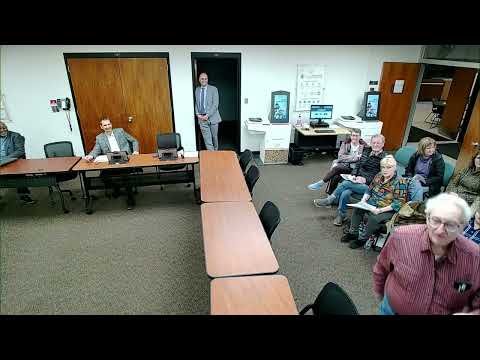
Mayor Dan Demine convened neighbors to present a tentative plan to ease parking congestion in a West Allis neighborhood that city staff say has increased since nearby employer parking and Milwaukee’s signage shifted vehicles into residential streets. The proposals include targeted no-parking near Mitchell Manor nursing home, two-hour time limits on several street segments and a resident commuter-impact permit system processed online.
The city framed the plan as a “living” approach that can be adjusted after implementation. City Engineer Melinda Dieski laid out a map showing existing no-parking on Lincoln Avenue, proposed no-parking on the north side of Hayes where curvature narrows the roadway, two-hour limits on the south side of Hayes and parts of 52nd Street, and unrestricted parking on wider sections of the parkway. "We want to make sure emergency vehicles can get through," Dieski said while explaining why certain curves and narrow lanes need permanent restrictions. The city estimated 3 weeks to place enforceable signs once the council adopts the ordinance, subject to DPW scheduling, Diggers Hotline marking and sign inventory.
Why it matters: Residents said the overflow is disrupting daily life, blocking driveways and impeding deliveries and mail service. One resident told the meeting she is recovering from flood repairs and faces extra hardship when contractors cannot access her driveway; others warned of increased policing needs and safety concerns for elderly and mobility-impaired neighbors. Mayor Dan Demine acknowledged the trade-offs, saying that "nobody owns the street in front of their house" but that the city would try to make changes "as least painful for the people that live here and pay taxes here." He added the measure aims to push the employer to pursue longer-term solutions such as off-site lots or shuttles.
Key details and resident options: Staff clarified that the commuter-impacted permit is issued by the city through an online application (OpenGov) and allows permitted license plates to park longer in restricted zones; staff corrected an earlier misstatement and said the commuter-impacted permit will be one permit per house. Temporary handicap zones remain an option for qualifying addresses, but any handicap zone is subject to existing rules allowing anyone with an appropriate placard to use that space. Engineering staff also stressed that informal 'please do not park' signs currently posted are not legally enforceable; enforceable signage requires ordinance language and DPW coordination.
Residents pressed the city to seek employer cooperation. Multiple speakers suggested Global Power contract with nearby private lots or use park-and-ride lots with shuttle service; the city said it recommended similar off-site parking options to the company in December but had received little sustained response. One attendee urged the city to consider billing the company for sign costs; staff said the city can send a bill but did not expect the company would pay it.
Implementation and next steps: The workshop produced a rough consensus on a starter configuration—no parking by Mitchell Manor; two-hour parking on designated block faces (7 a.m. to 7 p.m., Monday through Friday); one side of 52nd restricted to two-hour parking and the other side posted no-parking—and a plan to return and refine the map if the changes prove ineffective. The mayor and staff said they will draft ordinance wording for the common council, circulate a follow-up letter to affected households with permit instructions, and return to the neighborhood if further adjustments are needed. If the council approves the ordinance, staff estimated signs could be installed in about three weeks, weather and sign inventory permitting. No formal vote was taken at the workshop.