
Sheriff rebukes legislator's email, defends jail staffing and 9-1-1 operations
Get AI-powered insights, summaries, and transcripts
Subscribe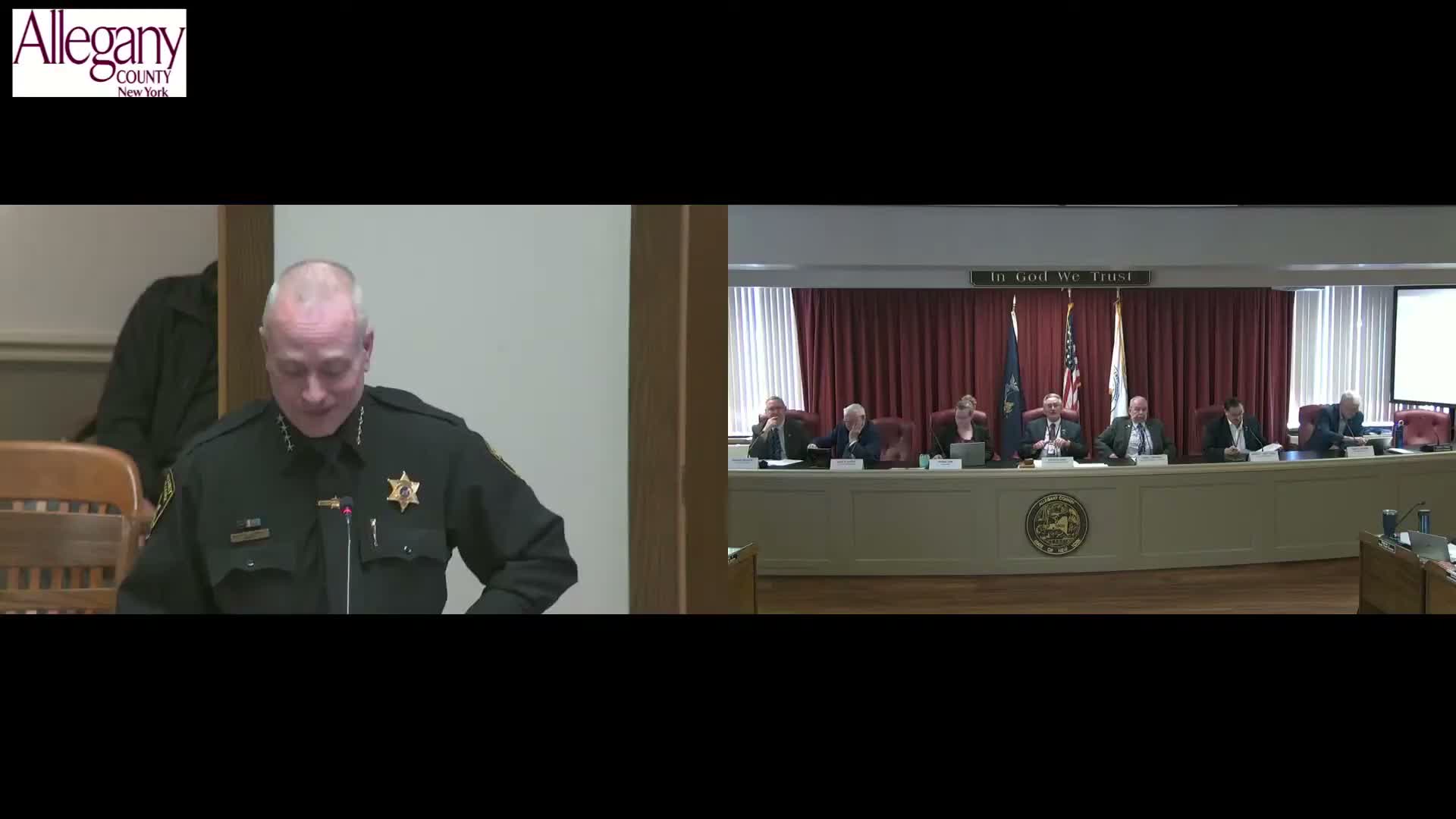
Summary
Sheriff Scott Cicarello read and rebutted an emailed critique from Legislator Healy alleging misleading staffing claims and questioned the idea of closing or downsizing the jail; the sheriff provided workload and budgetary figures and asked colleagues to raise concerns directly in committee.
Sheriff Scott Cicarello spent a substantial portion of the March 4 meeting responding to an email from Legislator Healy that questioned the sheriff's staffing requests and suggested the county consider selling or downsizing the jail. The sheriff read the email aloud and disputed several factual points, arguing the county is legally required to maintain a jail and to staff operations consistent with the New York State Commission of Correction and other law.
"This is probably the most dishonest statement in your email," the sheriff said when characterizing a claim that dispatching control is a political tool; he described call‑volume breakdowns ("82% of 911 calls that come into our center are law enforcement generated calls"), detailed recent increases in civil‑process duties (papers served up 14.6% over three years, arrests up 56.3% in that period in his summary), and said the county currently manages $14.6 million in grant funds that offset taxpayer expense for infrastructure and programs.
The sheriff also disputed the idea that housing federal inmates meant the jail was making money and provided a cost analysis he said showed closing or downsizing the facility would be financially detrimental. He cautioned that the New York State Commission of Correction must approve housing arrangements and that the county could not unilaterally reduce mandated staffing.
Several committee members urged collegiality and said concerns should be raised through committee channels rather than broadly by email. The exchange included acknowledgements of the sheriff's programs (Handle With Care, ATAG training, supervisor course) and multiple members praised the Handle With Care CAD flagging initiative that places disability/special‑needs information on dispatch CAD screens.
Next steps: The sheriff offered to provide a copy of the email and to meet with any legislator who has questions; committee members asked to route sensitive departmental critiques through the committee chair so they could be handled in an orderly way.