
Michigan House approves package to modernize captive-insurance rules (HB5380–HB5386)
Get AI-powered insights, summaries, and transcripts
Subscribe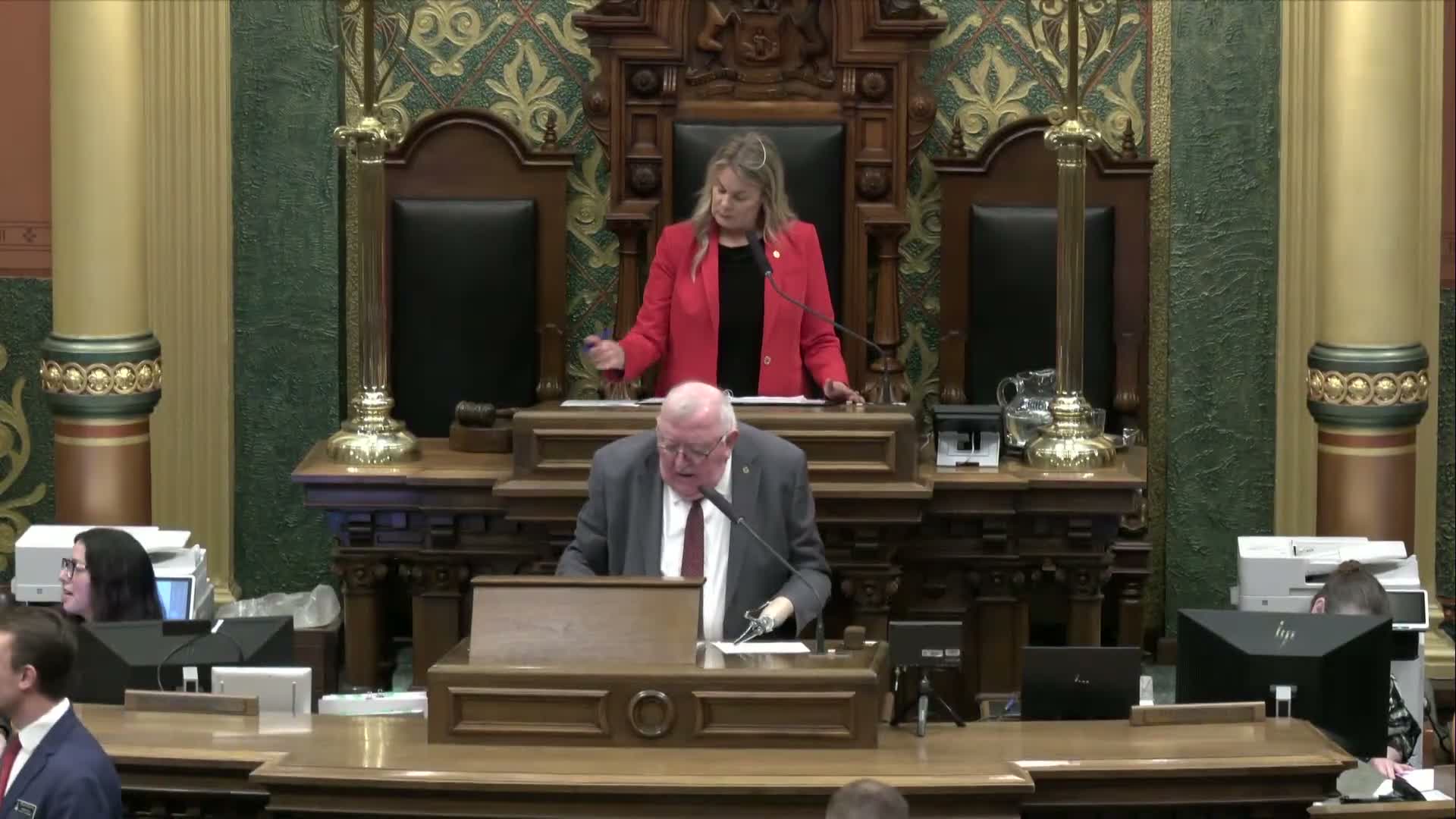
Summary
The Michigan House passed a set of bills (HB5380–HB5386) to update the state's captive-insurance framework, supporters said the reforms will attract more firms and jobs while retaining regulatory safeguards; each bill passed on recorded roll calls, most by wide margins.
The Michigan House on March 4, 2026 approved a package of bills (House Bills 5380'5386) amending the Insurance Code of 1956 to modernize captive-insurance regulations and make Michigan more competitive for captive insurers.
Representative Brenda Carter, who spoke in support, said the package provides "important forward-looking updates to modernize captive insurance regulations" that will attract firms while preserving oversight and consumer protections. Representative Tisdell, vice chair of the House insurance committee, urged a yes vote and cited the sector's global scale, saying Michigan has room to grow from its current 27 captive companies.
Supporters described the bills as measures to clarify formation rules and provide flexibility for captives to manage risk and serve defined groups. "These reforms position Michigan to compete more effectively in this growing industry," Representative Carter said. Representative Tisdell added, "These captive companies provide great jobs" and noted other domiciles with larger captive populations.
Lawmakers considered the bills on third reading in sequence. Recorded roll-call tallies in the House for the package's bills included large margins in favor: several bills recorded 104 ayes and 2 nays, while HB5383 passed 106'00. On each bill the majority floor leader moved for immediate effect and the House ordered immediate effect.
The package drew limited floor debate beyond proponents' endorsements and the vice-chair's industry overview. No committee or floor amendments were adopted during the third-reading consideration.
What happens next: The bills will be enrolled and transmitted per the usual legislative process; sponsors and the House leadership indicated immediate effect was ordered for these bills.