Midland commissioners approve sequence of plats after debate over county jail drainage and paving standards
Loading...
Summary
The Planning & Zoning Commission approved multiple plats and zone changes and after extended discussion moved forward on the Midland County jail plat following engineering confirmation that a drainage report was approved; commissioners debated whether frontage paving should meet city or county standards.
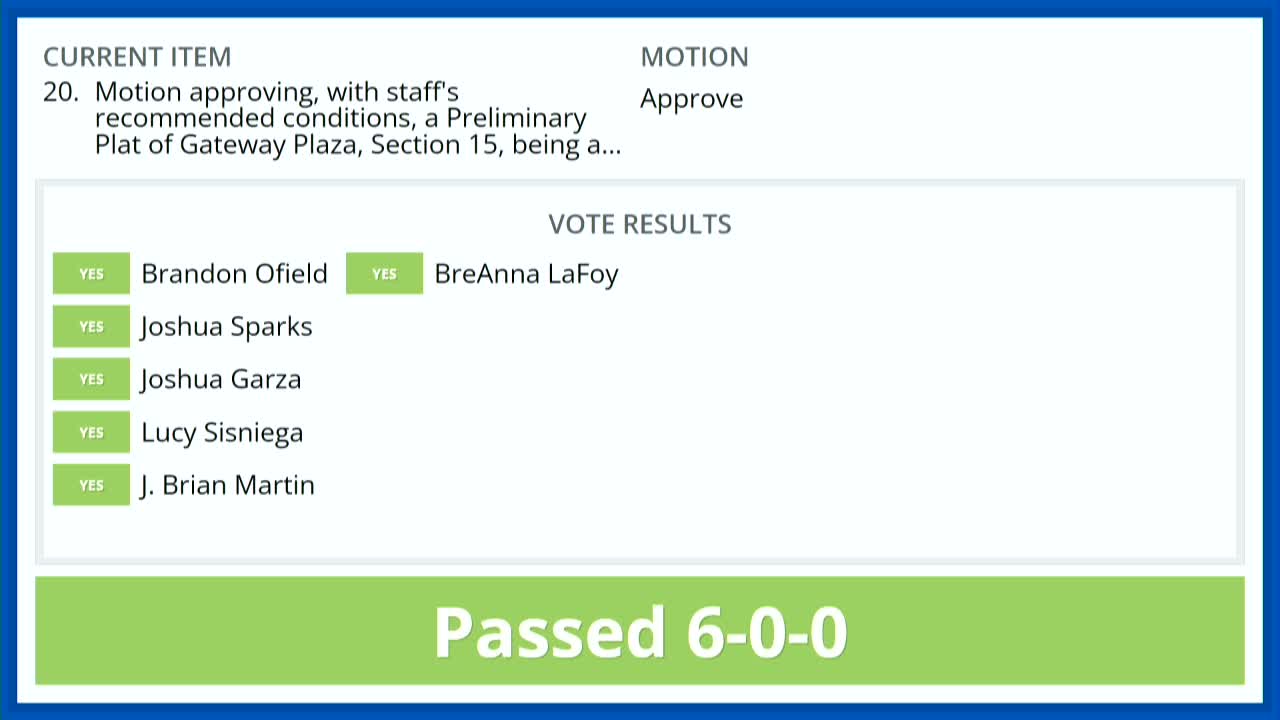
The Midland Planning and Zoning Commission voted on March 24 to approve a slate of plats and rezoning requests, moving a contentious Midland County jail plat forward after engineering staff confirmed the drainage study had been approved for planning purposes.
Britt Murray, senior planner, told commissioners the reinstated preliminary plat for the Sheriff Gary Painter subdivision (a 236.34-acre tract proposed for the Midland County jail) had been approved by the commission and council previously and staff recommended reinstatement. Commissioners reinstated the preliminary plat to allow the county to continue the entitlement process.
Discussion over the final plat (item 22) focused on two outstanding engineering items staff cited as reasons to recommend denial: an approved drainage study and paving or an approved deferral for frontage improvements. Planning staff said the drainage report had not been approved in the city file; Park Hill representative Josh Wallander, representing Midland County, said the county had completed its drainage review and had submitted the report in December and re-submitted it the prior Friday once staff indicated it was missing.
Adrian Acosta, introduced to the record by staff as the city engineering manager, told the commission that the drainage report had been reviewed and confirmed as approved for planning purposes, addressing one of staff's engineering concerns. Commissioners and staff then debated the paving requirement, with staff noting an interlocal agreement between the city and county gives the city authority to apply city code requirements even where the county will ultimately maintain the roads. Wallander said the county maintains the county roads and had its own standards; he urged the commission to allow the county's process to proceed without requiring immediate city-standard frontage improvements.
Commissioner Sysniaga moved to approve the final plat after the engineering clarification; Commissioner O'Field seconded. The transcript records the motion and second on the record; the minute book included subsequent agenda items. The commission then proceeded to other business.
Why it matters: The exchange highlights a recurring tension when county projects seek city plat approval — the overlap between county maintenance responsibilities and city planning standards — and clarifies that, for this plat, drainage issues have been resolved for planning purposes while the paving standard remains a policy decision that may require council-level consideration.
Next steps: The final plat will proceed in the city's process; the item may require city-council consideration related to frontage/paving standards and the existing interlocal agreement between the city and county.