Get Full Government Meeting Transcripts, Videos, & Alerts Forever!
Get email alerts on the Workforce Housing topic
No spam. Unsubscribe anytime.
Hunter Trail variance pitched as workforce-housing pilot amid debate over fee waivers and AMI requirements
Summary
A developer request to build 16 cottages on 1.38 acres prompted commissioners to frame the project as a workforce-housing pilot and to consider tying variances and fee waivers to an 80% AMI owner-occupancy requirement; staff described two variance requests and an alternate tree plan and said current applicants have already received multiple extensions.
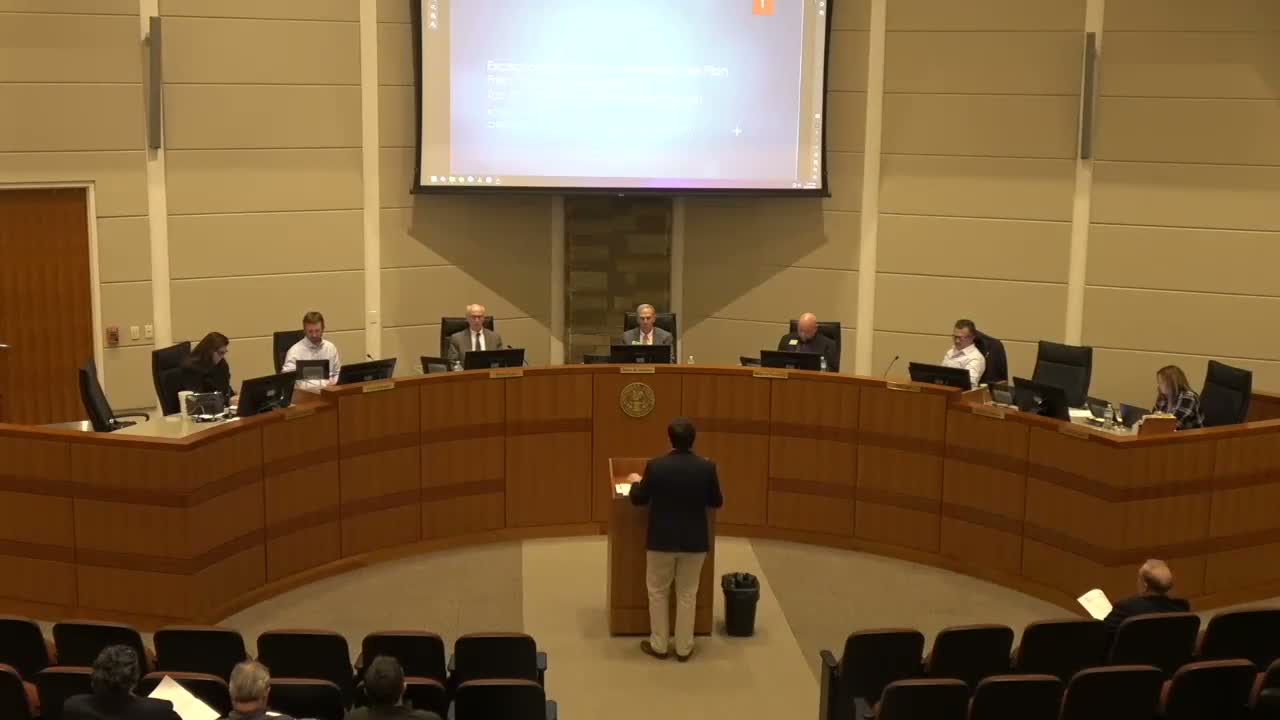
At a Jan. 20 work session, Cherokee County planning staff outlined an application by Fred Snell for Hunter Trail LLC that asks the Board of Commissioners for two variances to allow 16 single-family detached homes on a 1.38-acre site on Redbarn Road.
Staff said the applicant requests (1) an exceptional variance to waive "other functions" and civic-space requirements so a small site could be treated as a Neighborhood Center character area, allowing greater density, and (2) a concurrent variance to use an alternate tree-replacement plan because much of the site lacks preserved trees. "That would allow the 12 units per acre ... which would allow for the 16 units essentially on this particular property," staff said.
Commissioner (speaker 7) described the proposal as a potential workforce-housing pilot: "The whole intent for this project is to be, a workforce housing project," he said, urging that any regulatory relief be tied to affordability and owner-occupancy at 80% of area median income. Several commissioners asked whether fee waivers (impact fees or county fees) could be used as a proffered condition to drive an affordability commitment and whether the variances should be contingent on compliance with AMI limits.
The board also questioned how to treat a current applicant who has already received multiple extensions; staff said one outstanding application has been extended three times (about two years) and suggested the board could address grandfathering at the public hearing or in a follow-up discussion. Commissioners debated enforcement options for owner-occupancy and resale controls, noting financing and deed restrictions may affect long-term enforceability.
Key unresolved points: whether variances will be conditionally granted only if the developer accepts affordability restrictions tied to fee relief, whether impact-fee relief must be handled via the impact-fee appeals process, and how many extensions existing applicants should receive. Staff indicated these matters could be clarified as proffered conditions at the public hearing and that fee- waiver specifics may require separate analysis.
Next steps: staff will include the application on the public-hearing agenda and return recommended conditions and language tying variances to any proffered affordability commitments for board consideration.