
House unanimously backs domestic‑violence overhaul after survivor testimony and tougher penalties
Get AI-powered insights, summaries, and transcripts
Subscribe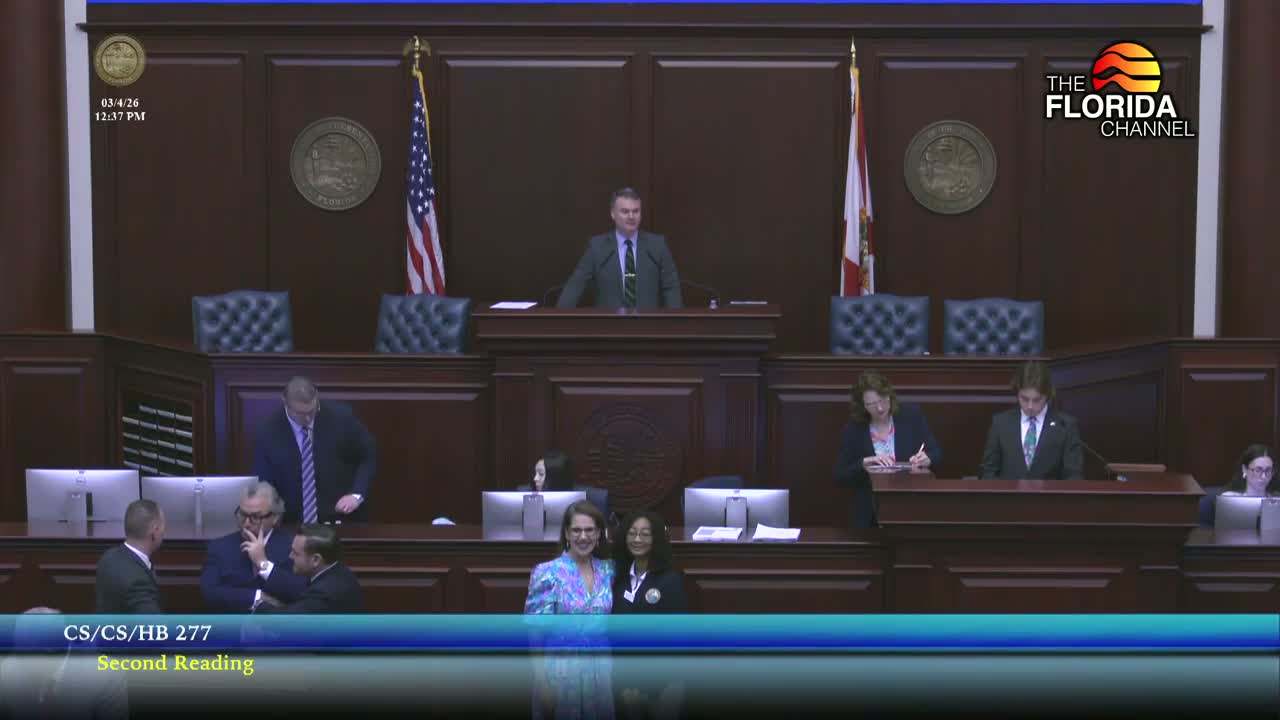
Summary
CS/CS/HB 277, a broad package of domestic‑violence reforms including penalty enhancements, a GPS monitoring pilot, stronger military‑civilian protections and increased victim relocation assistance, passed the Florida House unanimously after survivor testimony and several adopted amendments.
The Florida House unanimously approved CS/CS/HB 277 on final passage following extensive floor debate, amendment adoption and highly personal testimony from the bill’s sponsor and survivors in the gallery.
Sponsor Representative Tendridge (who shared a personal survivor account on the floor) outlined provisions that reclassify repeat injunction violations, create a pilot GPS monitoring program for high‑risk offenders, strengthen coordination between civilian and military protective orders, and increase the victim relocation allowance from $1,500 to $2,500. "This bill enhances penalties for repeat domestic violence offenders," Tendridge told the chamber, and framed the bill around survivor safety.
Amendments adopted on the floor tightened language on penalty reclassification and expanded the felony threshold for repeat violations after members described tragic cases where injunctions were violated repeatedly with little enforcement impact. Representative Plaikin introduced a successful amendment making a felony for violating an injunction with a single prior domestic‑violence conviction, citing the case of a survivor whose restraining order was violated dozens of times prior to a fatal outcome.
The measure won unanimous support on final passage, 112–0. Members and advocates in the gallery, including survivors and nonprofit representatives, were recognized during the debate. Sponsors said the bill centers victim protection, accountability and tools to reduce risk while directing pilot evaluation to determine whether GPS monitoring should expand statewide.
The bill now moves to the Senate; advocates said implementation and funding of the pilot will require coordination among criminal‑justice agencies, courts and local service providers.