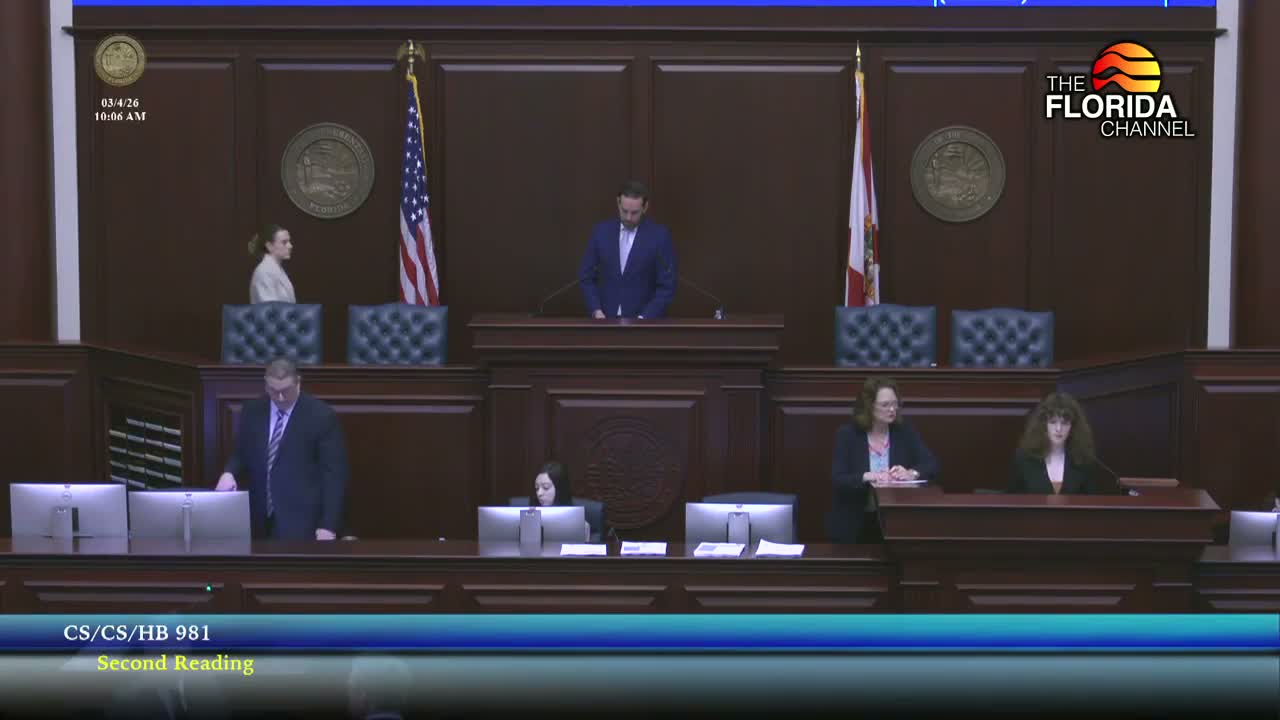
House passes Ocklawaha River restoration bill after rural impact debate
Loading...
Summary
The Florida House on March 4 adopted CS/CS/HB 981 to advance restoration of tributaries to the St. Johns River, including an advisory council expansion and a grant program; supporters called it a long‑overdue conservation step, while opponents warned of uncertain local economic and property impacts to rural communities.
The Florida House passed CS/CS/HB 981 on final passage after debate that split lawmakers largely along concerns about local impacts and long-term environmental benefit.
Representative Duggan, sponsor of the measure, described the bill as “a comprehensive community driven plan for the restoration of the Ocklawaha River balancing conservation, economic growth, and recreation,” and told colleagues the measure built on collaboration with stakeholders that has been “long overdue.”
Opponents raised alarms about potential harms to rural constituencies. “This bill threatens a huge supply of fresh water that helps refill and protect our water resources,” Representative Sapp said in floor remarks opposing the measure, warning it could leave waterfront homeowners with “diminished property values, potential flooding, and no clear proven long term plan.” Sapp urged the chamber to remember the interests of Rodman Reservoir communities and said concrete funding for impacted towns was not included.
Supporters countered that the bill creates grants to improve outdoor recreation and community access and could revitalize small towns along the river system. Representative Cross praised the measure as a long‑term environmental restoration project that could restore springs and return wildlife to former habitats.
An amendment adopted on the floor removed specific references to aging planning documents to allow more current data to guide implementation and expanded the size of an advisory council from 16 to 19 members. After debate and the amendment’s adoption, the House voted 107 yeas to 3 nays to approve final passage.
The measure now moves to the Senate or the governor for further action, and sponsors said implementation will involve coordination with state agencies and local stakeholders to award the grant funds and assemble the advisory council.