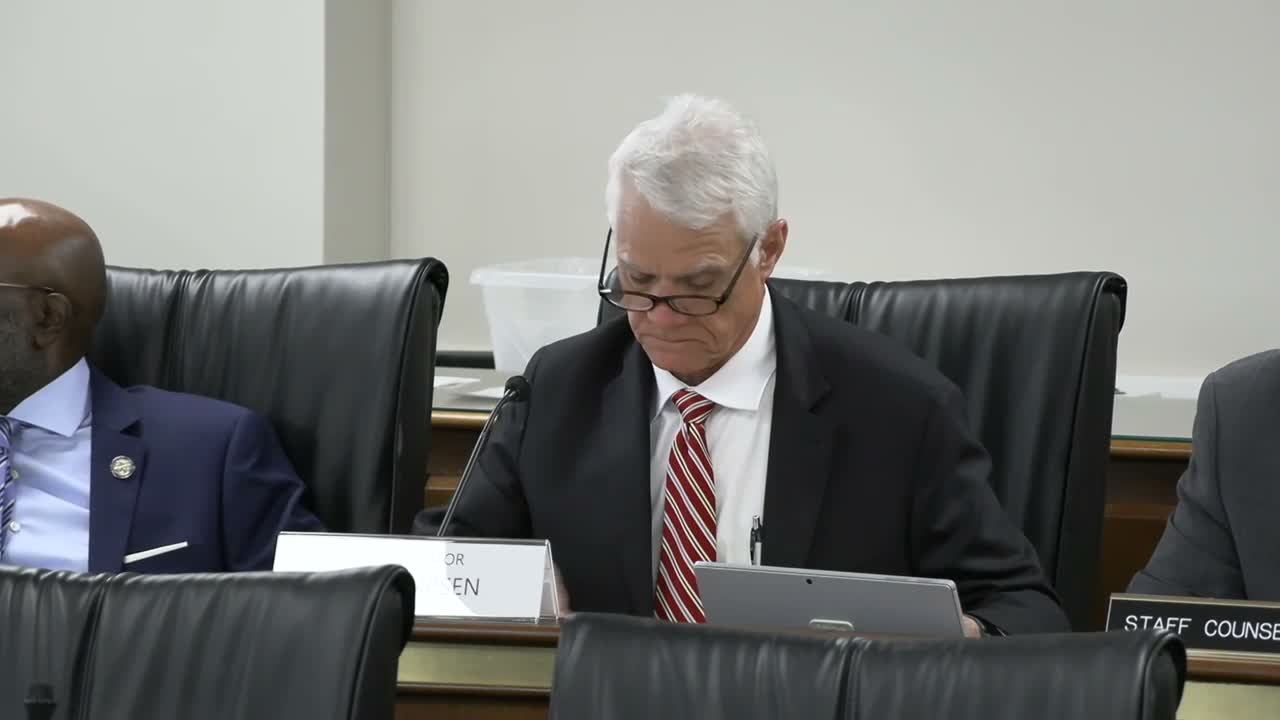
Senate subcommittee backs limits and gear changes to protect red drum
Loading...
Summary
A Senate subcommittee gave S961 a unanimous favorable report after hearing DNR data that South Carolina’s red drum population needs a roughly 24% harvest reduction; witnesses including guides and fishing groups urged the change and warned enforcement gaps. Vote tally not specified in transcript.
The South Carolina Senate subcommittee voted unanimously to give a favorable report to Senate Bill S961, which would tighten harvest and gear rules aimed at rebuilding red drum (also called spot-tail bass) after state and regional assessments found the stock overfished.
DNR Marine Resources Division staff told the committee the regional 2024 assessment and a state-specific review indicate South Carolina must reduce harvest by about 24% to meet sustainability thresholds. "We would need to take a 24% reduction in harvest to meet those thresholds, rebuild the stock, and make the stock sustainable," the DNR presenter said, explaining the science behind the proposals.
The bill would reduce the personal creel (bag) limit from two fish to one and cut the vessel limit (aggregate per boat) from six to two. It would also require larger non-offset circle hooks when anglers use natural bait, a change DNR says reduces gut-hooking and improves the survival of released adults.
Why it matters: Red drum are a long-lived, culturally important inshore species whose juveniles use estuaries before moving offshore to spawn. DNR told the committee the species typically matures at about four years and that, under reduced harvest scenarios, the stock could cross the overfished threshold in roughly seven years and may take decades to fully recover.
Fishermen, guides and conservation groups uniformly supported the measures in testimony. Scott Davis, a retired guide working with the American Saltwater Guides Association, said the fishery "drives hundreds of millions of dollars" in tourism and related spending and urged action so future generations can continue the fishery. Chalmers Allen of the South Carolina Boating and Fishing Alliance cited a $7,000,000,000 annual industry impact and more than 27,000 jobs tied to the marine recreational sector and backed the bill as proactive management.
Several guides described steep, local declines. "I've watched the redfish population go down where I fish probably by 90%," one Georgetown guide told the panel. Witnesses and members also raised enforcement concerns: some testified about people using cast nets and other methods in shallow winter spawning creeks, and they urged DNR to increase boots-on-the-water enforcement in known trouble spots.
DNR and witnesses emphasized that while environmental factors may constrain recruitment, the agency can act on harvest; the proposed bag, vessel and gear limits are designed to provide the percent reduction needed under the interstate management plan coordinated by the Atlantic States Marine Fisheries Commission.
The committee moved for a favorable report and the chair announced that the ayes carried; the transcript records the vote as unanimous and notes proxies were included but does not supply a numeric tally. The subcommittee adjourned after the vote.