Get Full Government Meeting Transcripts, Videos, & Alerts Forever!
Get email alerts on the Bicycle Master Plan topic
No spam. Unsubscribe anytime.
Grand Prairie staff present bicycle master plan update, highlight safety and connectivity priorities
Summary
City staff outlined a Bicycle Master Plan update that sets priorities for bike lanes, shared-use paths and education after 2025 engagement; staff said Epic Center area crash data show a disproportionate risk to people walking and bicycling and recommended prioritized projects and potential UDC changes.
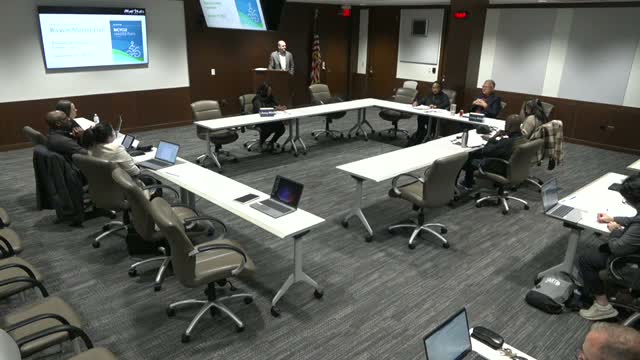
The Grand Prairie Planning and Zoning Commission heard an update on the city’s Bicycle Master Plan on Dec. 9 as staff described a project list intended to guide bicycle investments, advance city goals and improve regional connectivity.
Miss Clark, the staff presenter, said the plan began in 2024 and that 2025 was spent on data collection, research, public meetings and four pop-up community events. "We wanted to get the commission just an update on the project, kind of, the development of the project, what it is, and then where we're at in the process," she said. Staff reported more than 3,000 website views and two rounds of public meetings as part of outreach.
Daniella Kosnikova, who led the transportation and mobility chapter, told commissioners the analysis included a bicycling-propensity map that weighs destinations such as schools, parks and households without vehicles to identify where bicycle investment would have the biggest impact. She said the plan recommends adopting prioritized projects from the implementation chapter and conducting ADA sidewalk assessments.
Kosnikova also emphasized safety data for the Epic Center area: "In the Epic Center area, bicyclists and pedestrians are 5 times more likely to sustain a fatal or serious injury," she said, noting that this increase is consistent with regional patterns and that investments should focus on optimizing the network to reduce that risk.
The presentation outlined a mix of facility types the city will consider: on-street bike lanes, shared-road treatments and 10–12-foot shared-use paths. Staff said they will select facility types based on corridor function, traffic volumes and neighborhood context rather than a one-size-fits-all approach.
Commissioners asked about outreach geography and connections to adjacent cities. Staff said events were staged across the city (north, central and peninsula locations, including Dalworth Park and the Epic) and that the city coordinates with the Bicycle and Pedestrian Advisory Committee, NCTCOG and TxDOT on regional trail projects and safety enhancements.
Commissioners proposed community programs to build ridership. One commissioner suggested forming a citywide cycling club to encourage participation; a meeting participant urged a helmet giveaway for children, saying, "maybe you guys can give out some free helmets to children under the age of 18." Staff said programming and equipment distribution would be part of later implementation once the plan’s recommendations are finalized.
Staff said they are fine-tuning the implementation list and ranking projects by implementation ease, community support and vision alignment; they expect to bring project recommendations back to the commission within about a month. Potential UDC text amendments or design-guideline changes would be presented after plan adoption.
The commission did not take any formal votes on the plan during the briefing. Staff will return with refined recommendations and next steps ahead of a planned adoption process in the spring.
Quotes used in this article are taken from the staff briefing transcript.