
House committee deadlocks on work/community engagement bill HF3763 after testimony raises readiness and cost concerns
Get AI-powered insights, summaries, and transcripts
Subscribe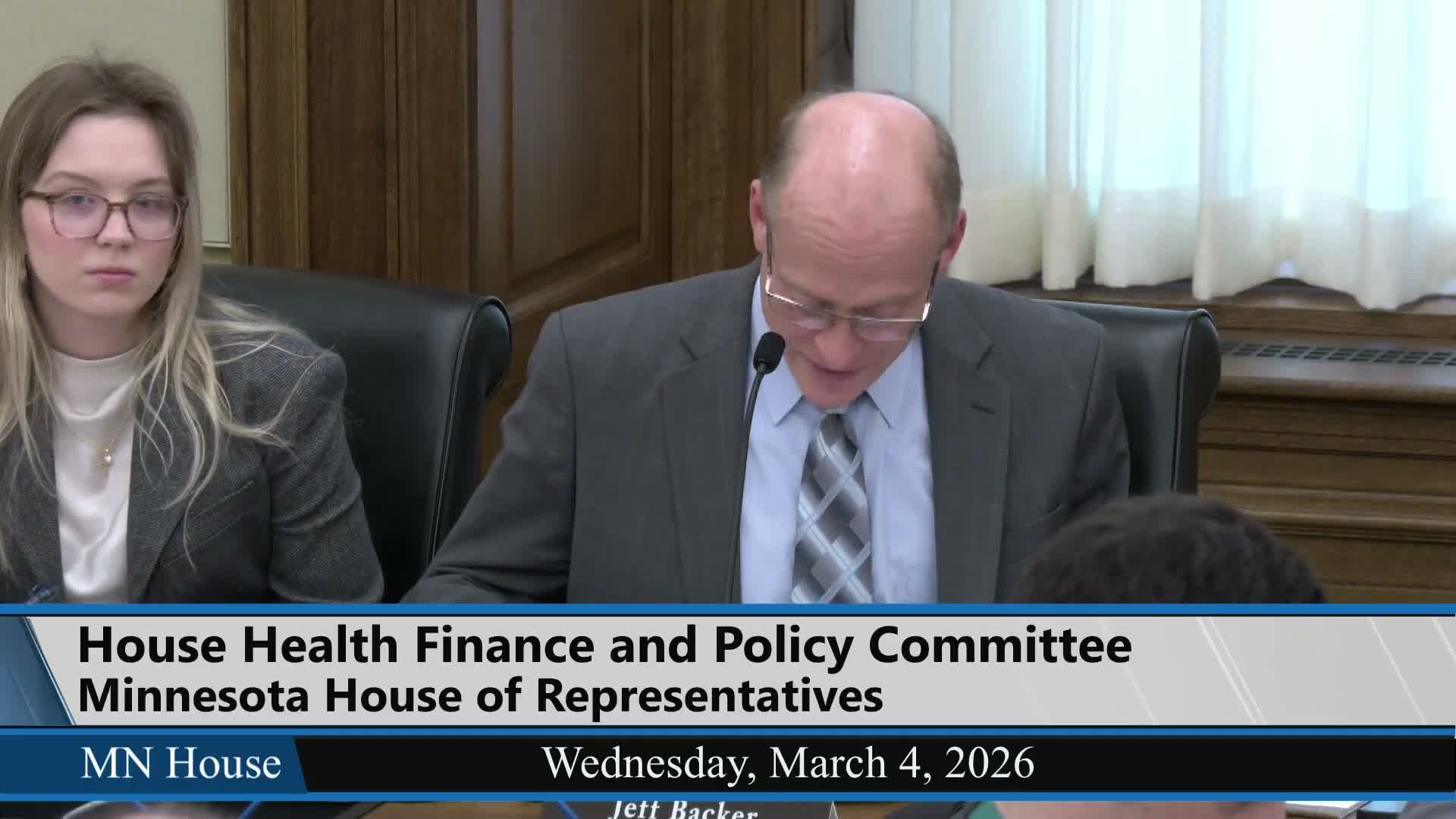
Summary
House File 3763, the author's proposed state implementing language for federal community engagement (work) requirements for Medicaid expansion enrollees, drew supporters and health-advocacy opponents; members and local officials warned of county workload and technology limits and a roll call ended in an 11-11 tie, so the motion did not prevail.
Representative Nadeau presented House File 3763 as implementing the federal work and community engagement requirement for Medicaid expansion enrollees; the bill would set qualifying activities and define mandatory and optional exemptions.
The draft selected two consecutive months of qualifying activities for expansion enrollees (the author noted states may choose one to three months), set mandatory exemptions (foster care, caregivers, veterans with certain disability ratings, SNAP households, people in substance-use treatment, people who are incarcerated) and listed short-term hardship exemptions (inpatient care, nursing facility and psychiatric stays). The bill also contains data-matching and wage-reporting language intended to facilitate verification and automatic determinations.
Proponent testimony from Scott Centorino urged the committee to adopt the bill as a way to encourage work and limit long-term dependency. Multiple health and patient-advocacy groups testified in opposition or urged amendments designed to reduce coverage loss and administrative burden: Dana Bacon of Blood Cancer United and Emily Myatt of the American Cancer Society Cancer Action Network asked the committee to use a one-month lookback instead of two for compliance determinations and to reduce medical paperwork burdens for exemption claims. AARP Minnesota also submitted language recommendations for caregiver definitions and asked the committee to consider narrower renewal lookback periods.
County representatives reiterated concerns about increased workload and the fragility of legacy eligibility technology. Association of Minnesota Counties consultant Angela Jungerberg said counties could face substantial ongoing costs to process the additional renewals and verifications if automated solutions are not available, estimating $6 million to $10 million per year in ongoing costs for the portion tied to more frequent renewals.
After extensive questions and comment about fiscal notes, agency readiness, data-sharing agreements and the timing of CMS approvals, the committee took a roll-call vote on the HF3763 motion. The vote tied 11-11; the chair declared the motion did not prevail. Members said additional technical work, fiscal analysis and agency consultation are required before moving forward.