
NCSL expert: federal OB3 will require big system changes and could cause coverage churn without careful state planning
Get AI-powered insights, summaries, and transcripts
Subscribe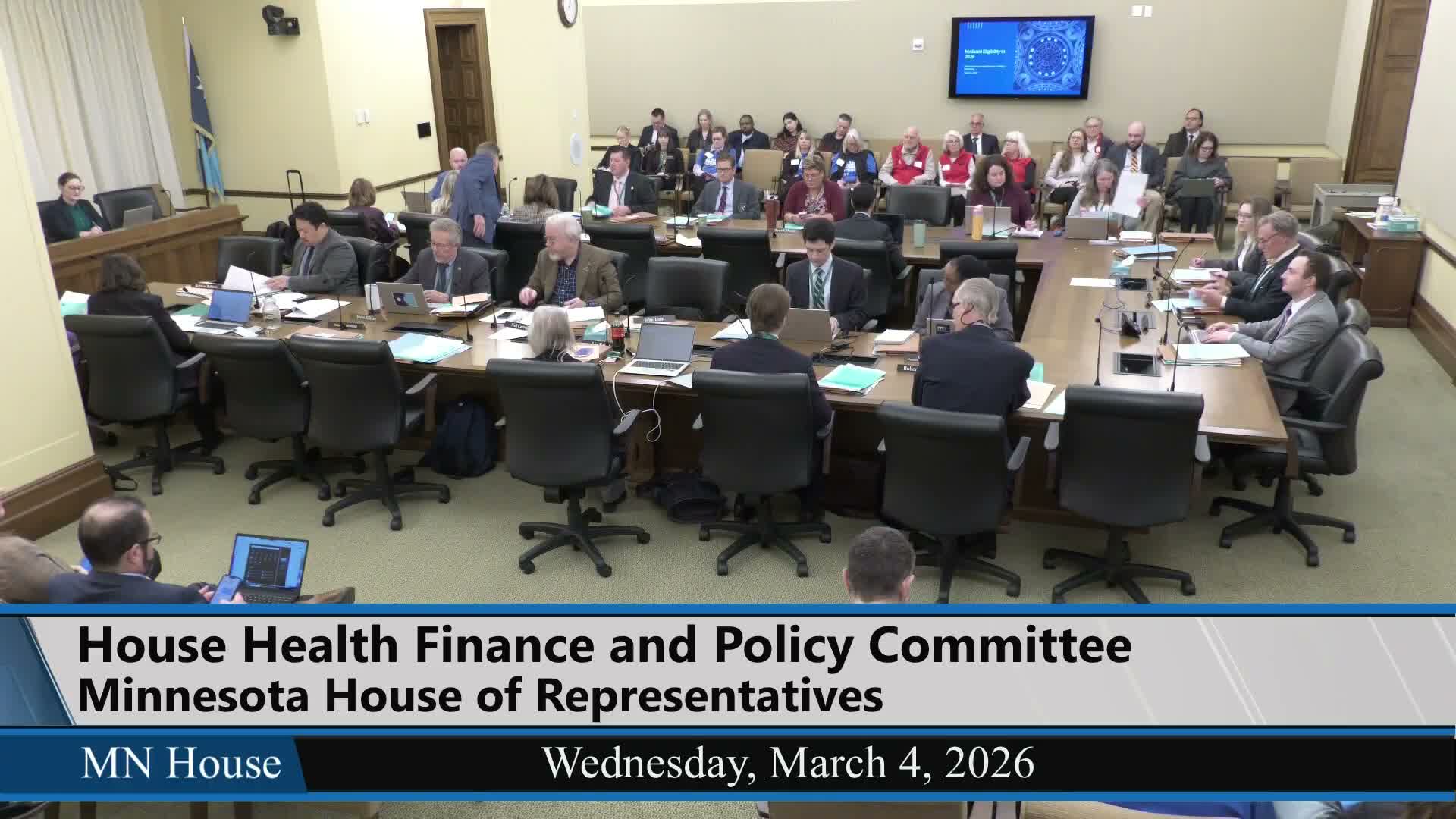
Summary
Catherine Costanza of the National Conference of State Legislatures told a Minnesota House committee that the 2026 federal law (referred to in the hearing as OB3/HR1) shortens retroactive eligibility, requires more frequent redeterminations and adds work/community engagement rules for expansion enrollees; she urged stronger data connections, noted federal grants and a 90% match for system upgrades, and warned of implementation challenges and potential coverage losses.
Catherine Costanza, a fellow with the National Conference of State Legislatures' health program, told the Minnesota House Health Finance and Policy Committee that OB3 (also discussed in the hearing as HR1 or OB3) changes Medicaid eligibility rules nationwide and creates a fast implementation schedule for states.
"This is certainly, I think, the largest, federal legislative activity we have seen since the Affordable Care Act," Costanza said, summarizing the law's intent to reduce federal Medicaid spending and to press states to tighten eligibility and program integrity. She told members the presentation would focus on eligibility and implementation choices that fall to state legislatures.
Costanza highlighted provisions with immediate operational impact: shortened retroactive eligibility (one month for expansion enrollees, two months for other enrollees) and a new requirement to check the Social Security Administration's death master file at least quarterly; both changes take effect Jan. 1, 2027. She said expansion enrollees must be redetermined every six months under the federal law and that states must implement work or community engagement requirements for expansion populations, with mandatory exemptions and optional short-term hardship exemptions available to states.
The NCSL fellow emphasized that states will need to build or strengthen many automated data links — among Medicaid agencies, state workforce agencies, corrections, SNAP, TANF and managed-care data — to verify qualifying activities and exemptions. Costanza said federal supports include a $200 million grant pool distributed by a statutory formula and a 90% federal match for certain Medicaid eligibility system design, development and installation work, though approval of the 90% match is subject to CMS review.
Costanza warned of uncertainty around guidance and timing. "Your Medicaid agency is literally building the track as the train is running," she said, noting CMS guidance was not expected until June and that states may have to make implementation choices before final federal direction.
Committee members asked about likely coverage losses and administrative costs. Costanza cited state-level analyses from KFF and RAND and said the evidence base is limited; outcomes depend on how states design the work/community engagement rules and exemptions. She also described federal enforcement tools — deferrals, disallowances and reductions in federal matching funds — that could be triggered by program errors and called out the potential for future recoupment related to extraordinary improper payment rates.
The committee followed the presentation with questions from lawmakers and then moved to consider two bills to conform Minnesota law to OB3's requirements.