
Committee hears wide testimony on organized retail and supply‑chain crime; bill laid over
Get AI-powered insights, summaries, and transcripts
Sign Up Free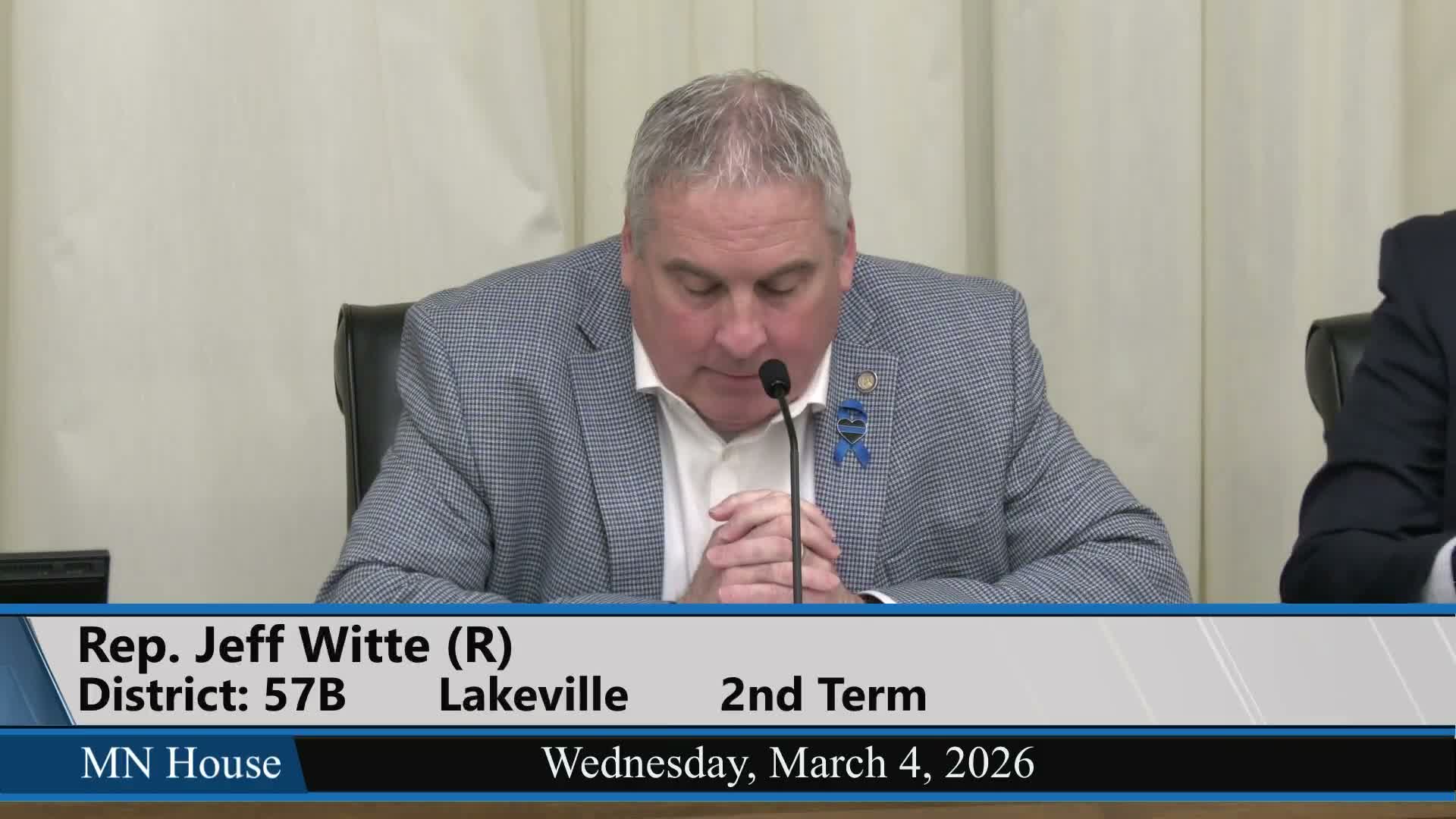
Summary
House File 2879 would create a coordinated advisory board to connect multi‑jurisdictional retail and supply‑chain theft investigations; retailers, trucking and dealer groups described sophisticated, cross‑jurisdictional criminal networks and urged a statewide coordination mechanism; the committee laid the bill over.
Vice Chair Woody presented House File 2879 to establish an organized retail and supply‑chain crimes advisory board, housed at the Bureau of Criminal Apprehension, to coordinate investigations, identify networks, and build enterprise‑level prosecutions.
Bruce Newstead (Minnesota Retailers) said the bill moves Minnesota from definition to execution and would create a practical, statewide coordination mechanism. Karen Tapero (district manager, Patina Stores) described repeat offenders who targeted multiple stores, sold stolen goods online, and in some instances assaulted employees; she said local police did what they could but lacked a way to connect incidents across jurisdictions.
John Hauslott (Minnesota Trucking Association) described supply‑chain theft tactics including GPS/data spoofing and hijacked orders, citing a publicized case of stolen tequila, and said shipments and data are being targeted. Amanda Doer (Minnesota Automobile Dealers Association) described thefts of wheels, thefts from lots and catalytic converter thefts and urged coordination.
Members asked about data, evidence and whether existing structures (Financial Crimes Advisory Board or BCA units) could be used rather than creating a new board; proponents said the advisory board could borrow frameworks from existing bodies and asked for flexibility in structure. Chair Mueller noted the bill’s draft included federal participants and flagged questions about federal cooperation. After extensive testimony and member questions, the committee laid HF2879 over.
Next steps: HF2879 was laid over; sponsors and proponents signaled willingness to refine membership, coordination with existing boards and federal participation language.