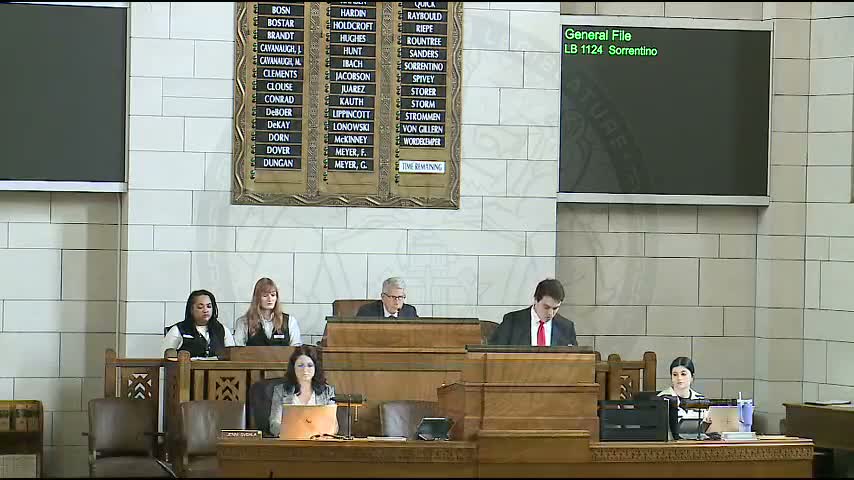
Heated floor debate opens on proposed cigarette tax increase to fund Medicaid offsets
Loading...
Summary
Lawmakers opened debate on LB11-24, which would raise the cigarette excise tax from 64¢ to $1.64 per pack and direct the revenue to a Medicaid expense-offset cash fund; sponsors cited $120–$150 million in annual Medicaid costs from smoking, while opponents called the measure regressive and warned of unconstrained cash funds and disproportionate harm to low‑income and young Nebraskans.
The Legislature opened a prolonged floor debate over LB11-24, a proposal to raise Nebraska's cigarette excise tax and dedicate the new revenue to offset smoking‑related Medicaid costs.
Senator Sorrentino, sponsor of LB11-24, said the bill is designed "to partially offset more than roughly 120 to $150,000,000 in annual Nebraska Medicaid costs incurred by the state due to smoking related illnesses," and explained the measure would raise the cigarette excise tax from 64¢ per pack to $1.64 per pack of 20 cigarettes and create a Medicaid expense offset cash fund via a revenue committee amendment (AM2253). (Senator Sorrentino)
Opponents, including Senator Conrad and several colleagues, urged a procedural vote to indefinitely postpone the bill and framed it as a regressive tax that would disproportionately burden lower‑income Nebraskans and young people. "No one can deny this is a regressive tax," Senator Conrad said, urging colleagues to consider distributional impacts and the bill's failure to solve the broader structural budget gap. (Senator Conrad)
Other critics raised fiscal‑policy concerns: several senators said the proposed cash fund appeared vague and potentially vulnerable to future sweeps, questioned whether increased tobacco revenue would actually be directed to health‑related uses, and noted the 'catch‑22' that higher taxes intended to reduce smoking would eventually reduce the revenue stream intended to pay for Medicaid offsets.
Supporters—including Senator Kavanaugh and Senator Moser—argued higher cigarette taxes are an effective tool to reduce smoking and can raise revenue to mitigate Medicaid costs, with Kavanaugh urging that similar changes have been debated in the past and that a dollar‑plus increase can affect health outcomes.
Floor debate continued for multiple hours with senators from across the political spectrum making substantive policy and fiscal arguments. A priority motion to indefinitely postpone (raised in floor procedure) was pending at recess; the Legislature recessed without a final floor vote on LB11-24.