Hearing Examiner Keeps Record Open After Hours of Testimony on OPALCO Decatur Island Solar Plan
Loading...
Summary
After hours of expert testimony and more than a dozen in‑person public speakers, the San Juan County hearing examiner kept the record open on OPALCO’s plan for a 4,470‑panel solar array on Decatur Island, continuing the consolidated CUP/SEPA hearing to March 6, 2026 amid disputes over deeded open‑space covenants, stormwater and wildfire risk.
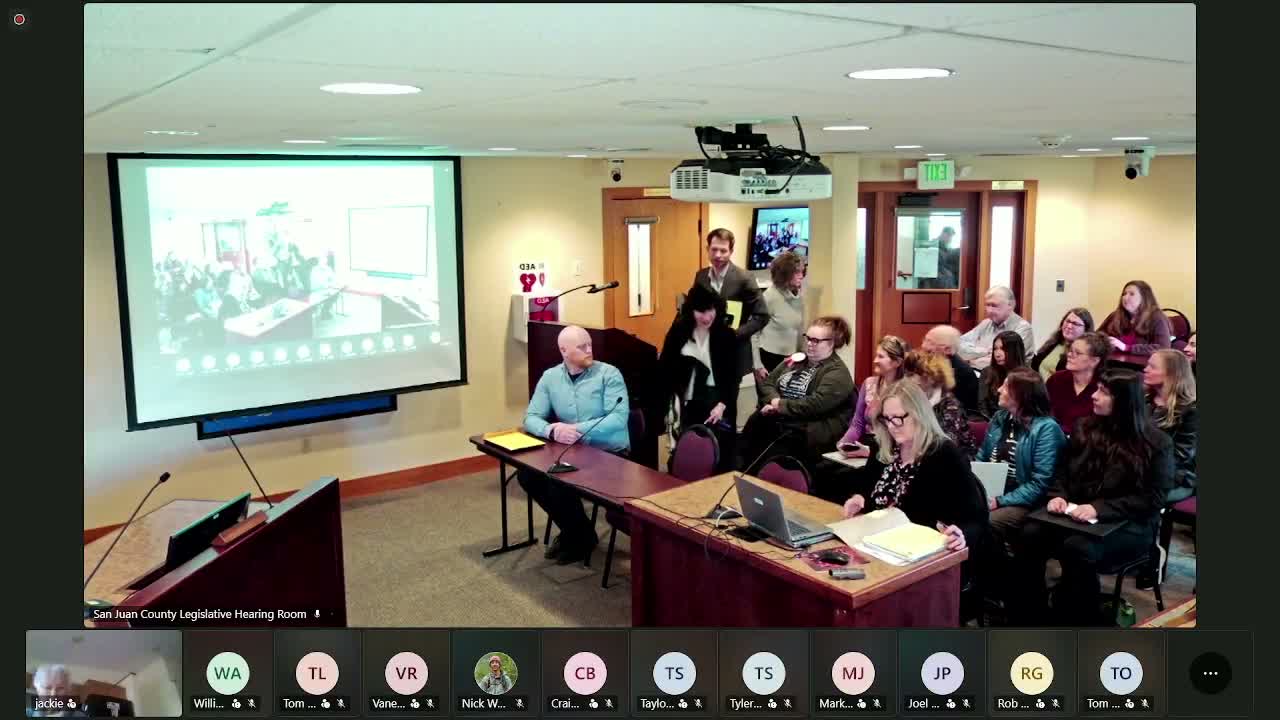
The San Juan County hearing examiner continued the record on Friday in a heated consolidated hearing over a conditional‑use permit and SEPA review for a proposed OPALCO (Orcas Power & Light Cooperative) solar array on Decatur Island. The hearing, which drew experts and scores of residents, closed with the examiner scheduling further proceedings at 10 a.m. on March 6, 2026, and leaving the administrative record open while the county and parties sort competing claims and possible revisions to recorded restrictions.
At the heart of the dispute is OPALCO’s proposal for 4,470 ground‑mounted solar panels split across two sites on a multi‑parcel tract (3,050 panels in Area A and 1,420 in Area B). County staff summarized its review and recommended approval subject to conditions addressing landscaping, stormwater controls, critical‑area protections and recommended measures for Townsend’s big‑eared bat habitat. Staff reported about 134 written statements of support and roughly 65 written objections in the record.
OPALCO’s witnesses said the site has operational advantages. Russell Gerry, OPALCO’s manager of engineering and operations, said the project’s proximity to the substation reduces interconnection costs and helps meet grant timelines. “These funds would help subsidize bills for low‑income members across the OPALCO system,” Gerry said, noting grant milestones tied to permitting.
Environmental consultant Vanessa Rogers of Environmental Science Associates summarized the project’s field studies and mitigation measures. Rogers said the team mapped six county‑regulated wetlands and designed the project to avoid them and their buffers. She described a stormwater approach that included vegetated swales and a detention pond: “Post‑development flow rates show the project is flow‑control exempt, meaning runoff leaving the site is no greater than existing conditions,” she said.
But residents and conservation advocates urged a different outcome. Magali Cota, legal director for Friends of the San Juans, told the examiner the project “does not meet the standards required by county code, SEPA, or the comprehensive plan,” arguing that the proposal would clear mature forest and high‑quality soils and that alternative sites on already‑developed land should be prioritized.
Multiple Decatur Island residents echoed those concerns at the podium. Dennis Jenkins, who lives below the site, warned of increased stormwater and erosion after earlier clearings and said OPALCO proposes to clear an additional roughly 8.5 acres for the expansion. Donnie Cunnington (Decatur resident) and others pointed to a recorded native‑growth covenant and a 30% open‑space set‑aside that they say overlap portions of the proposed array and must be respected unless lawfully revised.
OPALCO representatives said they have initiated a process to seek revisions to the native‑growth and open‑space documents if necessary but emphasized they could and would comply with the county’s conditions if revisions are not approved. Clara Park, outside land‑use counsel for the applicant, told the hearing that the applicant is prepared to modify the site plan if required.
Wildfire risk was a recurring theme. Several residents and appellants said Decatur lacks a fire district and local suppression capacity, and they asked for a detailed wildfire mitigation, detection and response plan. OPALCO’s electrical engineer Nathan Bronick and other consultants testified that the project would use bifacial panels (glass on both faces) and current industry practices to reduce panel‑related fire propagation risk and that components would be selected and installed to current code and inspection standards.
The record also contains a technical disagreement over the SEPA timeline: the examiner initially cited a March 6 potential appeal date, and county staff corrected the record to note that the formal appeal window closed March 4, 2026; the examiner nevertheless continued the consolidated hearing to March 6 to accommodate evidence and appeals already filed and to allow parties to review newly submitted materials.
Because SEPA appeals were filed and new documents have been submitted, the hearing examiner said the file will remain open. He invited appellants to file a concise supplemental submission (limited in length by schedule) and set the next hearing day so appellants, staff and applicant witnesses can be called in a consolidated fashion. The examiner said he will read the full record before issuing any decision.
Next procedural step: the consolidated CUP/SEPA hearing will resume at 10 a.m. on March 6, 2026, when appellants will present their case and cross‑examination will occur. The record will remain open for the SEPA appeal period and any related administrative filings.