
Rochester superintendent proposes targeted gap‑closing goals and $3M ANI focus for 2026–2029
Get AI-powered insights, summaries, and transcripts
Sign Up Free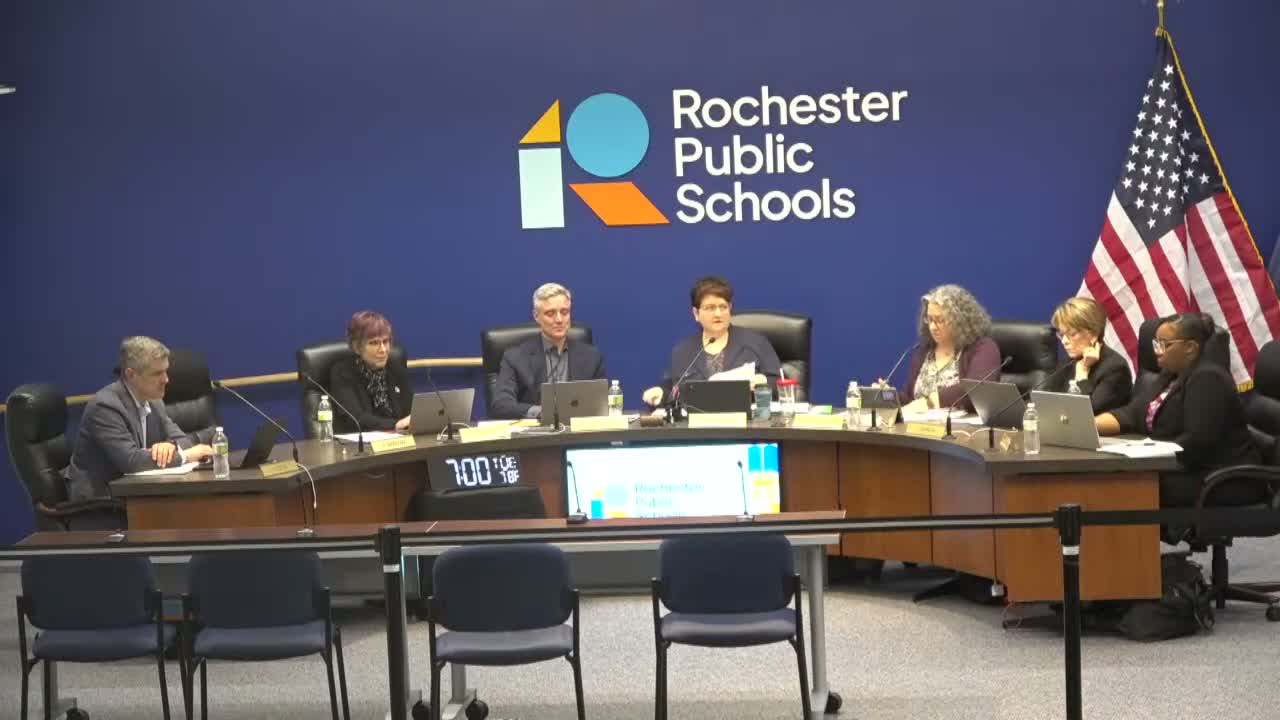
Summary
Superintendent Kent Picow outlined a draft Achievement and Integration plan using about $3 million annually in state funds to reduce specific graduation and postsecondary gaps by June 2029, including a 5.25 percentage‑point target to narrow the Hispanic/Latino four‑year graduation gap and a planning year for racially identified Gage Elementary.
Superintendent Kent Picow presented a draft Achievement and Integration (ANI) plan the Rochester Public Schools board will consider on March 17, proposing the district concentrate its ANI funding on a limited set of measurable gap‑closing goals and integration strategies.
Picow said the district qualifies as "racially isolated" under Minnesota criteria and therefore must include integration and gap‑closing goals to receive ANI funding. He told the board the district receives about $3,000,000 a year in ANI funds and recommended concentrating that money on a small number of priorities so it is not spread too thin.
"Our achievement and integration goal, if you adopt my recommendation, would be that we'll reduce the difference between the four‑year graduation rate of Hispanic and Latino students and the four‑year graduation rate of all other students by 5.25 percentage points by June 2029," Picow said. He explained the district's 2024 data showed Latino/Hispanic students graduating at a 71% four‑year rate versus 88% for other students (a 17‑point gap), and the proposed goal would reduce that gap to about 11.7 percentage points by 2029.
Picow outlined additional proposed goals: narrowing postsecondary enrollment disparities between low‑income students and others by about 6.3 percentage points, increasing access to rigorous course taking for students of color, and improving teacher diversity for high‑school technical and rigorous offerings. He described operational strategies such as Freshmen on Track work, expanded advising and planning supports, auditing course registration processes, and stronger partnerships with community organizations to increase FAFSA completion and postsecondary planning.
The superintendent also said the plan includes a focused planning year for Gage Elementary, which the state has identified as racially identifiable because 77.4% of its students were students of color in 2024 compared with a district average of 47.3%. Picow proposed a year of planning to understand why local families in the Gage attendance area are not choosing the school and to develop targeted supports; he said the district would request a planning year from the Minnesota Department of Education (MDE).
Board members asked technical questions about the choice of using four‑year graduation rates rather than dropout statistics and whether the district could report finer demographic breakdowns now or after new student information systems are implemented. Picow said the four‑year rate emphasized positive outcomes and that improved data systems are a goal for future differentiation.
The draft plan is scheduled for formal board action at the March 17 meeting; Picow said revised materials will be distributed in advance.