
County committee approves higher education impact fees after consultant study
Get AI-powered insights, summaries, and transcripts
Sign Up Free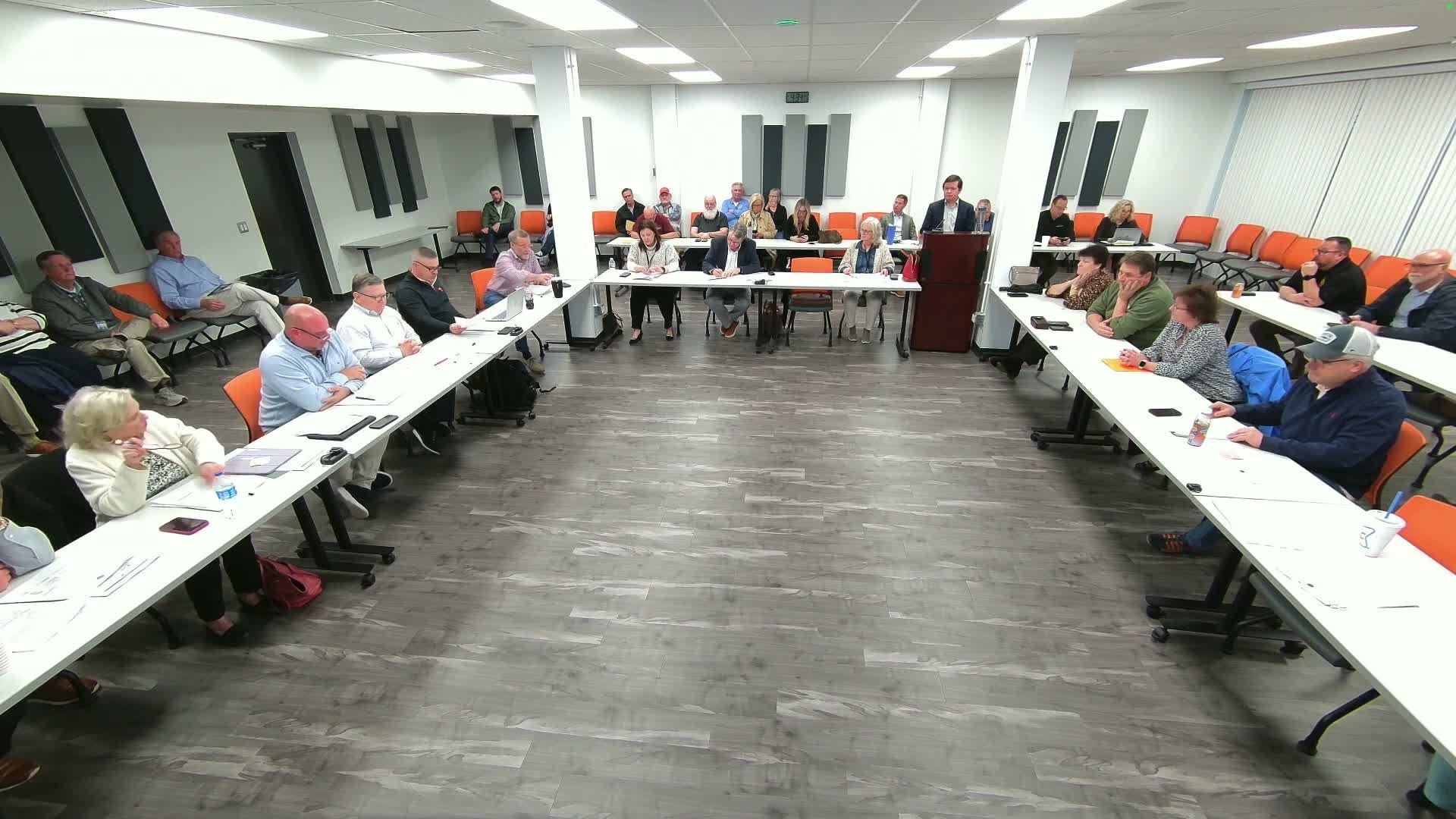
Summary
After a consultant presentation, the Williamson County budget committee unanimously approved Resolution 3-26-4 to amend education impact fee rates and accept a February 16, 2026 study showing higher capital costs per student and a range of maximum supportable fees by unit size.
Ben Griffin, a consultant with Distruvise, presented the county’s updated educational facility impact fee study and recommended new maximum supportable fees tied to student generation rates and capital cost per student.
Griffin said the study uses an incremental methodology, student-generation rates and credits for existing and anticipated revenue streams. "On average a residential unit in Williamson County is gonna generate about 0.44 students per housing unit," he told the committee, and showed how different unit sizes produce different student counts and therefore different fee levels.
The study attributes most of the proposed increases to higher construction and land costs: Griffin told commissioners K–8 school facility construction costs are about 110% higher than in the 2022 study, while high school costs are up roughly 55%. He said bus costs have risen nearly 50% and that the overall capital cost per student increased substantially, producing a range of maximum supportable fees from roughly $2,300 for the smallest units up to about $34,000 for the largest units.
Phoebe, the county staff member who reported the county’s impact-fee balance, told commissioners the fund balance stands at about $95–96 million and staff estimates about $1,000,000 in monthly collections at current rates. That existing balance and projected collections factored into discussion about whether to adopt the maximum supportable fee schedule or a smaller increase.
Commissioners discussed alternatives, including using a 2022 fee base adjusted for construction inflation (an example adjustment of about 7% was presented). After questioning on methodology and cost drivers, the committee moved and seconded Resolution 3-26-4, to amend the county’s educational impact fee schedule and accept the February 16, 2026 study. The budget committee and the education impact fee task force each voted by voice; the chair recorded both votes as unanimous.
The measure authorizes the county to adopt updated fee rates up to the maximums shown in the study; the county may adopt lower rates if it chooses. Staff said next steps include posting the updated schedule and coordinating implementation with permitting processes.