Get Full Government Meeting Transcripts, Videos, & Alerts Forever!
Get email alerts on the Lone Lake Algae topic
No spam. Unsubscribe anytime.
Resident warns of dangerously high algae-toxin readings at Lone Lake; urges county to seek treatment grant
Summary
During public comment, Mark Sysma presented measured peaks of 8,900 µg/L (anatoxin) and 3,000 µg/L (microcystin) at Lone Lake—well above state recreational-contact guidelines—and urged the county to apply for a state grant to fund lanthanum-and-clay sediment treatment; staff said the item is on tomorrow’s work session for follow-up.
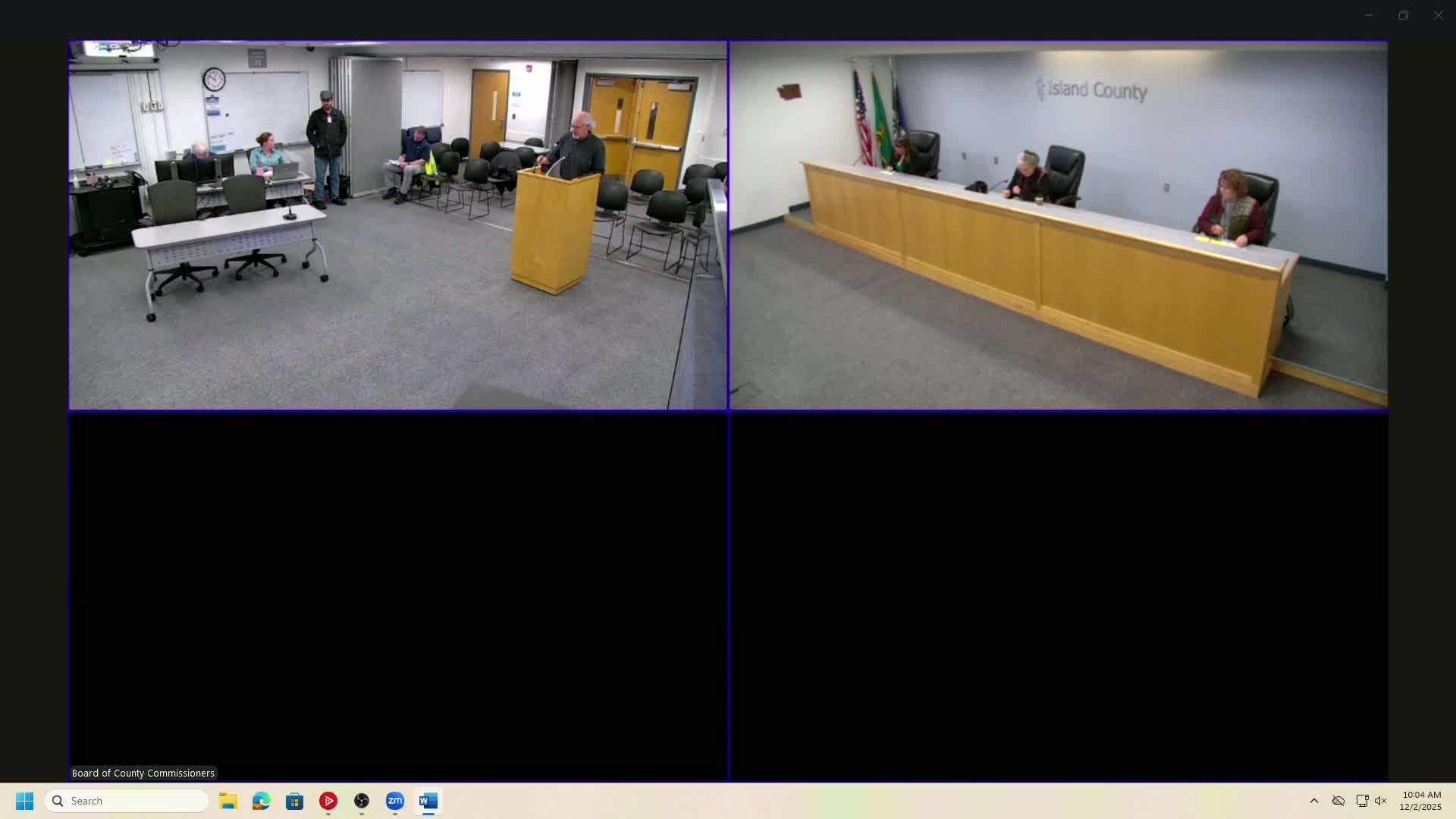
Mark Sysma, who identified himself during public comment, told the Board of Island County Commissioners that recent sampling at Lone Lake found extremely elevated algae-toxin concentrations and urged county action.
Sysma cited measured peaks of about 8,900 micrograms per liter (µg/L) for anatoxin and about 3,000 µg/L for microcystin. He contrasted those readings with Washington state recreational-contact guideline values he cited—1 µg/L for anatoxin and 8 µg/L for microcystin—and warned those concentrations pose a risk to pets and people who come into contact with lake water.
Sysma recommended the county apply for a state grant to fund treatment of the lake with a lanthanum-and-clay compound that, he said, binds phosphorus in lake sediment and reduces nutrient availability for algae. He described the treatment protocol (targeting phosphorus in the top sediment layers and repeating applications over multiple years for sustained benefit) and said a single treatment could provide benefits for one to two years, with repeat treatments needed to address deeper sediment phosphorus.
Chair asked planning and public-health staff to follow up: planning staff were asked to review the moratorium suggestion from Jack Mercer, and public health staff were asked to confirm grant-application deadlines for Lone Lake. Staff confirmed the Lone Lake topic is scheduled for a work session the next day.