Get Full Government Meeting Transcripts, Videos, & Alerts Forever!
Get email alerts on the Comprehensive Plan Public Comment topic
No spam. Unsubscribe anytime.
Residents urge adoption of Deer Lagoon Preserve plan, kennel‑licensing implementation and deed‑restricted housing language
Summary
During the meeting's public comment period, residents and local advocates pressed the Board of Island County Commissioners to adopt a Deer Lagoon Preserve management plan, implement kennel licensing and add language to the comprehensive plan to incentivize permanently affordable deed‑restricted housing; several groups said they will file written comments before the Feb. 9 deadline.
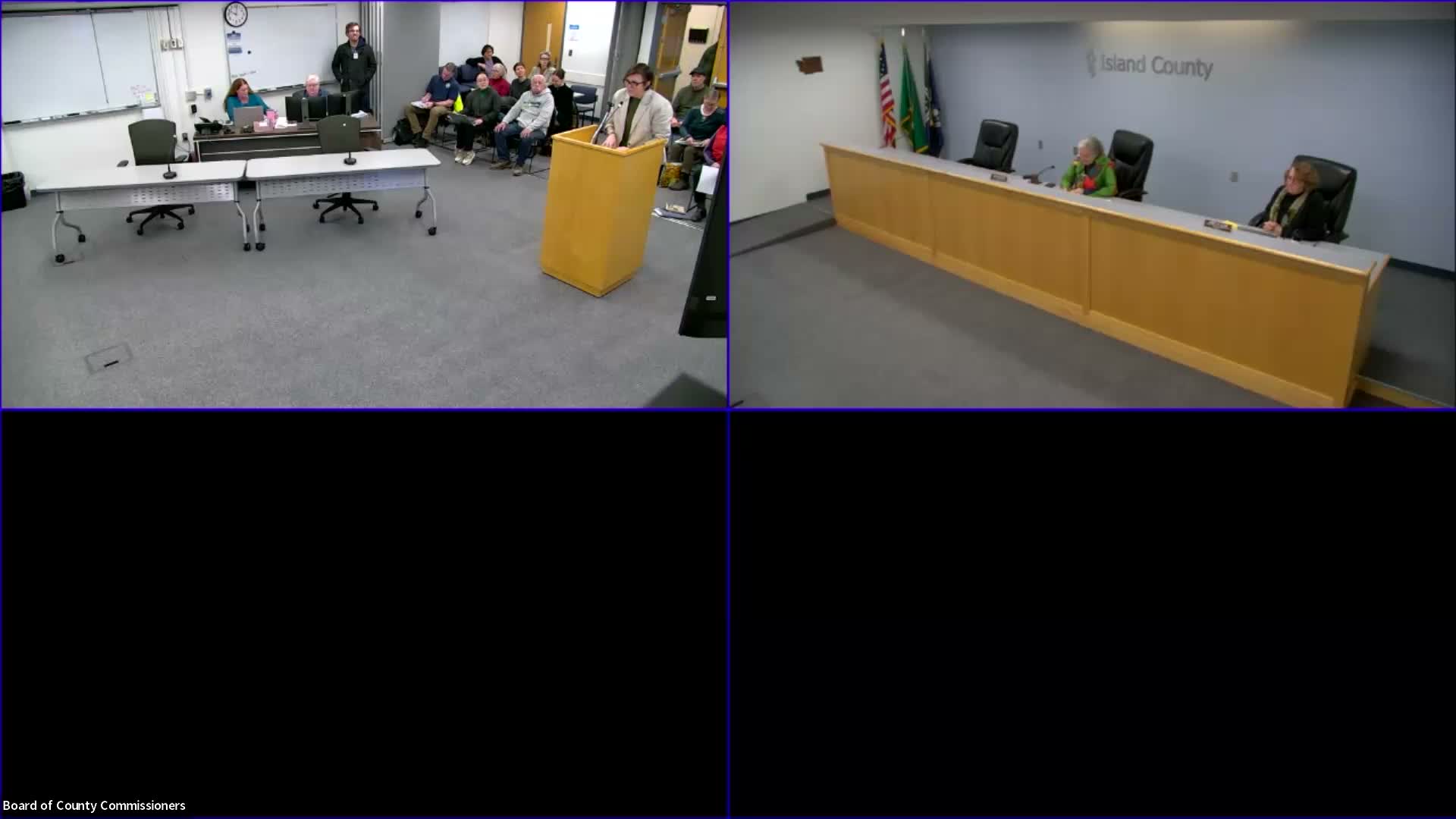
Dozens of residents used the Board of Island County Commissioners' Feb. 3 public comment period to press for conservation, animal‑welfare and housing measures in the county’s comprehensive‑plan update.
Marnie Jackson of the Environmental Action Network opened a series of conservation comments by urging the board to recognize Indigenous settlement histories and to support upcoming consideration of the Deer Lagoon Preserve management plan. "I really admire the depth with which [Carlos Anderson] interviewed agencies and nonprofits to develop a plan that would bring us into compliance with the 22‑year‑old grant agreement," Jackson said.
Other conservation speakers echoed that support. Amanda Bullis (Environmental Action Network, Langley) asked the county to perform a climate‑resiliency audit of the comprehensive plan in line with 2025 guidance from the Washington Department of Commerce; Linda Griesbach and Jackie Lassiter (speakers representing local Audubon interests) urged adoption of the site‑specific Deer Lagoon management plan and recommended limiting shoreline access to protect nesting habitat. Govinda Holtby offered local bird‑count data and called Deer Lagoon an important bird area.
Animal‑welfare advocates urged the board to finalize kennel licensing and related implementation measures so animal control officers have legal and financial tools to act. "The kennel fees and associated licensing codes are critical tools for animal control officers because they provide the legal and financial infrastructure necessary to intervene before neglect turns fatal," Dr. Donna Debonis said, citing the Finch cruelty case that required over $70,000 in sheltering and manpower costs for WAIF.
Multiple speakers — Pat Lamont, Christie Lovellady, Lars Pardo and Summer Bolen — urged the county to implement the kennel licensing code and suggested creating an animal‑fund (paid for by licensing fees and fines) and stronger enforcement and penalties for repeat offenders.
Affordable‑housing advocates called for clearer language and incentives to secure long‑term affordability. Gabby Caro described Upper Langley, a cohousing project that uses deed restrictions that cap appreciation at 1.5% annually, and asked the board to add comprehensive‑plan language that encourages similar permanent affordability tools. She and others said they will submit written comments ahead of the Feb. 9 deadline.
Annie Jesperson, co‑owner of Deep Harvest Farm and a member of the county Agriculture Resources Committee, urged the plan to better reflect agriculture's economic and ecological contributions and requested more data in plan narratives to support agricultural policies.
The board thanked participants for their testimony and noted some items will be taken up separately; the Deer Lagoon site‑specific management plan was on the workshop agenda for the following day and animal‑welfare implementation will require staff follow‑up. The board invited commenters to send written materials and indicated that some requests (for example, state‑level mandatory‑reporting rules) are outside the county’s authority and would be directed elsewhere.
(Reporting note: attributions use names and roles as given on the public record.)