
Lawmakers split as LAO warns of fiscal risks from proposed sustainable aviation fuel tax credit
Get AI-powered insights, summaries, and transcripts
Subscribe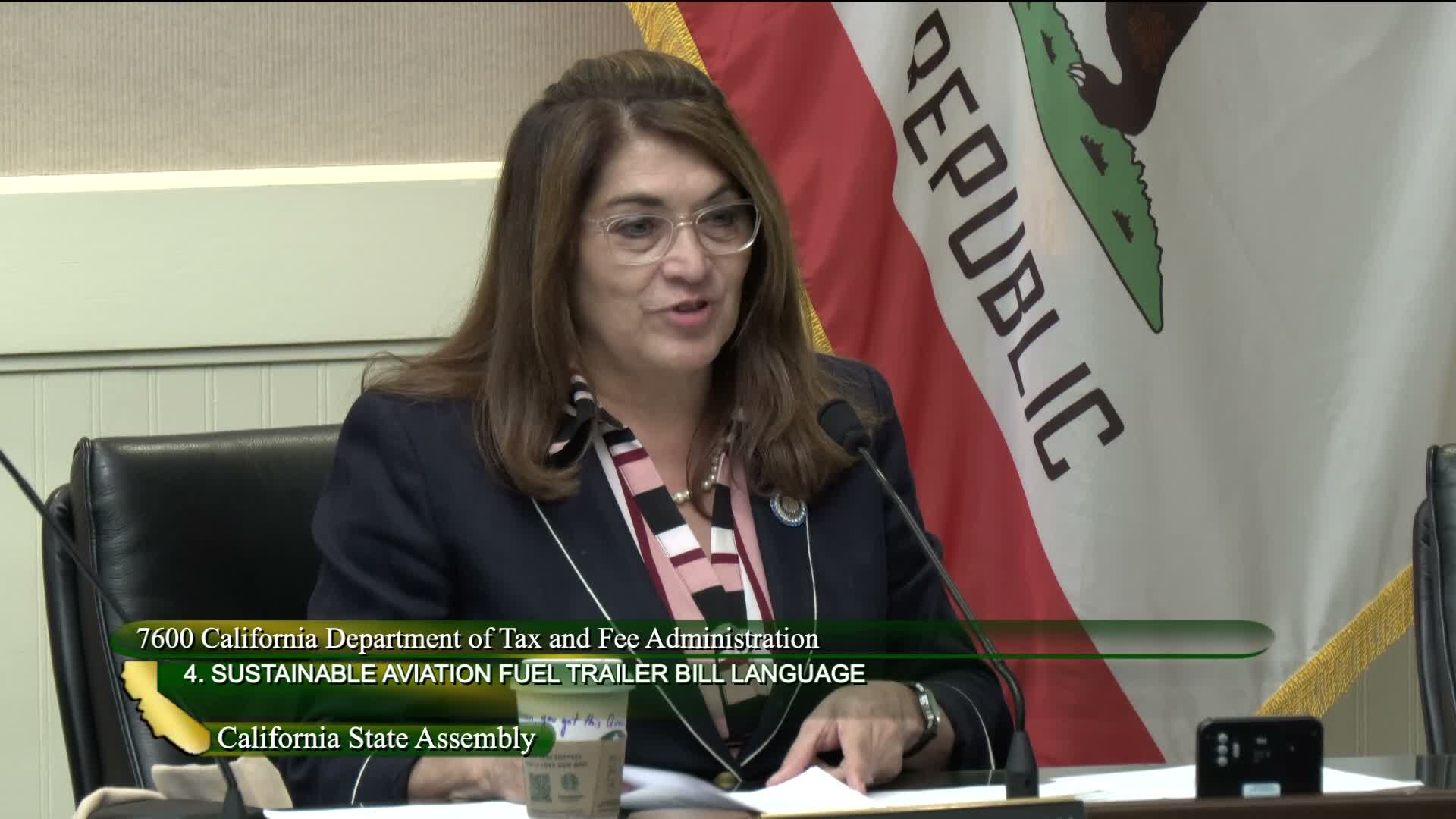
Summary
The governor's proposed SAF tax credit — $1 to $2 per gallon depending on carbon intensity — drew support from airlines, unions and in‑state producers and criticism from the Legislative Analyst's Office over cost, environmental uncertainty and potential impacts on transportation funding.
Legislators and analysts sparred over a proposed sustainable aviation fuel tax credit the administration says would support decarbonizing aviation and preserve renewable-fuel jobs, while the Legislative Analyst's Office warned the credit could be an expensive and uncertain way to reduce emissions.
Andrew March of the Department of Finance described the proposal as a per-gallon credit against the diesel excise tax ranging from $1 to $2 depending on a fuel's carbon-intensity rating. "The floor would be a dollar for any sustainable aviation fuel that has a carbon intensity that's 50% lower than fossil jet fuel," he said, explaining the credit would climb with greater carbon-intensity reductions.
Helen Christine of the Legislative Analyst's Office recommended rejecting the proposal and laid out five concerns: high cost compared with other decarbonization options, uncertain environmental benefits including a risk of reshuffling production from one renewable fuel to another, uncertainty about the program's total cost (which could exceed administration estimates), reductions to diesel excise revenues that support transportation projects, and tension with the voter-intended uses of transportation revenue.
Department of Finance and administration witnesses argued that other states have similar credits and that in‑state production needs predictability: officials said four companies currently have certified pathways that would qualify under the credit and that robust in-state production supports union jobs. Union and refinery speakers — including the Rodeo Renewable Energy Complex and United Steelworkers locals — urged approval, stressing job preservation and the high capital cost of converting plants.
Opponents, such as the California Fuels and Convenience Alliance, warned of fiscal risk and higher gasoline and diesel prices for consumers. LAO analysts said the administration's $165 million starting estimate could rise and that without statutory limits the liability could be substantially larger if production or imports qualified in volumes the state had not modeled.
Committee members asked for additional analyses on fiscal exposure, effects on transportation revenues and how the proposal would interact with federal credits. The hearing generated extensive public comment from industry and labor groups; the subcommittee did not take a final vote and requested further information.