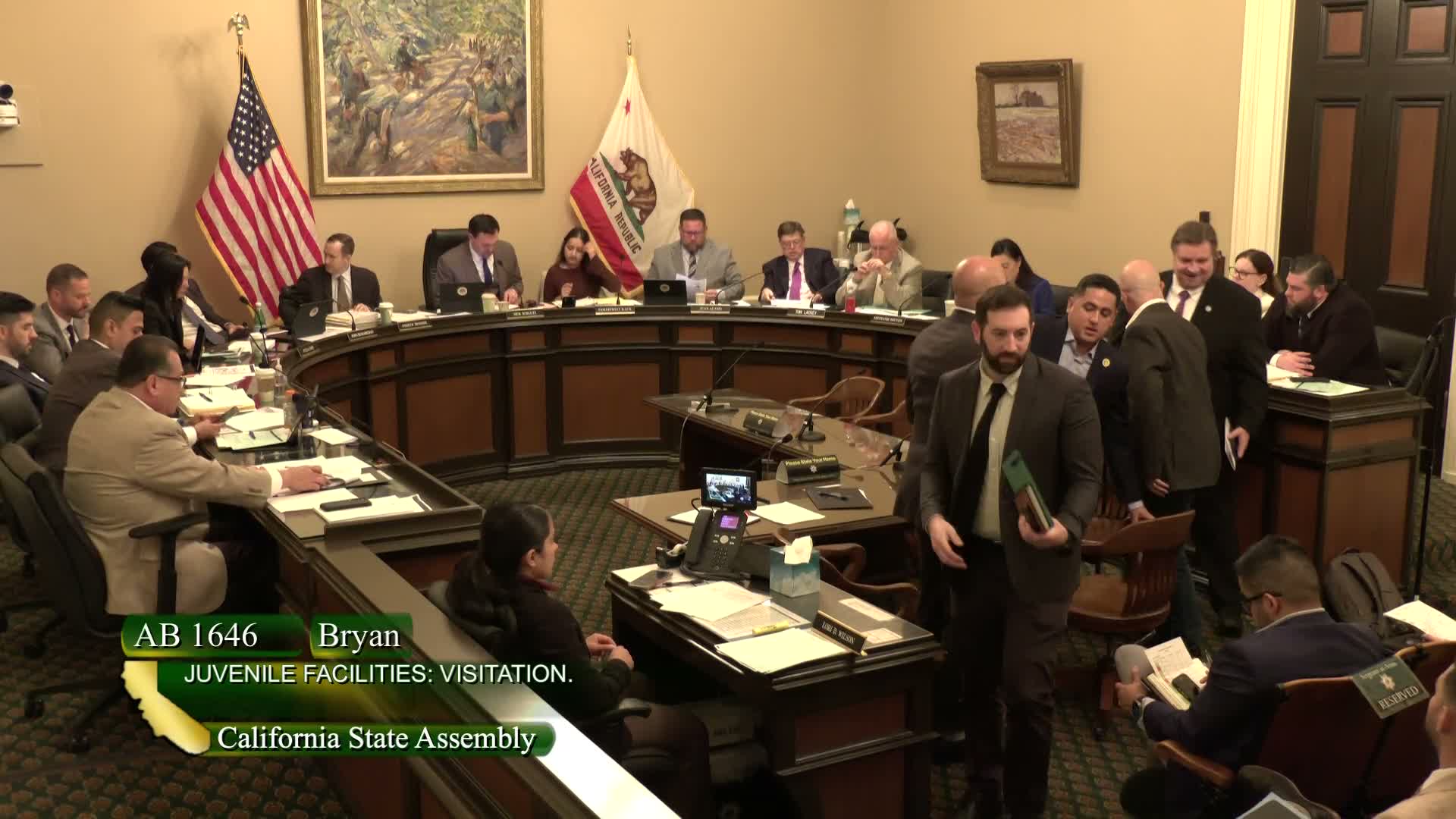
Committee backs 'HUG Act' to allow physical affection during juvenile facility visits
Loading...
Summary
AB 16 46, the HUG Act, would require juvenile facilities to permit family physical contact (hugs, hand‑holding) consistent with safety protocols. The committee voted to move the bill to Appropriations after family testimony and a discussion with probation officials about implementation safeguards.
The Assembly Public Safety Committee on Thursday advanced AB 16 46, known as the HUG Act, which would require juvenile facilities to permit family contact consistent with safety protocols, advocates said, to support rehabilitation and family bonds.
Assemblymember Isaac Brian (author) described visits in some facilities as physically and emotionally restrictive and said research shows physical contact reduces anxiety and supports rehabilitation. Multiple parents and formerly incarcerated young people testified. Shavonda Perry said being barred from hugging her son during detention was “devastating” and urged lawmakers to allow family contact that supports healing.
Supporters included the National Center for Youth Law, the Anti‑Recidivism Coalition and numerous youth‑justice organizations. Danielle Sanchez of the Chief Probation Officers of California said the agency had no formal position but raised operational concerns: visitation policies must account for safety, security and staff responsibilities, and the bill should include language to allow facilities to address threats and maintain safety.
Committee members agreed on the policy aim and encouraged the author’s office to work with probation to ensure the bill includes reasonable safety provisions and clear implementation language. The committee recommended the bill be sent to Appropriations.