Senate advances amendment to expand Independent Redistricting Commission, caps population deviation at 5,000
Loading...
Summary
Senators adopted a Meznard floor amendment to SCR 10 23 that would expand the Independent Redistricting Commission to a 3‑3‑3 membership model, add geographic distribution requirements and cap population deviation at 5,000 people; the measure received a due‑pass recommendation and will go to voters as a constitutional amendment if the legislature advances it.
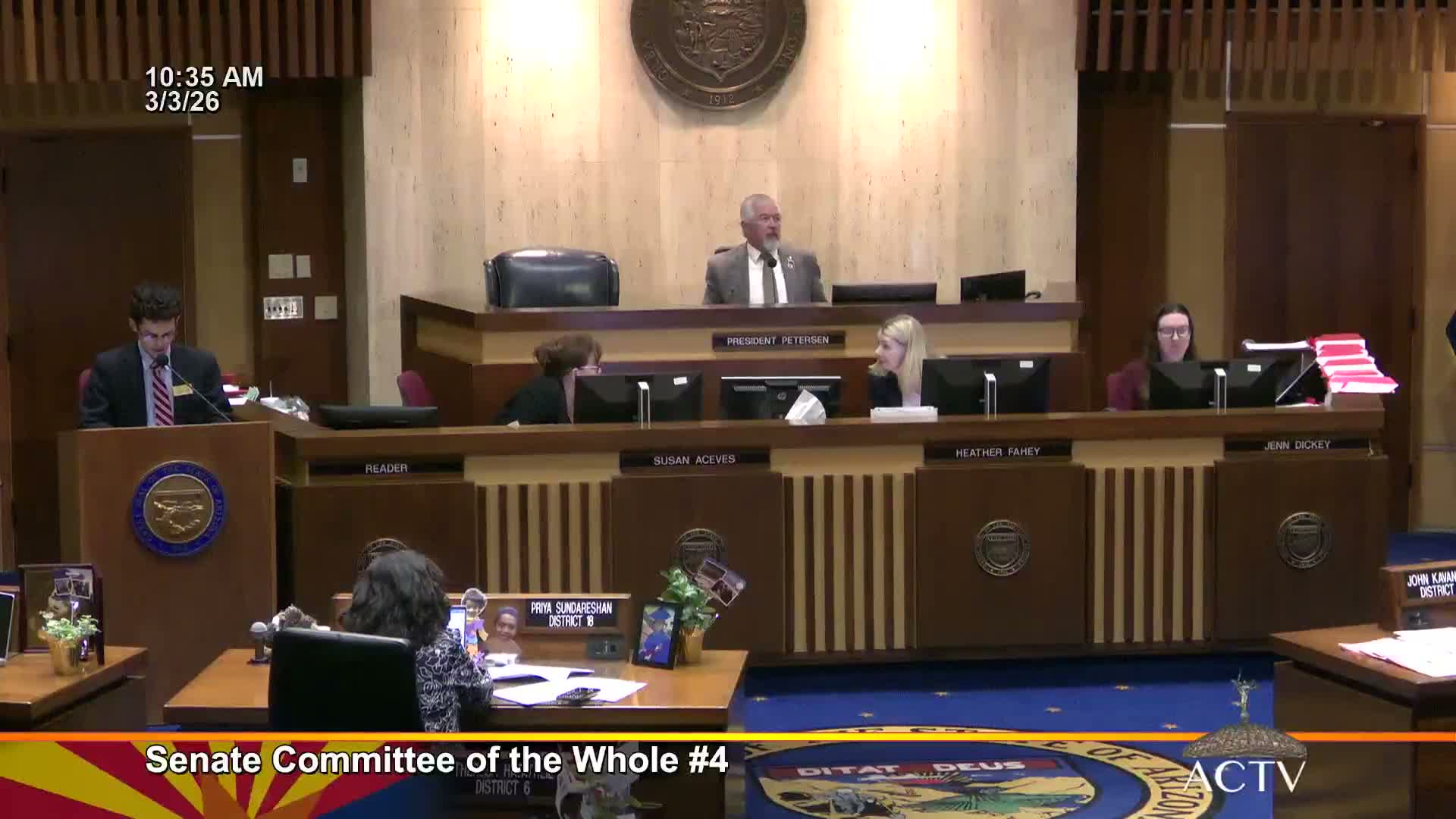
The Arizona Senate committee of the whole on Wednesday adopted a floor amendment to a proposed constitutional amendment that would change the makeup and rules of the state's Independent Redistricting Commission (IRC).
Senator JD Meznard, the amendment sponsor, told colleagues the package adds geographic distribution requirements, increases membership in each political category and tightens population deviation standards. “So this says we're gonna cap the deviation at 5,000 people,” Meznard said, explaining the change is intended to bring districts closer to equal population without eliminating all flexibility.
Supporters said the changes would broaden geographic representation on the IRC and reduce extreme population differences among legislative districts compared with the historic 10% standard derived from older U.S. Supreme Court guidance. Opponents raised concerns that a fixed numeric cap could disadvantage rural areas and tribal communities where a 5,000‑person limit represents a larger share of a district's population.
Senator Hotazoli asked how the change would affect rural and tribal areas and whether zip‑code‑based appointment rules were appropriate. Meznard acknowledged the concerns and framed the proposal as a philosophical choice about what “equal representation” should look like in the modern era: “The whole idea is to create some wiggle room … but get closer to equality,” he said.
The committee adopted Meznard's floor amendment and then voted to give SCR 10 23 a due‑pass recommendation. As a proposed constitutional change, the measure would be placed on the ballot for voters to approve or reject if the legislature ultimately sends it to the public.
What happens next: The resolution, as amended, was reported out of the committee of the whole with a due‑pass recommendation and will proceed through the legislative process; if enacted by the Legislature it would go before Arizona voters as a constitutional amendment.
Sources: Proceedings in the Senate committee of the whole on March 3, 2026.