Minority caucus advances dozens of bills in consent calendar; several carry little debate
Loading...
Summary
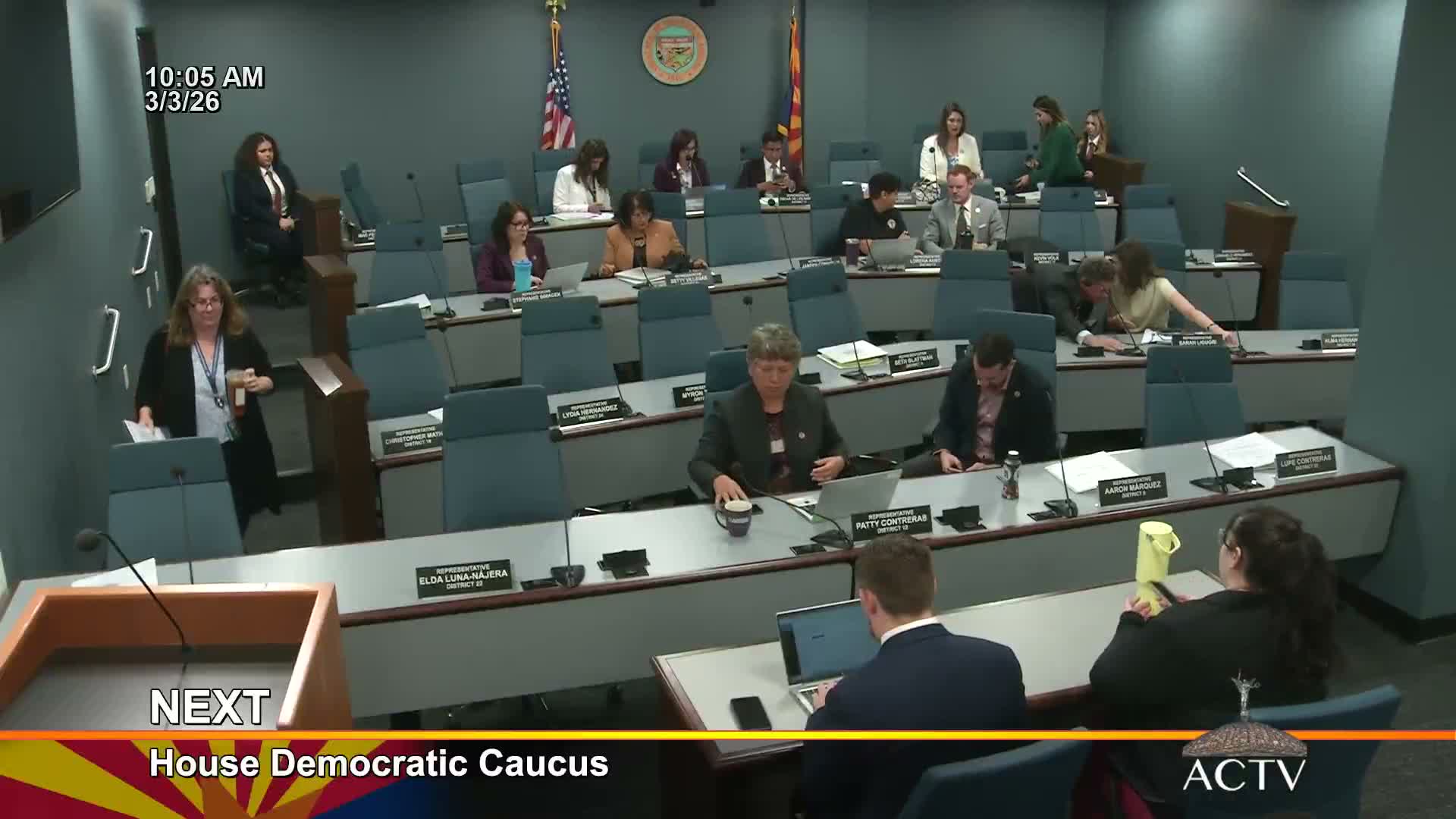
At a minority caucus meeting covering caucus calendars 8 and 9, sponsors gave brief overviews of many bills; most were placed on consent or moved forward without extended discussion, while a handful drew substantive questions on privacy, rural capacity, and funding priorities.
The Arizona House minority caucus convened to review caucus calendars 8 and 9, with sponsors giving short overviews of more than two dozen bills and many items placed on the consent calendar or advanced without substantive floor debate. Sponsors provided one- or two-sentence summaries and remained available for questions.
Among the bills noted as moving forward on consent or with unanimous committee votes were HB 2,620 (a $300,000 appropriation for a homeless veteran shelter), HB 29-60 (a veterans court program grant fund), HB 40-64 (municipal improvement district petitions), HB 20-79 (a memorial bill), HB 22-39 (a childcare grant program), HB 24-37 (an EMS reciprocity compact), HB 24-34 (controlled substances prescription monitoring), HB 23-44 (local government investment pool oversight), HB 24-45 (task-order contract posting), HB 29-50 (tourism improvement areas), HB 24-02 (ambulance certificates of necessity reporting), HB 24-29 (short-term rental occupancy rules), and HB 25-02 (ASRS retirement for elected officials).
Several bills received only brief discussion. Representative Nicole noted concerns with HB 23-44about third-party contracting for treasurer oversight; Representative Pete Contreras asked for clarification on the definition of a local government investment pool. HB 24-45 drew an observation that the measure had "no appropriation" attached and could operate as an unfunded mandate for smaller jurisdictions.
Most sponsors stated committee votes (where recorded) and offered to take further questions offline. The caucus concluded with routine announcements and an internal affordability award.
What happens next: items on the consent calendar and those reported from committee will proceed according to normal floor and scheduling rules; sponsors said they would be available for follow-up questions and floor amendments.