Get Full Government Meeting Transcripts, Videos, & Alerts Forever!
Committee advances bill requiring out‑of‑state online colleges serving Arizonans to register with state board
Summary
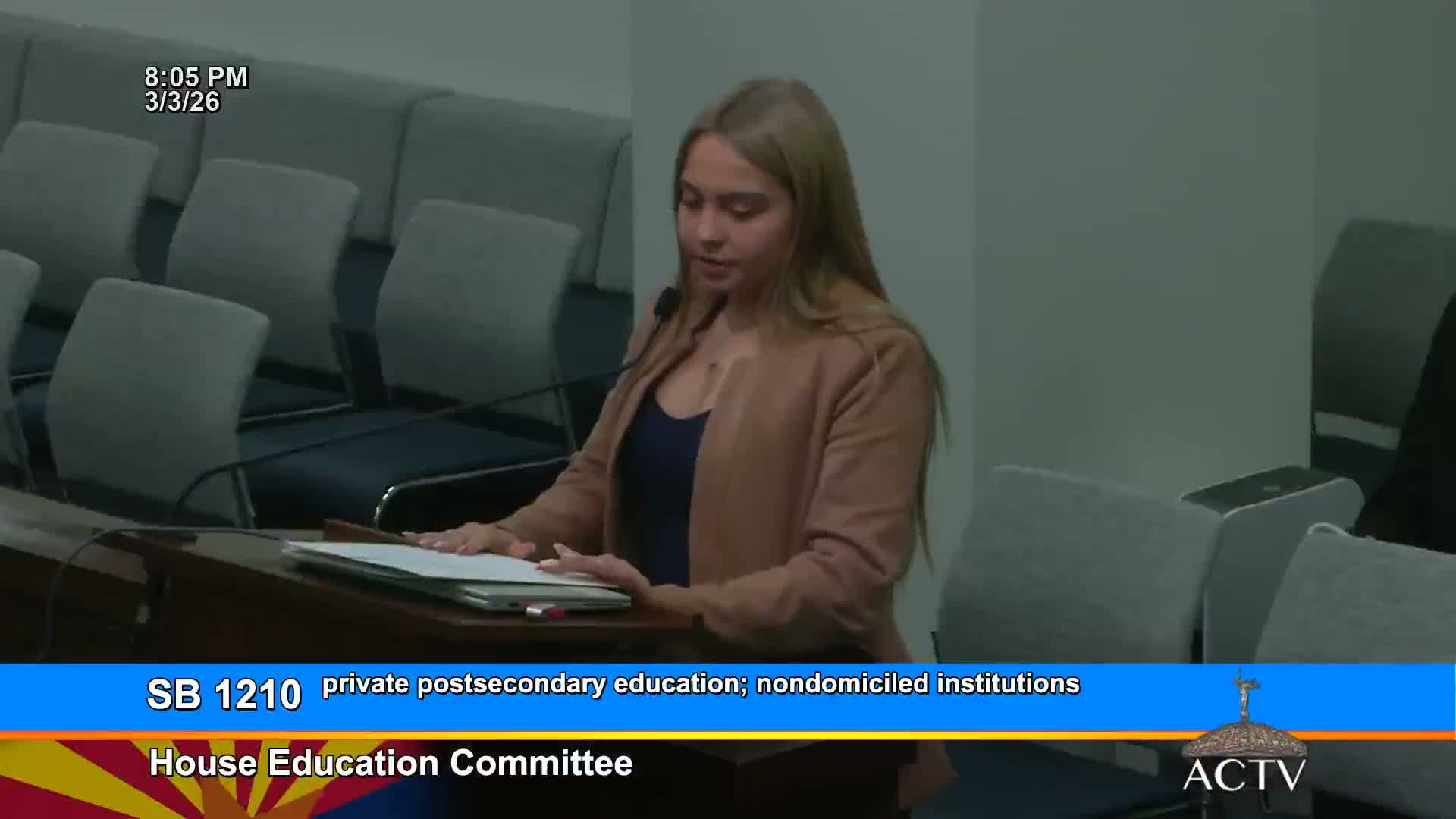
The committee gave Senate Bill 12‑10 a due pass recommendation (11 ayes, 1 no). Witnesses said the bill closes a regulatory gap for out‑of‑state online private postsecondary providers and protects students via registration and a tuition recovery fund.
The Committee on Education advanced Senate Bill 12‑10 by an 11–1 vote after witnesses, including Susan Cardulo of the Arizona Private School Association, argued the bill closes a gap that leaves some Arizona students without recourse when an out‑of‑state, online private institution is insolvent or non‑compliant.
Legislative staff summarized SB 12‑10 as requiring…
Already have an account? Log in
Subscribe to keep reading
Unlock the rest of this article — and every article on Citizen Portal.
- Unlimited articles
- AI-powered breakdowns of topics, speakers, decisions, and budgets
- Instant alerts when your location has a new meeting
- Follow topics and more locations
- 1,000 AI Insights / month, plus AI Chat