Get Full Government Meeting Transcripts, Videos, & Alerts Forever!
Get email alerts on the School Finance topic
No spam. Unsubscribe anytime.
Mahomet-Seymour board weighs $80 million bond vs. larger referendum to address junior high and Lincoln Trail needs
Summary
Board members debated building and funding options at a March 2 meeting, weighing an $80 million bond plan that leans on county sales tax against larger referendum proposals that would raise more money but require voter approval; officials flagged capacity trade-offs, timing and messaging risks.
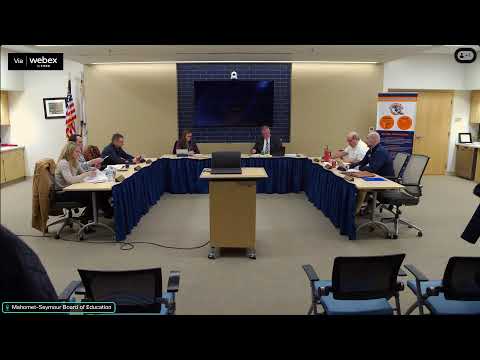
At a March 2 meeting, the Mahomet-Seymour CUSD 3 Board of Education discussed competing plans to address urgent needs at the junior high and at Lincoln Trail school, with officials weighing an $80 million bonding plan that would rely heavily on countywide sales-tax revenues against larger referendum options that would raise additional funds but require voter approval.
Dr. Taylor, the board's facilities lead, told trustees the district could reallocate part of the middle-school addition to provide roughly a 15,000-square-foot addition at Lincoln Trail that would include multipurpose space and classrooms, but doing so would reduce flexibility at the middle school. Nelson, the presenter of the cost sketches, described how the reallocation would pull planned middle-school addition square footage down from earlier sketches in the mid‑60,000s toward figures in the low‑50,000s.
Chris, the district finance presenter, outlined how timing of existing debt and county sales-tax receipts affects options. He showed that debt certificates scheduled to roll off in 2033 create a window in which using countywide sales-tax receipts (Fund 60) could service roughly $80 million in bonds "without touching a tax rate," while cautioning that there are two years with tighter sales-tax availability. The board discussed using Fund 60 for items such as playgrounds, weight-room upgrades and other non-HLS projects that do not qualify for Health Life Safety funding.
Board members pressed on tax impacts and public receptivity. One presenter cited a figure of about "$1.87" on a $450,000 home tied to an $80 million bonding scenario and discussed a larger referendum scenario that trustees referenced as roughly "$600 a year" on a $450,000 home for a bigger package. Trustees noted those figures were illustrative and discussed how previous referendums had failed when voters perceived the ask as too large.
Trustees also debated alternatives: run an $80 million plan that uses countywide sales-tax receipts to avoid a direct tax-rate increase now, then seek voter approval later for additional projects; or pursue a single referendum to secure the full amount needed for both campuses. Several board members emphasized transparency and communications, saying the district would need clear, repeated messaging if it pursued a no-tax-increase referendum or a plan that relies on redirecting sales-tax revenues.
The board did not take a formal vote on a funding path at the meeting. Trustees asked staff to refine scenarios, provide clearer capacity counts (including cafeteria and special-program constraints) and return with recommended next steps; if the board pursues a referendum, ballot language must be set by June for a November election.
The board indicated an $80 million planning bond would allow work to begin sooner but could limit flexibility on the middle-school campus; a successful referendum would allow more comprehensive work but carries the political risk of a failed vote. The next substantive presentation and a possible decision on a preferred scenario are expected at a future regular meeting as staff refines costs, phasing and communications materials.