
Lawmakers press DOC on inmate health care, $5 co‑pay and women's screening access
Get AI-powered insights, summaries, and transcripts
Sign Up Free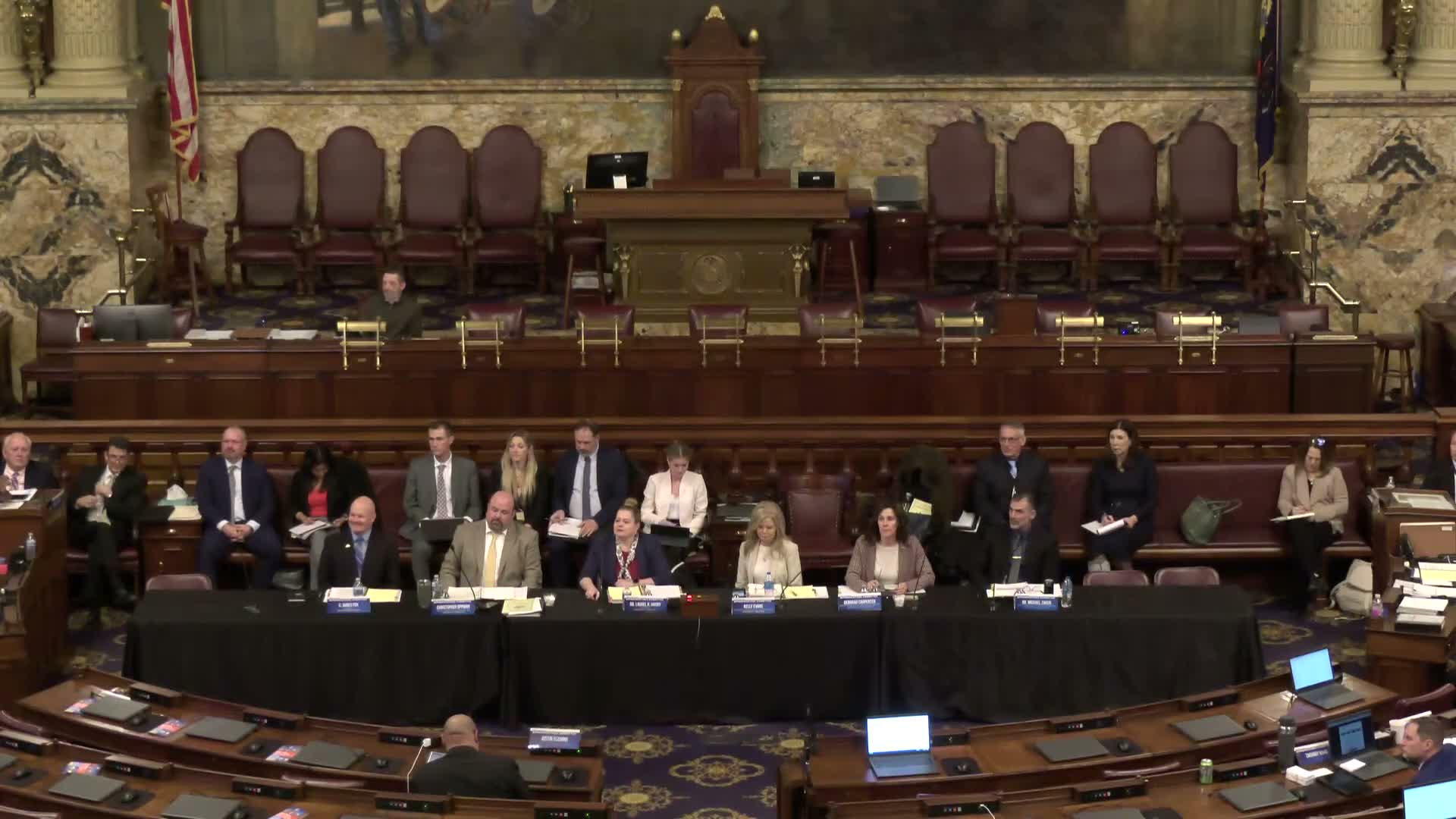
Summary
Legislators questioned DOC officials about the $5 medical co‑pay, its operational effects, how collected co‑pay revenue is used, and whether incarcerated women receive 3‑D mammography and other maternal supports; DOC said co‑pay removal would require significant new appropriations and that contracted vendors provide screening.
Legislators pressed the Department of Corrections on the $5 medical co‑pay and access to women’s health services during a state appropriations hearing.
Representative Codd asked whether the $5 co‑pay is a barrier given many incarcerated people earn pennies an hour. DOC witnesses said suspending the co‑pay previously during the COVID response led to a substantial increase in sick‑call requests, overburdening providers; restoring free care would require hiring more practitioners. An agency official testified: “We collected $526,000 in co pay this past year,” and said those receipts are used to offset the medical appropriation.
DOC also addressed screening for incarcerated women. When Representative Fleming asked whether DOC provides 3‑D mammography, Secretary Harry said vendor‑contracted vans provide annual mammograms to women at facilities such as Cambridge Springs and Muncy, and that DOC would work with medical directors and vendors to determine if and when to move toward broader 3‑D adoption.
On the Dignity Act and restraint use, Representative Mace asked whether the statutorily required report on shackling pregnant inmates had been filed. Secretary Harry said the department issued its first report in August 2025 and that, in the past 18 months, there was one instance in which a pregnant woman was shackled during transport because she was an acute safety risk; staff removed restraints once she calmed and the transport proceeded.
Why it matters: Members said health equity and access to screening are public‑health priorities and asked DOC to provide more detailed clinical criteria and budgeting options. DOC said chronic care and prenatal/postpartum care are excluded from co‑pays, but eliminating the $5 fee entirely would require roughly an additional $15 million for staffing to maintain timely access to care.
What’s next: The committee requested follow‑up on clinical screening criteria, a breakdown of what services co‑pay revenue offsets, and cost estimates for suspending the co‑pay policy.