
City council hearing spotlights gaps in Philadelphia's reproductive health safety net
Get AI-powered insights, summaries, and transcripts
Subscribe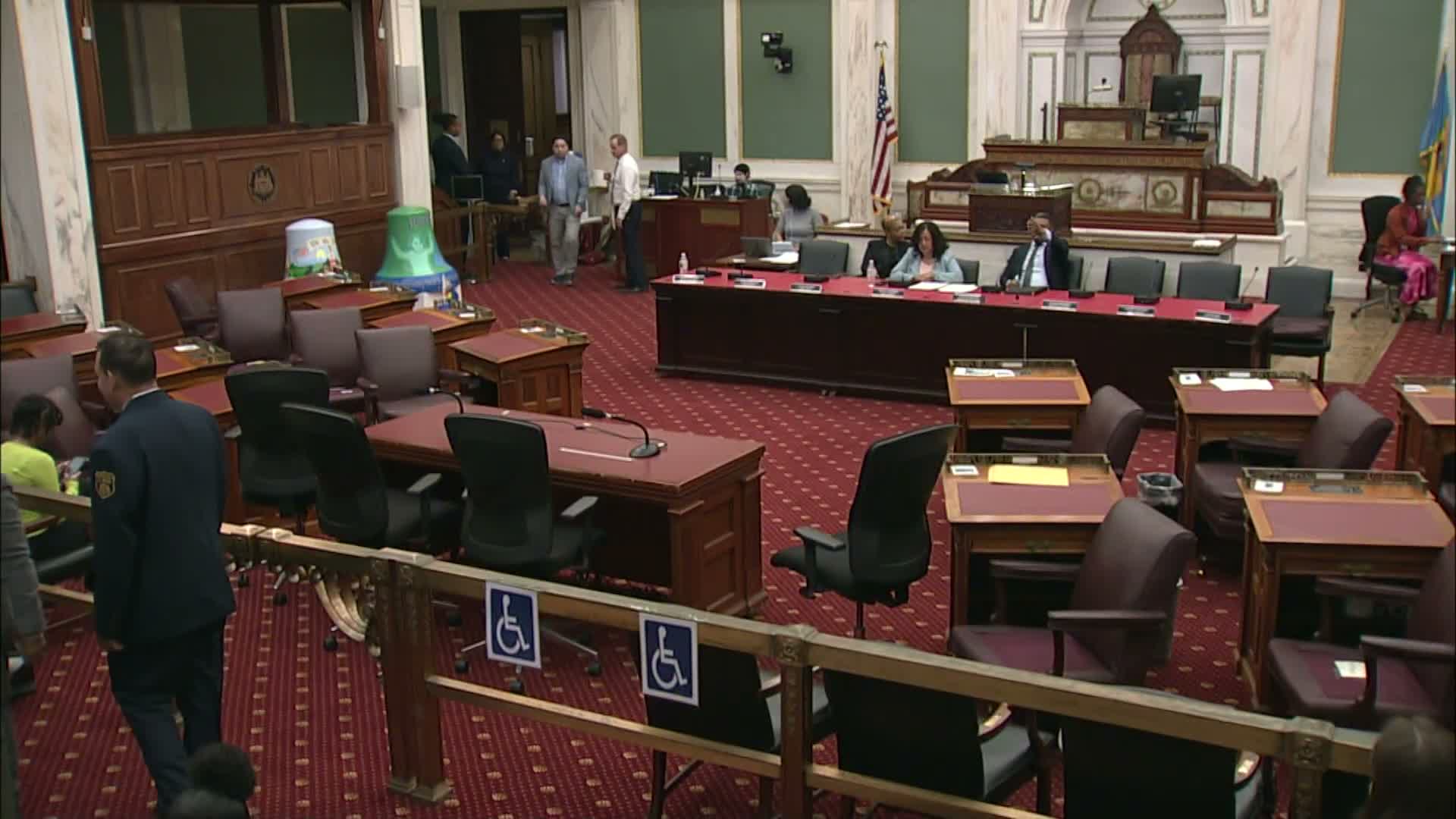
Summary
City council's public hearing brought clinicians, researchers and community groups to outline shortfalls across abortion, prenatal, postpartum and survivor services, warning of clinic closures, staffing shortages and immediate funding needs for the Philadelphia Sexual Assault Response Center and other providers.
Philadelphia City Council's Committee on Public Health and Human Services held a public hearing to review the state of the city's reproductive health care system and to identify local steps to protect access amid federal and state policy changes.
Chair Ahmad opened the session by asking witnesses to identify barriers, who is most at risk and what the city can do within its jurisdiction. "When I say reproductive health care, I mean the whole shebang," she said, listing services from contraception and STI care to prenatal, labor and delivery and abortion services.
Dr. Astha Mehta, director of the Division of Reproductive, Adolescent, and Child Health (REACH) at the Philadelphia Department of Public Health, told the committee that reproductive freedom "is not a single service. It is infrastructure." She outlined ongoing city programs including prenatal access at city health centers, a planned early-pregnancy public-health campaign, maternal mortality review processes and an active severe maternal morbidity surveillance system. Mehta said clinic closures and workforce instability were concentrating care in fewer facilities and that misinformation and economic barriers were delaying care.
Advocates and clinicians pressed elected officials for immediate budget action. Lila Slovak, director of the Philadelphia office of the Women's Law Project, warned that the Philadelphia Sexual Assault Response Center (PSARC) "is at risk of closing in a matter of weeks on June 30 due to a lack of funds," and asked council to include a $300,000 line item in the city budget to sustain forensic examinations and survivor services. "PSARC needs to be able to depend on Philadelphia," Slovak said.
Planned Parenthood Southeastern Pennsylvania said recent federal policy changes have cut Medicaid reimbursement for certain affiliates and that more than 20,000 Philadelphians rely on Planned Parenthood health centers for contraception, cancer screenings, STI testing and other preventive services. Signe Espinosa, vice president of public policy and advocacy, urged the council to create local funding streams to sustain services should federal reimbursement remain uncertain.
Community groups described how gaps ripple through related services. Testimony detailed strains on perinatal mental-health supports, lactation and postpartum follow-up, school-based health centers for adolescents, and community doula and home-visiting programs. Representatives emphasized that financial instability, transportation, childcare barriers and immigration-related fear reduce timely access to care.
Several witnesses recommended concrete actions: create and publish a comprehensive geographic map of reproductive and perinatal services; invest in school-based health centers and Title X family-planning programs; stabilize community providers and the reproductive health workforce; expand cash-support pilots such as the Philly Joy Bank; and convene hospitals, funders and community providers to explore durable funding and shared responsibilities.
Speakers also urged the city to coordinate with state partners on issues that exceed municipal authority but directly affect access, including venue and liability considerations for community providers and the broader Medicaid funding landscape.
The committee did not take votes. Chair Ahmad said the hearing was the start of a sustained effort to translate testimony into budget and policy recommendations and that the committee would follow up with witnesses and city agencies on specific requests, including PSARC funding and the feasibility of a comprehensive services map.
The committee expects further outreach and will receive additional written testimony; Council Member Kendra Brooks and the Reproductive Freedom Task Force also plan a public "people's hearing" later in the week to gather more community input.