MDHHS outlines plan to spend $173 million federal rural health award; lawmakers press on scoring, distribution and oversight
Loading...
Summary
Michigan Department of Health and Human Services senior deputy Beth Nagle told the House Appropriations Subcommittee the state received $173 million from CMS’s Rural Health Transformation Program and outlined grant categories, distribution methods and oversight; legislators asked about scoring, rural prioritization, administrative caps and spend‑out timelines.
Michigan received $173 million from the federal Rural Health Transformation Program and the state Department of Health and Human Services is moving to match its proposal and distribute funds to rural communities across a range of initiatives, the department told a House appropriations subcommittee.
Beth Nagle, senior deputy director for policy, planning and operations support at MDHHS, presented the department’s plan on the program and the adjusted budget on behalf of the agency. She said the federal program, created in H.R. 1 and administered by the Centers for Medicare and Medicaid Services, funds transformational projects over five years. "Michigan received a $173,000,000 award," Nagle said, and MDHHS revised its submitted budget to align with the award without cutting proposed activities.
Nagle described four broad areas the state proposed to fund: transforming rural health through partnerships (chronic disease prevention and collaborative care), workforce development (pipelines, rural residency and recruitment/retention support), interoperability and technology (EHR upgrades, telehealth, data integration) and care closer to home (discharge planning, hub‑and‑spoke models, mobile care and supports for older adults). She said the department set aside money for tribal health, evaluation and technical assistance and that CMS capped administrative costs at 10 percent.
The department plans to move funds two ways: directed grants in which MDHHS identifies an entity and scope (for example, Area Health Education Centers for high‑school‑to‑health‑care pipelines) and proposal‑based grants open to a wide array of applicants. Nagle said the department will use the Federal Office of Rural Health Policy dataset to identify 58 fully rural and 17 partially rural Michigan counties as a starting point, then apply prioritization factors — including percent rural population, chronic disease prevalence, access to hospitals and maternal and mental health services, Medicaid prevalence, child poverty and share of older adults — to target the highest‑need areas.
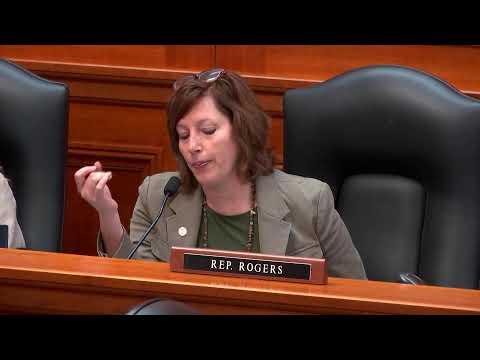
Lawmakers pressed the department on several issues during the question period. Members asked whether MDHHS had requested its CMS score after the agency’s comparatively small award and whether the state could earn additional points by adopting related legislation. Nagle said MDHHS had only recently been assigned a CMS project officer and planned to request the state’s score; she explained CMS’s scoring mix includes an equal split across states and many graded metrics and noted outside estimates put Michigan roughly where MDHHS’s result landed.
Representatives also pressed MDHHS on operational details: how quickly the state can obligate and spend the funds, how MDHHS will ensure rural applicants that lack grant‑writing capacity can compete, how the department will track that dollars actually reach rural communities rather than remain in Lansing for studies or administration, and how CMS rules limit use of funds for broadband. Nagle said funds must be obligated in the period between 12/29/2025 and 10/30/2026 and can be spent into the following year; she emphasized recipient and subrecipient monitoring and said directed grants and partnership arrangements with statewide associations are intended to reduce administrative burden on small rural applicants.
On provider payments and the program’s budget rules, Nagle said CMS allows up to 15 percent of the award to correspond to payments to providers but that those payments must be tied to a proposed initiative and must not duplicate other funding; MDHHS must balance that constraint with the 10 percent administration cap the agency must track separately.
Committee members raised sustainability questions and referenced previous statewide efforts, asking how programs funded by a five‑year federal grant would continue after Year 5. Nagle said demonstration of impact through evaluation was a central goal and that some investments — especially in technology — could change care delivery without requiring ongoing operating funds.
Nagle also reported MDHHS received 226 advisory council nominations after a Jan. 13 call for applicants and hopes to convene the advisory council in the spring; she provided a legislative contact for follow‑up and directed members to michigan.gov/rhtp for the full narrative and sign‑up information.
The subcommittee did not take a substantive vote on the grant program during the hearing; it approved the minutes from its June 24 meeting by unanimous consent. The committee chair closed the hearing and said members will continue oversight as MDHHS begins implementation.