
EGLE geologic‑resources unit flags workforce pressures, upgrades WAT and readies for geothermal, hydrogen and carbon storage
Get AI-powered insights, summaries, and transcripts
Subscribe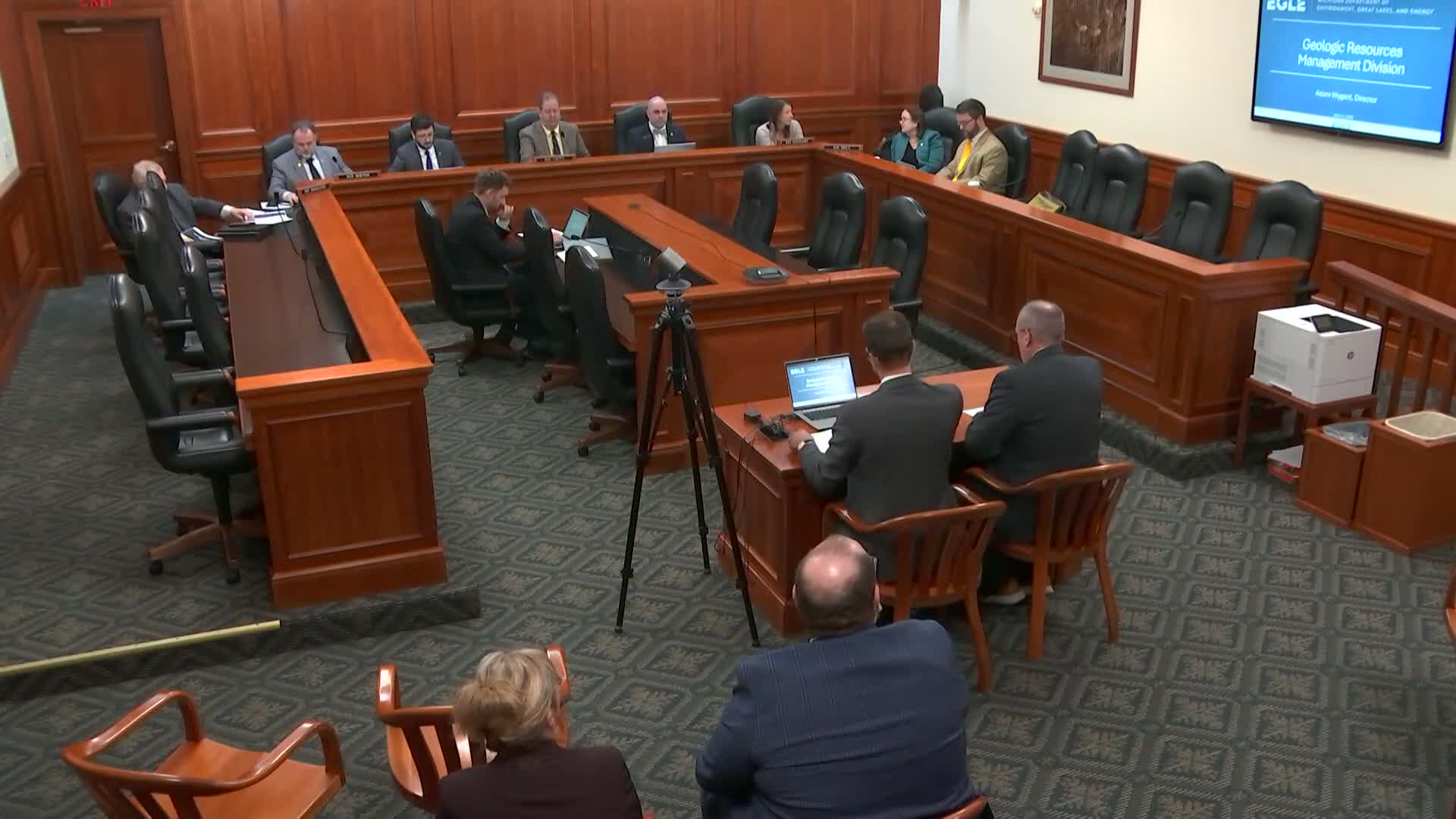
Summary
EGLE’s Geologic Resource Management Division told legislators it faces staffing shortfalls and growing workload from water‑withdrawal reviews, geothermal and carbon storage proposals; the division highlighted upgrades to the Water Withdrawal Assessment Tool (WAT), orphan‑well plugging with IIJA funds and an EPA grant opportunity for Class VI carbon storage readiness.
A senior representative of EGLE’s Geologic Resource Management Division (GRMD) told the House Appropriations Subcommittee that the division administers 13 regulatory programs — including oil and gas, mining, large‑quantity water withdrawals and underground injection control — and is confronting significant recruitment and workload pressures as experienced staff retire.
The presenter said GRMD employs roughly 70–76 people but has seen a wave of retirements that left nearly half the staff with less than five years of experience. The workload includes permitting and inspection for extractive industries, groundwater modeling and establishment of monitoring networks. The division also manages the Upper Peninsula Geologic Repository and the new groundwater data unit intended to provide public, near‑real‑time groundwater information.
Water withdrawals and tools: The director said the Water Withdrawal Assessment Tool (WAT) has been upgraded and now “contains the latest and greatest code from the USGS,” and that GRMD has hard‑wired three primary groundwater solutions into the tool so regulators and users are working from the same dataset. He also said about 30 water management areas no longer have allocation capacity under the agency’s depletion budgets, making site‑specific evaluations critical.
Orphan wells and restoration: GRMD described federal IIJA money being used to plug and remediate hundreds of orphan wells, leveraging state funds and accelerating cleanup of legacy contamination.
Emerging industries and regulatory gaps: The division highlighted growing interest in geothermal (including deeper closed‑loop systems that can penetrate freshwater aquifers), geologic hydrogen and helium exploration, and a potential expansion of underground carbon storage. The GRMD representative said EPA is reviewing proposed Class VI CO2 storage permits and EGLE has a $1.9 million EPA grant included in the budget request to develop a state Class VI program and associated administrative rules so Michigan could seek primacy if federal approvals proceed.
Why it matters: The witness urged legislators to consider sustained funding for staffing, monitoring networks and IT/cybersecurity costs for the agency’s databases. He said those investments support careful, site‑specific reviews of withdrawals and resource protection as development and climate pressures increase water‑use demands.
Next steps and follow‑ups: Committee members pressed about capacity planning for highways, stormwater, and future large users such as data centers; EGLE staff said local master planning and community projections drive engineering approvals and that the agency uses its engineering review to balance future needs against distribution and water‑age concerns.