
Senators outline supplemental that leans on reserve to cover disaster aid and higher‑education shortfall
Get AI-powered insights, summaries, and transcripts
Subscribe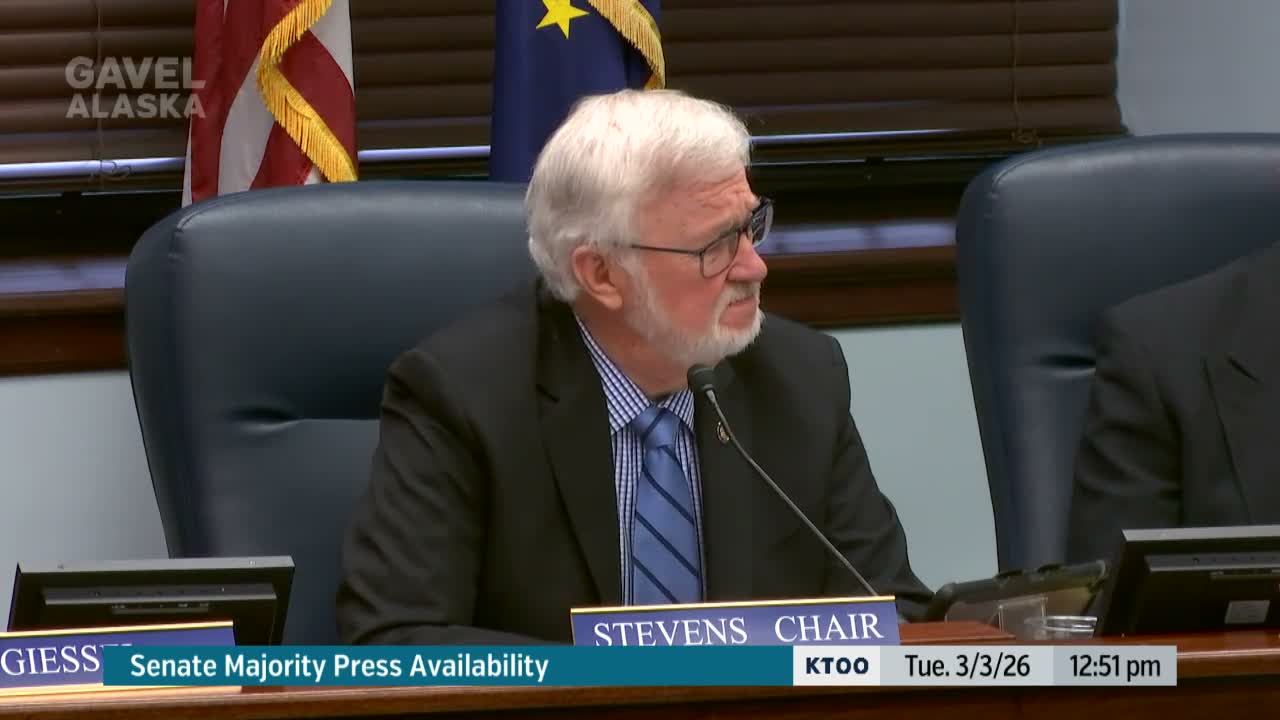
Summary
Senate leaders described a supplemental budget that mainly pays previously incurred costs — disaster relief, fire suppression federal matches and a $129 million replenishment for the higher‑education fund — and warned using the Constitutional Budget Reserve will require a three‑quarter vote.
Senator Hoffman told reporters the supplemental budget the Senate Finance Committee passed in committee largely covers previously incurred operational costs and requests from the Dunlevy administration, including disaster relief, fire‑suppression federal matches and a $129,000,000 transfer to replenish the higher‑education fund that had been used to balance the budget.
The supplemental, Hoffman said, is unusual this year because it draws from the Constitutional Budget Reserve (CBR) rather than general fund appropriations. “To access that fund requires a three‑quarter vote,” Hoffman said, noting that the majority of the supplemental’s items represent money already spent and requested by the administration.
Senator Stevens said the Senate plans to put the committee substitute on the floor next week, pass the supplemental and send it to the House for concurrence before sending it to the governor for signature.
Committee members singled out specific amounts Hoffman listed: roughly $40,000,000 for disaster relief, $35,000,000 for the whole‑long disaster category, $99,000,000 tied to federal fire‑suppression match, and an additional $30,000,000 held in reserve pending developments before June 30. Separately, the $129,000,000 line item is intended to restore the higher‑education fund that had been tapped to balance prior budgets.
Several senators emphasized that the supplemental pays bills already incurred and therefore is difficult to reduce. Senator Hoffman and others also flagged rising costs in corrections and the Department of Transportation, saying those increases are driving the need for future scrutiny: the finance committee plans additional presentations to drill into corrections’ rising expenditures.
Senator Giesland noted lawmakers are also discussing structural revenue options to avoid repeatedly tapping one‑time funds, mentioning proposals from Senate Bill 227 such as an S‑corporation net‑income tax threshold and other revenue tools to address a multi‑billion‑dollar structural deficit.
The briefing closed with senators urging caution around one‑time oil‑price windfalls and emphasizing the need for longer‑term revenue strategies rather than relying on temporary price spikes. The Senate expects to consider the supplemental on the floor next week; no final floor vote had been recorded at the time of the briefing.