Committee advances bill raising select court fees, including OCAP charge from $20 to $60
Loading...
Summary
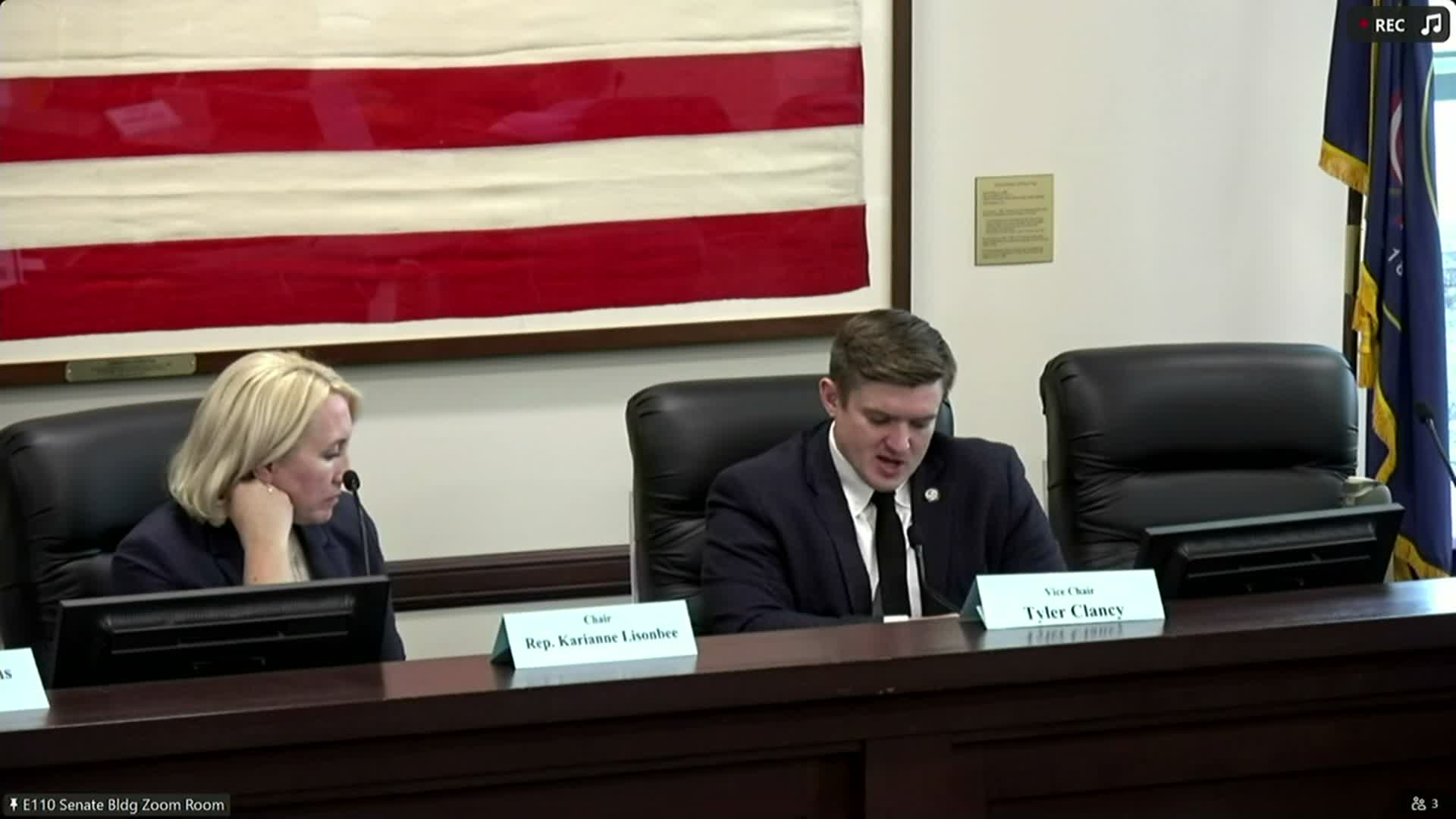
The House Judiciary Committee favorably recommended SB 283, which raises several civil filing fees and increases the Online Court Assistance Program fee from $20 to $60 to preserve court staffing and maintain OCAP services, after court administrators and prosecutors explained operational needs.
The House Judiciary Committee favorably recommended Senate Bill 283, a measure that adjusts a set of court fees and modifies the Online Court Assistance Program (OCAP) fee structure to respond to recent budget pressures.
Senator Wyler presented the bill and highlighted the rationale: the courts faced funding reductions that threatened roughly 30 full-time-equivalent positions and the fee changes were developed collaboratively with legislative fiscal analysts to preserve court operations. Assistant State Court Administrator Michael Drexel told the committee the courts had identified statutory language that required assessment of certain fees; the substitute would remove or change that language and explicitly increase several filing fees to offset the budget gap.
Drexel outlined specific changes in the first substitute: increases to civil complaint filing fees (two categories) by $15, a $25 increase to the divorce filing fee, and a $25 increase for the writ for garnishment fee. He also described raising the OCAP access fee from $20 to $60 — an increase some committee members called substantial but which the court administration said was the first adjustment in many years and intended to sustain the online assistance program.
Brett Robinson of the Salt Lake County District Attorney’s Office and other prosecution representatives supported the change, saying it corrects a statutory interpretation that would have required prosecution offices to pay for certified copies and that the substitute protects operations across offices.
Committee members asked about the fiscal note and operational impacts; the sponsor and court administration said the substitute includes coordination language and that stakeholders continue to refine details. The committee adopted the first substitute and favorably recommended SB 283 by voice vote.
The bill will proceed to the House floor for consideration.