
Residents warn drainage board that Hexagon solar plans could damage century‑old tiles and worsen flooding
Get AI-powered insights, summaries, and transcripts
Subscribe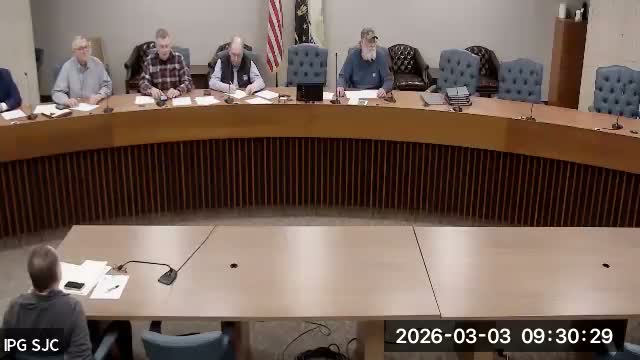
Summary
Residents used privilege of the floor to present a binder and maps showing large solar proposals (described as 2,000 to 7,047 acres in different maps), urged limits near county tile lines and urged the board to require engineered detention and tile protections; county counsel materials describing the board's statutory powers were also presented.
At the meeting's privilege‑of‑the‑floor period, multiple residents pressed the St. Joseph County Drainage Board to consider long‑term drainage and tile protections before large solar developments advance.
A resident presenting materials said an initial Hexagon map showed about 2,000 acres but a subsequent building permit map in July 2024 showed as much as 7,047 acres, and he asked the board to review the binder of maps and technical materials he provided. "This was in June 2024 ... two weeks later the map changed from that to that with nobody's knowledge," the presenter said, and urged the board to review the documentation.
Several speakers — including contractors and long‑time residents — warned that driving piles and constructing access lanes for utility‑scale solar could damage subsurface field and county drainage tile that are sometimes a century old. Alan, an excavator, noted that many private lateral tiles and laterals could be damaged by piling and urged the board to require developers to plan for private tile repair as well as county tile access corridors.
Legal counsel and statutory briefing: Loreen White of White Legal Services reviewed the drainage board's statutory authority under Indiana Code 36‑9‑27 and pointed to a Saint Joe County ordinance section in the binder addressing ground‑mounted solar development standards; she said the drainage board may deny drainage plans that fail to meet local stormwater capacity and design standards, but also warned that grandfathering could affect which rules apply.
Recommendations from the public included requiring engineered detention basins with controlled outlets to maintain predevelopment flow rates, mapping and protecting existing drainage paths and tile systems, and clear repair and restoration commitments so neighboring landowners are not left with damaged infrastructure.
The board did not take a formal action on the solar project at the meeting; residents asked that the drainage implications be considered when future permit or plan reviews are scheduled so the board can ensure existing drains and tile systems remain serviceable.