Get Full Government Meeting Transcripts, Videos, & Alerts Forever!
Get email alerts on the Tax Increment Financing topic
No spam. Unsubscribe anytime.
Paris council tables vote on proposed tax-increment financing zone after public questions
Summary
City consultants laid out a plan to create a Tax Increment Financing (TIF) reinvestment zone covering roughly 2,176 acres to fund downtown projects; after detailed questions from council and public concerns about boundaries, spending and missing packet materials, the council voted to table the ordinance for further review.
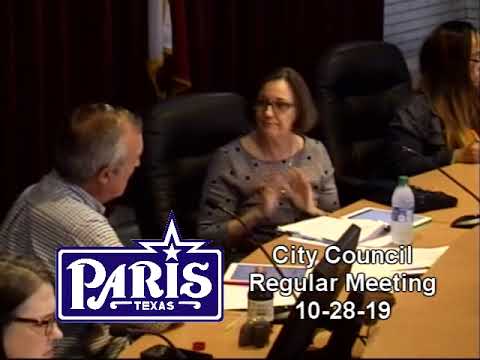
The Paris City Council on Oct. 28 heard a technical presentation on a proposed tax-increment financing reinvestment zone intended to raise money for downtown improvements but voted to table the ordinance so members could review the full packet and ask follow-up questions.
Consultant Larry Klein, who identified himself as a construction consultant with Richards, Texas, told the council that a TIF captures increases in taxable real property value within a designated zone and channels the increment into a fund for public improvements. "When you create the tax increment financing district, the base tax value on the area is set at that amount," Klein said, describing the mechanism and noting it typically covers streets, utilities and other public infrastructure.
Klein outlined financial projections in the preliminary finance plan: a maximum total public-project cost estimate of $25,500,000, projected TIF income to the fund of about $14,700,000, and a 30-year term beginning Jan. 1, 2019 and ending Dec. 31, 2048. He said projected build-out new improvement value in the zone could be roughly $3.39 billion over 30 years.
Residents and council members raised several concerns. Skipper Steely, a resident, warned that stretching the zone across multiple colored parcels could invite contention over which area’s projects are funded. "How are we gonna get over the argument that we wanna spend it out here in green versus the pink?" Steely asked, urging representation for each district on any recommending board.
Richard Thompson, another resident, asked whether large projects started in one area would be finished, saying, "You're gonna finish projects when you say you're gonna do all this? Are you gonna finish the downtown?" Klein and staff said the board and council together would prioritize and control project completion.
Council members also objected to missing packet materials. One council member said they had been "operating blindly" without the exhibits Klein referenced; staff made copies during the meeting and the council agreed to keep the public hearing open for review. Given the complexity and the need to study the draft ordinance and exhibits, the council ultimately moved to table the ordinance until the next meeting so members could review the documents and avoid a rushed approval.
The tabling preserves the council’s discretion to refine the proposed percentage of tax increment to allocate to the TIF fund (the consultant used a 50% example during the presentation) and to clarify board composition, eligible projects and geographical boundaries. The council left the public hearing open to accept further written materials and to allow staff to return with clarified language at a future meeting.
Next steps: staff will provide the complete ordinance exhibits and a revised schedule of deliverables for council review before the council again considers an ordinance to create the TIF zone.