Get Full Government Meeting Transcripts, Videos, & Alerts Forever!
Get email alerts on the Public Safety Housing topic
No spam. Unsubscribe anytime.
Paris council debates 'crime‑free' ordinance, asks staff to focus on motels and hotels
Summary
The Paris City Council on Sept. 9 discussed a proposed crime‑free zone ordinance aimed at hotels and extended‑stay properties, heard police calls‑for‑service data and Fair Housing Act concerns, and directed staff to narrow the draft to motels and hotels and return with a scaled proposal.
The Paris City Council on Sept. 9 discussed a proposed "crime‑free" safe‑zone ordinance for hotels, motels and multi‑housing and directed staff to scale the proposal back to focus initially on motels and hotels.
Dina Nicholson, who identified herself as a Paris resident, urged the council to adopt the model ordinance, saying the program has worked elsewhere and citing local incidents. "It's getting out of control," she told the council, and she said she and other property owners had circulated petitions supporting the measure.
Police data presented during the meeting showed wide variation in calls for service across properties. "America's Best Value Hotel ... had a 103 calls for service," Police Chief Henley told the council while explaining patrol and counting methods. He also recommended a tiered threshold — higher scrutiny for properties with more calls — similar to what Grand Prairie uses.
At the same time, Chief Henley warned about legal limits. "We have some concerns about some of the Fair Housing Act implications," he said, noting the city is more likely to face legal risk if the ordinance applies to people’s permanent homes rather than transient lodging.
Council members questioned inspection burdens and costs embedded in the sample Grand Prairie ordinance, including mandatory unit inspections and per‑unit fees. One council member said parts of the draft were "pretty onerous" and could force some operators to close; another suggested beginning with hotels and motels to reduce fair‑housing exposure.
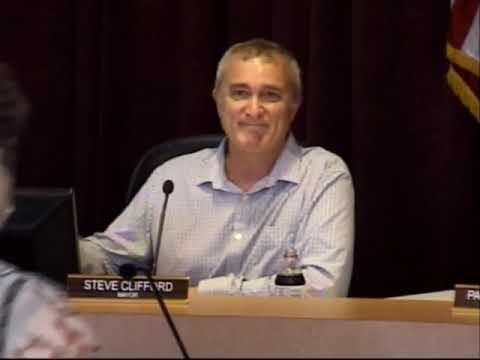
After discussion the mayor summarized the direction: "So we got a consensus at least that we'd like to look forward to this in a somewhat more limited fashion — only motels, hotels, and the less onerous things — the things that ... would have the most effect." Staff was asked to return with a narrowed draft and recommended thresholds for inspections and enforcement.
Next steps: staff will rework the draft ordinance to focus on motels and hotels and present the revised proposal at a future council meeting.