
Greendale board approves middle-school program changes adding tiered supports and daily morning meetings
Get AI-powered insights, summaries, and transcripts
Subscribe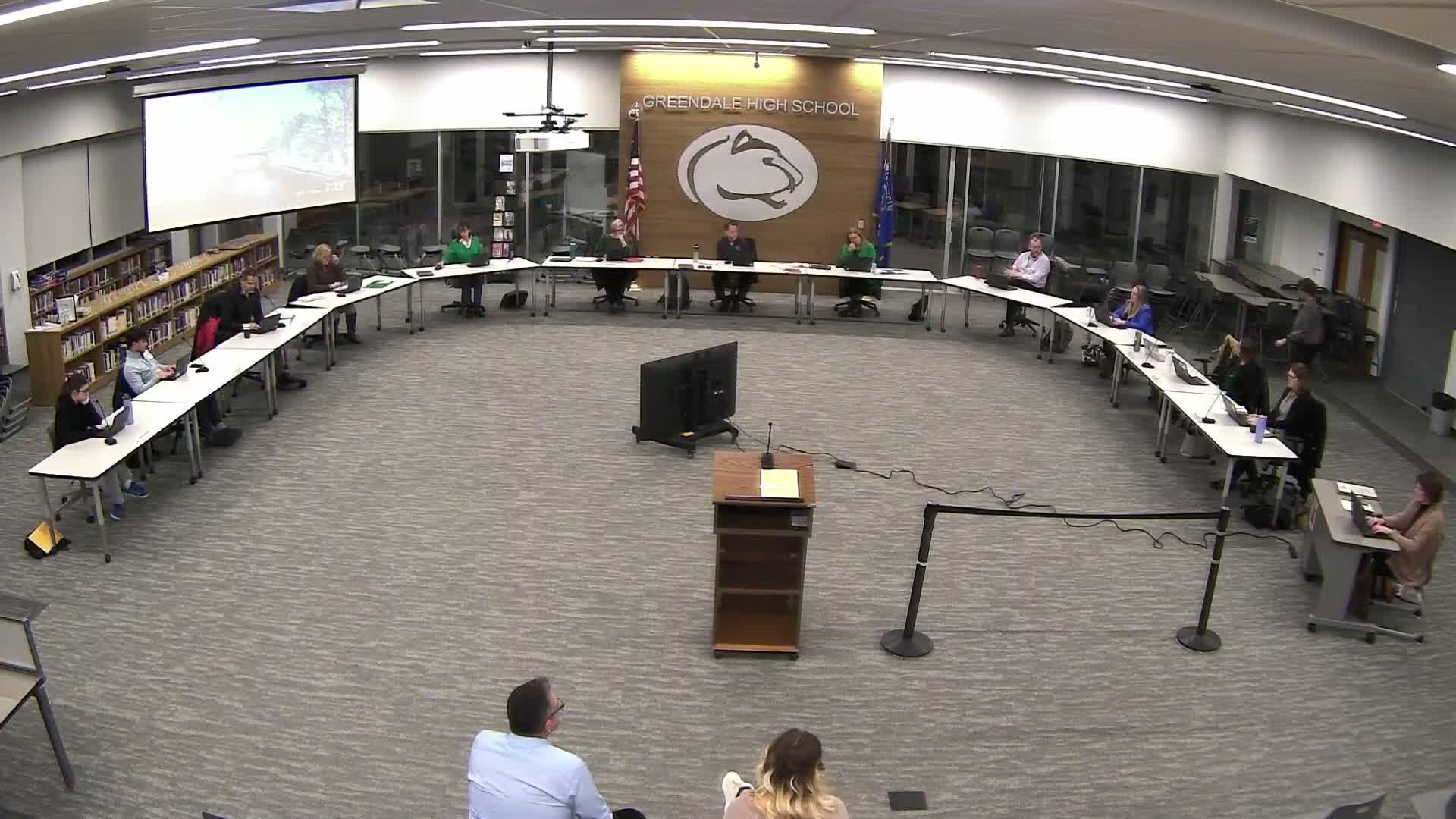
Summary
The Greendale School District board voted to adopt programmatic changes at Greendale Middle School that add a 30-minute tiered-support period for reteaching/enrichment and a daily morning meeting; the move follows months of community engagement and drew debate over teacher workload and schedule logistics.
The Greendale School District board voted to approve programmatic changes at Greendale Middle School that create a dedicated 30-minute tiered-support period for interventions and enrichment and implement a daily morning meeting for students.
Administrators and Principal Ray Curry framed the changes as a response to a proficiency gap: Curry said about 200 middle-school students are not meeting grade-level expectations in reading and math and argued the additional tiered-support time will allow teachers to reteach to mastery and provide targeted enrichment. "Tiered support, reteach and mastery is a non-negotiable here at Greendale Schools," Curry said.
The measure was put to a roll-call vote after extended public comment and board discussion and passed. A motion to approve the middle-school program changes (agenda item 3.2) was moved and seconded and the board voted to adopt the programmatic shifts; administration said the approval provides direction to begin implementation and to return data to the board through short-cycle reports.
Why it matters: Administrators said the model preserves curricular music and other encore offerings while adding time specifically for reteaching and targeted supports. Curry told the board that the proposed structure keeps a 53-minute Tier 1 instructional block and adds a 30-minute Tiered Support window for small-group intervention, reteaching and enrichment, with music lessons stabilized for a single day and time so students no longer lose core instruction for a lesson.
Parents, students and staff gave mixed feedback during public comment. Student Fiona Glorioso told the board that theater and music helped her find confidence and urged the board to protect arts programs: "Cutting them would be like taking away a lifeline for some students who need them most," she said. Several parents and educators urged care with change management and voiced concern that the program's logistics—teacher prep time, coverage for subs and possible reductions in social-studies and science minutes—must be resolved in implementation.
Board debate centered on two themes: the educational case for more targeted support and the risks of rapid change. One member expressed confidence in the revised plan and pointed to school surveys showing teacher and student support; others urged more outreach and clear plans for teacher collaboration, conferencing and special-education coordination. The board emphasized its governance role in approving programmatic change while leaving daily scheduling details to administration under board policy.
How it will be measured: Administration said it will use a mix of district common assessments and state-report-card measures to track proficiency and growth. Officials committed to reporting benchmark data as part of the district’s existing short-cycle reporting (twice yearly and at the end of the school year) to allow the board to evaluate whether the tiered-support time is improving mastery.
Details and next steps: Administration reported parent-survey results showing 39% of respondents felt the change would improve the student experience, 39% predicted no change, and 21.5% felt it would be negative. Teacher feedback presented to the board indicated majority support for the model (administration cited 76.4% positive feedback for the tiered-support idea and 91.2% support for a morning-meeting curriculum). Administrators said they will begin committee work (e.g., a morning-meeting committee starting March 10) to develop lesson options, professional development and contingency plans for busing, snow days and special-education coordination.
The approval was programmatic rather than a minute-by-minute bell schedule; administration and the board said they will continue iterative design and professional development before any full schedule is finalized.
The board approved the item and asked administration to return regular progress updates and short-cycle data so trustees can evaluate effects on proficiency and equity.
Ending: The board directed staff to proceed with implementation planning and data collection; administrators said they will present short-cycle benchmarks in forthcoming reports and keep the board informed of changes to scheduling details and resource needs.