
Council hears presentation on 30‑year H3 tax exemption as residents press concerns about school funding
Get AI-powered insights, summaries, and transcripts
Subscribe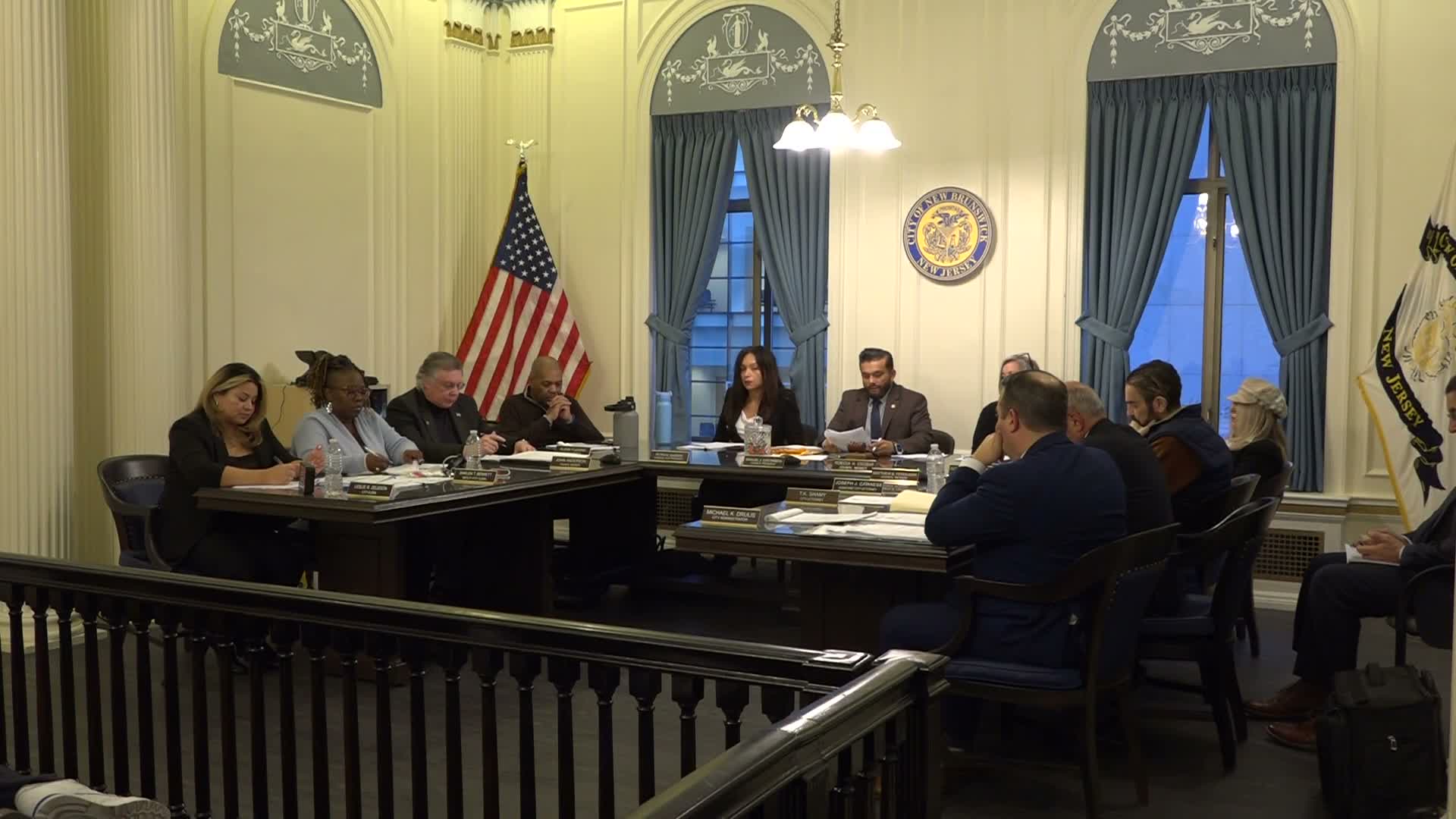
Summary
City staff summarized a 30‑year long‑term tax exemption for the downtown H3 project, saying it will generate roughly $1.8 million a year for the city and include 265 housing units (20% designated affordable); residents asked how the pilot will affect school funding and pressed for more budget detail.
New Brunswick City Council on the agenda read a proposal for a 30‑year long‑term tax exemption and financial agreement tied to the H3 building, which city staff said will bring new office and lab space, housing and revenue to the city.
Dominguez, the staff member who summarized the measure, said the H3 abatement “should provide approximately, and then grow every year, a little over $1,800,000 in revenue to the city,” and described the project as roughly 200,000 square feet of office and laboratory space plus about 265 dwelling units, “20% of which will be designated as affordable.” He said the project would create temporary construction work and under 1,000 permanent jobs.
The presentation also explained how the pilot (payment in lieu of taxes) changes the distribution of local tax receipts. Dominguez described the pilot split as roughly 95% to the city and 5% to the county, and noted that when a long‑term exemption is approved “it shifts the balance so that nothing goes to the school system” compared with current property tax flows.
Several members of the public used the council’s public‑comment period to press that point. Charlie Bridal, who identified himself during public comment, asked directly what the exemption will do “for the schools,” saying the city’s approval of long‑term exemptions repeatedly removes expected revenue that would otherwise flow to the school district. He warned that approving abatements without clearer mitigations could leave increased school‑enrollment costs unfunded.
Council members and staff acknowledged uncertainty about the exact fiscal mechanics and said the city would work through budget details with the Board of Education. Dominguez and other staff described typical pilot structures — residential components often pay a percentage of gross revenue (the presentation cited a 10% residential rate) while nonresidential components can be charged by a per‑square‑foot formula — but did not present a finalized, line‑by‑line budget impact for the school district during the session.
The ordinance authorizing the tax‑exemption agreement was introduced on first reading and the council opened the public hearing for related items. Council members did not take a final vote on the overall long‑term financial agreement during the presentation; next procedural steps include continued budget review and future council consideration.
The council packet lists the developer as “Downtown Club Associates H3” and the resolution and ordinance were introduced for further consideration at future meetings.