Get Full Government Meeting Transcripts, Videos, & Alerts Forever!
Get email alerts on the Housing ADUs topic
No spam. Unsubscribe anytime.
Town hearing on ADU zoning change draws mixed public reaction
Summary
East Hampton’s planning department presented proposed code changes to ease accessory dwelling unit (ADU) rules — reducing minimum lot size and removing some owner-occupancy limits — which drew praise from homeowners seeking rental flexibility and detailed objections from residents warning of increased density and absentee ownership.
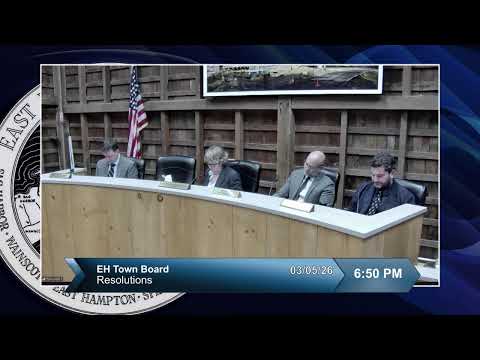
The East Hampton Town Board held a public hearing on March 5 to review proposed zoning changes intended to make accessory dwelling units (ADUs) easier to create across town.
Planning Department staff member Eric summarized the draft local law to amend chapter 255 of the town code, saying it would reduce the minimum lot area for an attached ADU from 20,000 square feet to 15,000 square feet, remove an owner-occupancy requirement so second homeowners can build or maintain ADUs, allow property owners to remain in the rental registry program while keeping an ADU, and adjust related parking and terminology provisions.
Supporters said loosening the rules is a practical step toward expanding the town’s rental options. "The way you eat an elephant is one bite at a time," said Andy Hammer, who told the board he owns a property in town with an ADU and described widespread interest from teachers and other local workers seeking housing. Hammer said he would be open to the board imposing affordable-rent conditions as part of a compromise.
Opponents urged caution. "This latest proposal continues tinkering that risks eliminating reasonable guardrails," said resident David Boot of The Springs. Boot argued that ADU programs have produced relatively few units and that public funds — including proposed New York State forgivable loans of up to $125,000 mentioned in the hearing record — would better serve larger-scale projects by the East Hampton Housing Authority. He recommended keeping owner-occupancy requirements and barring absentee or corporate landlords from participating.
Planning staff told the board the changes have been reviewed by the planning department, the Office of Housing and Community Development and the town attorney’s office; the planning board supported the draft with no recommended changes (letter dated 09/25/2025).
No action was taken at the hearing; the board closed the public comment period after in-person remarks. The town’s next steps will include any formal local-law introduction or revisions, further public hearings as required, and staff-led environmental and planning reviews before adoption.
The board scheduled no vote at the March 5 meeting; additional public hearings and formal legislative steps were discussed as future actions.