
Judiciary Committee approves amendment allowing some legal notices to be published online
Get AI-powered insights, summaries, and transcripts
Subscribe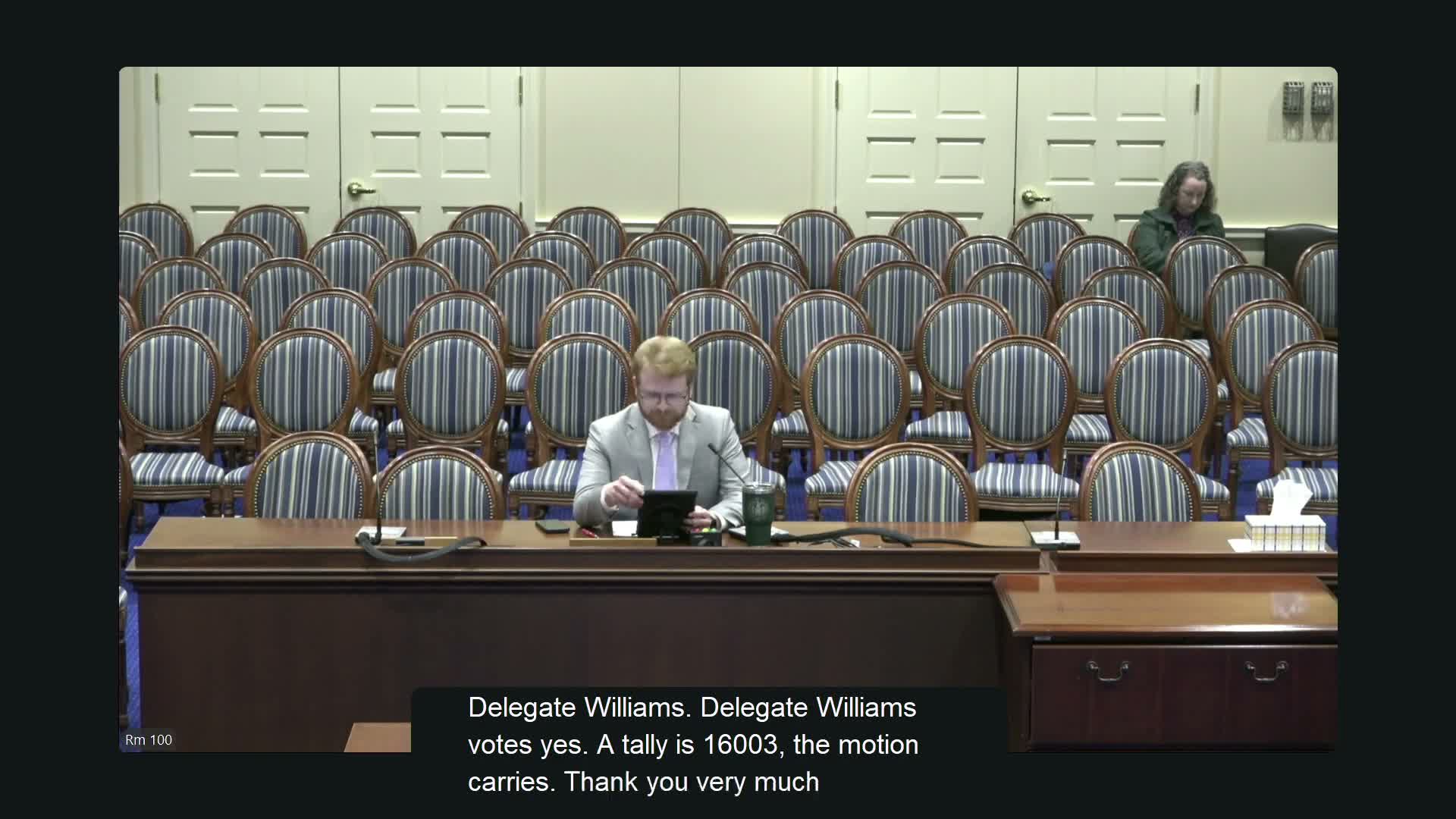
Summary
After a lengthy debate on access for older residents, the Judiciary Committee on March 6, 2026, approved House Bill 10 with an amendment that narrows which digital-only publications may carry legal notices: they must cover more than three counties and have at least one person working in the area represented. The motion carried 11–5; three members were excused.
The Judiciary Committee approved House Bill 10 on March 6, 2026, after members debated an amendment that narrows which digital-only outlets may carry legal advertisements. The clerk reported the final tally as 11 yes, 5 no and 3 excused; the chair announced the motion carries.
A staff member explaining the amendment said it "alters an or to an and" and clarified the digital option: a digital-only publication must "cover local news or information in more than 3 counties in the state" and must have "at least 1 person working at in the area which you represent," according to the explanation provided to the committee. The amendment was offered on the floor before the roll call.
Members pressed on access and equity. One committee member raised concerns about older residents who "are very used to getting their information in print" and said moving notices online "might mean we lose access to information that they actually really care about." Another member countered that, under existing practice, courts treat the act of publishing itself as the legally significant act and do not require proof that someone actually read the notice: "it's the act itself that you've published it and courts are satisfied," the member said.
The committee also discussed how narrow the digital-only option would be under the amendment. The staff member and the subcommittee chair explained that, under the amendment, very few outlets currently meet the criteria; one speaker said there is "really only 1 entity that meets that qualification right now," while noting the landscape could change as online publications grow.
A committee member noted that a related Senate cross-file exists (SP 64) and has been heard there but had not yet been voted on, according to the exchange in committee. Another committee member said AARP had not engaged on this particular bill even though AARP had supported a somewhat similar measure previously.
Committee members repeatedly emphasized that the bill does not prevent a publisher from choosing to print notices: "if somebody wants to put it in print, there's nothing in this bill that stops them from doing it," the staff member said.
The committee moved to a roll call after discussion. The clerk read votes for each listed delegate and reported the tally as 11 yes, 5 no, 0 abstentions and 3 excused; the motion carried.
What happens next: the committee carried HB10 to the next stage with the amendment in place; members noted there is a Senate cross-file (SP 64) that has been heard. The committee did not add any further implementation deadlines or reporting requirements during the session recorded in the transcript.
(Attributions in this article use the speaker labels present in the committee record: the staff member who explained the amendment is listed as "Staff member (S9)" in the record; other speakers are identified where the transcript provided names or functional labels.)