Get Full Government Meeting Transcripts, Videos, & Alerts Forever!
Get email alerts on the Elections topic
No spam. Unsubscribe anytime.
Registrars say state-mandated 14-day early voting drives larger budget ask; BET asks for staffing and per-day analysis
Summary
Registrars told Norwalk BET they are folding state-mandated 14-day early voting costs into FY27 base requests, raising the department’s ask to about $927,000; commissioners requested a follow-up analysis of daily voter volumes, staffing and consolidation options.
Registrars Diana and Stuart told the Board of Estimate and Taxation on March 3 that the registrar office is incorporating state-mandated 14-day early voting costs into its base FY27 request, a change that raises the office’s proposed budget.
"We are incorporating the 14 day state mandated early voting costs into this budget cycle," Diana said, listing supplies, poll worker staffing, training and potential post-election audit costs as drivers. She and Stuart said prior practice was to request contingency funds mid-cycle but that the data now show early voting is a persistent operational requirement that should be budgeted ahead of time.
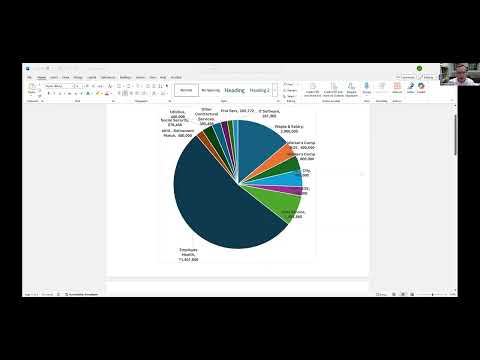
Commissioners focused on the registrar total in the CFO/mayor column — roughly $927,000 in the revised FY27 request — and questioned whether the city’s poll-worker and polling-location footprint could be optimized. BET member Miss Yang noted the headline number and framed it as a cost-per-voter issue: she calculated that the registrar budget equated to approximately $50 per voter based on last year’s turnout, and asked whether consolidation or volunteer staffing could reduce the marginal cost. "It equates to about $50 per vote," Miss Yang said.
Diana and Stuart described several specific operational changes that increase training and staffing needs: new tabulators, a centralized voting system, and a state protocol eliminating early-voting envelopes that requires a new ballot-log and signature process. Diana said the new procedures likely require more training and hands-on staffing during early voting periods.
Registrars acknowledged some offsetting savings (for example, reduced envelope processing on election day) but said uncertainty remains: they are awaiting state guidance on signature and log procedures, and they flagged public-safety expectations (police coverage) as an additional potential cost. They agreed to prepare a follow-up analysis showing day-by-day voter volumes, how early voting affects election-day staffing needs, and options for consolidation or volunteer/stipend models for poll workers.
The BET marked the registrars’ staffing and cost review as an open follow-up to be returned during deliberations.