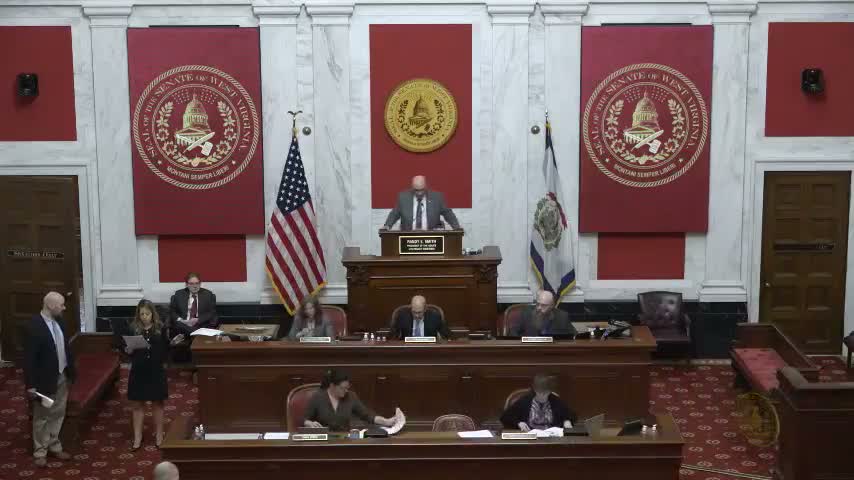
Senate passes Judicial Deference Reform Act after rejecting strike-all amendment

West Virginia Senate · February 24, 2026

Get AI-powered insights, summaries, and transcripts

Subscribe
AI-Generated Content: All content on this page was generated by AI to highlight key points from the meeting. For complete details and context, we recommend watching the full video. so we can fix them.

Summary

The West Virginia Senate rejected a strike-everything amendment to Senate Bill 888 and then passed the Judicial Deference Reform Act on third reading, voting 21–10 with 3 absent. Debate centered on whether the law would inappropriately constrain judicial decisionmaking and how it interacts with federal law.

The West Virginia Senate on third reading passed Senate Bill 888, the Judicial Deference Reform Act, after rejecting a strike‑everything amendment offered by members of the Senate.

Senator from Ohio, speaking in favor of the bill, said the measure would create a new section of West Virginia Code under chapter 55 that requires courts to interpret ambiguous state statutes, regulations and subregulatory documents without granting automatic deference to state agency interpretations. "When there is a tie, the court is to resolve the issue in favor of individual liberty," the senator said, urging passage.

The strike‑everything amendment was moved, according to the record, by Senator Weld and explained on the floor by Senator Frumberg (Senator from Brooke). Frumberg argued the unamended bill "is violative of both our state and our federal Constitution" and said the amendment would narrow the bill's scope, revise definitions, remove a provision requiring ambiguity to be resolved against agencies, and otherwise align the statute with recent precedent. Frumberg told colleagues the amendment would preserve judicial independence while addressing constitutional concerns.

Opponents of the amendment, including the senator who identified themselves as the "Junior senator (second)," said the amendment would soften the bill's protections and remove provisions intended to prevent agency interpretations from supplanting statutory text. That senator listed numbered changes they said the amendment would make — including altering the act's name and removing a "major ambiguity" rule — and urged colleagues to reject the amendment.

Other senators debated whether the bill would improperly direct judges on how to decide cases or whether it merely clarifies the standard of review when a statute or rule is ambiguous. Questions were raised about federal preemption and whether state courts could be required to use a different standard when interpreting federal law; proponents said federal supremacy rules remain in effect and the bill applies only where state law ambiguity exists.

The Senate took a division vote on the Brooke/Frumberg amendment; the clerk announced 13 in favor, 18 opposed and 3 absent, and the presiding officer declared the amendment rejected. After further procedure, the Senate voted on passage of SB 888; the clerk reported 21 yays, 10 nays and 3 absent. The presiding officer declared the bill passed and instructed the clerk to communicate the action to the House.

The debate's transcript references the U.S. Supreme Court decision Loper Bright (commonly cited in federal administrative‑law contexts) and legislative concerns about agency deference and the predictability of administrative outcomes. Supporters characterized the bill as "pro‑business and pro‑individual liberty," saying it would produce more foreseeable litigation outcomes when agencies and courts disagree. Opponents said the bill, as written, risked intruding on judicial functions and could complicate interpretation where agencies have historically filled gaps.

The Senate then received a series of committee reports and conducted first readings on multiple other bills before adjourning.