
APS previews FY27 budgets for transportation, food services and capital projects
Get AI-powered insights, summaries, and transcripts
Sign Up Free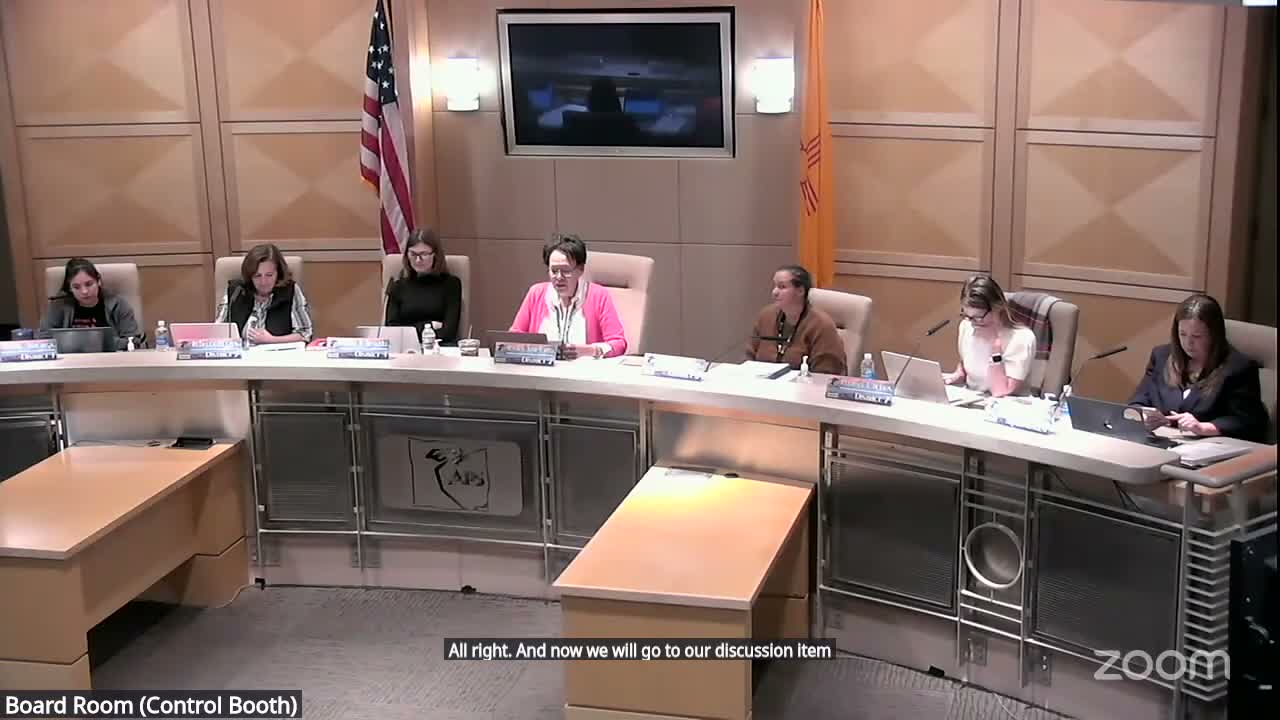
Summary
District finance staff presented high‑level FY27 program budgets including transportation (about $26.5M projected revenue), food and nutrition (about $49M) and a capital program projected at $525M. Presenters described constraints in state reimbursement for transportation, a state scratch‑cooking mandate for meals, and capital priorities tied to voter‑approved bonds and ADA/HVAC work.
District finance and operations staff presented the first FY27 budget briefings to the Albuquerque Public Schools board on March 4, outlining program projections, revenue sources and key constraints for transportation, food services and capital projects.
The district’s budget officer described the state equalization guarantee (SEG) as the primary above‑the‑line revenue source for operations and said APS is forecasting roughly $1 billion in operating resources across programs. Staff emphasized that final allocations depend on the PED unit value, which is typically released in mid‑March.
Transportation leadership said projected revenue for the transportation program is approximately $26.5 million, driven by state funding, while expenses are dominated by salaries, fuel, fleet maintenance and other fleet costs. Transportation staff and the deputy superintendent described limits in the state’s reimbursement model that tie funding to traditional neighborhood routes rather than magnet or cross‑district transportation. The district said it hopes to work with legislators to modernize reimbursement rules to allow equitable access to magnet programs via "superstops" but noted that any expanded routing would require either additional funding or internal reallocation.
On special‑education transportation, the department said roughly 55% of the transportation budget is used to serve special‑needs students — a rising cost driver — and staff described constraints on using SUVs and smaller vehicles because of current rules and federal program restrictions.
Food and Nutrition staff presented a projected budget of roughly $49 million, primarily state and federal funding. A major operational note: the district will implement a state mandate calling for at least 51% scratch‑cooked meals in every school cafeteria at breakfast and lunch next school year. Staff highlighted ongoing student and parent taste‑tests and promised expanded grab‑and‑go and after‑school snack/dinner options where feasible.
Capital staff presented a proposed capital program of approximately $525 million funded by mill levies, general obligation bonds and public school capital outlay. They emphasized the district’s long‑term $7.2 billion capital needs, plans to convert many schools’ evaporative cooling to refrigerated HVAC with recent bond funds, and ongoing ADA and Title IX compliance work. Staff described the role of school design committees — made up of principals, parents, students and teachers — in tailoring projects once the district prioritizes needs.
Board members asked when operational budget presentations and school‑level allocations would be reviewed. Staff said the operational and federal program presentations are scheduled for April 15, with campus budgets already submitted the day of the meeting. The board also heard that outreach included a October 2025 budget survey with about 5,300 responses and district listening tours to inform priorities.
No formal approvals are expected from the presentation; the session was described as an early opportunity for public view and board questions as staff builds the formal balanced budget to submit to PED.