Get Full Government Meeting Transcripts, Videos, & Alerts Forever!
Get email alerts on the Local Economy topic
No spam. Unsubscribe anytime.
Council narrows mobile food‑vending rules: overlay limits, event cap, hours and spacing set; planning review next
Summary
Council reviewed a draft mobile food vending ordinance and set key policy choices — allow vending in nonresidential overlay districts, set per‑property special event permits at two per 12 months, keep a 10‑foot separation between units, and adopt proposed hours (roughly 8 a.m.–10 p.m. Sun–Thu, 8 a.m.–11 p.m. Fri–Sat). The draft will go to the planning commission for formal review.
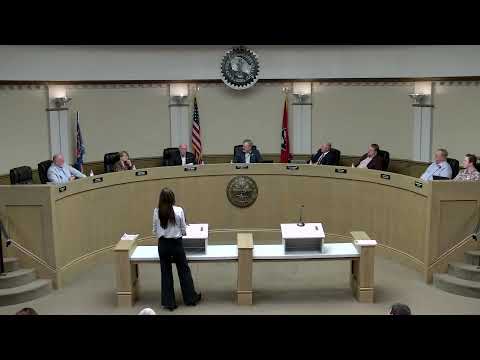
City planning staff presented a final draft mobile food vending ordinance on Feb. 26 and asked the council for policy direction on overlay districts, permit caps, spacing, hours, special-event frequency and alcohol sales in certain overlay districts.
Staff proposed limiting vending to selected commercial overlay districts (C‑1, C‑2, C‑4, C‑5 and C‑6) and leaving industrial and residential zones out of the overlays. The council agreed that the number of mobile food vehicles allowed in an overlay district should be determined when an overlay district application is brought to council, rather than adopting a single static number citywide.
On single‑property special-event permits, council debated allowing two or three events within a rolling 12‑month period; after discussion the council settled at two permits per 12 months for a single property. Fire‑marshal and NFPA spacing requirements led the council to retain a 10‑foot separation requirement between mobile food vehicles.
The proposed hours of operation discussed were 8 a.m.–10 p.m. Sunday through Thursday and 8 a.m.–11 p.m. Friday and Saturday; council members noted that approving those hours does not change any separate alcohol sales restrictions — beer/alcohol from a vendor would still require specific council approval in designated overlay districts (for example, stadium events tied to the Red Wolves venue).
Staff added procedural protections for permit holders, including written notice and an opportunity to cure non‑safety violations before suspension except where immediate public safety risk exists. The draft will go to the planning commission for evaluation before returning to council.
Staff and council emphasized that site constraints and fire‑marshal discretion may modify placement requirements; formal permitting and inspections will govern any final approvals.