
PROC flags concentration in peer‑review workload and asks staff for more disaggregated data
Get AI-powered insights, summaries, and transcripts
Subscribe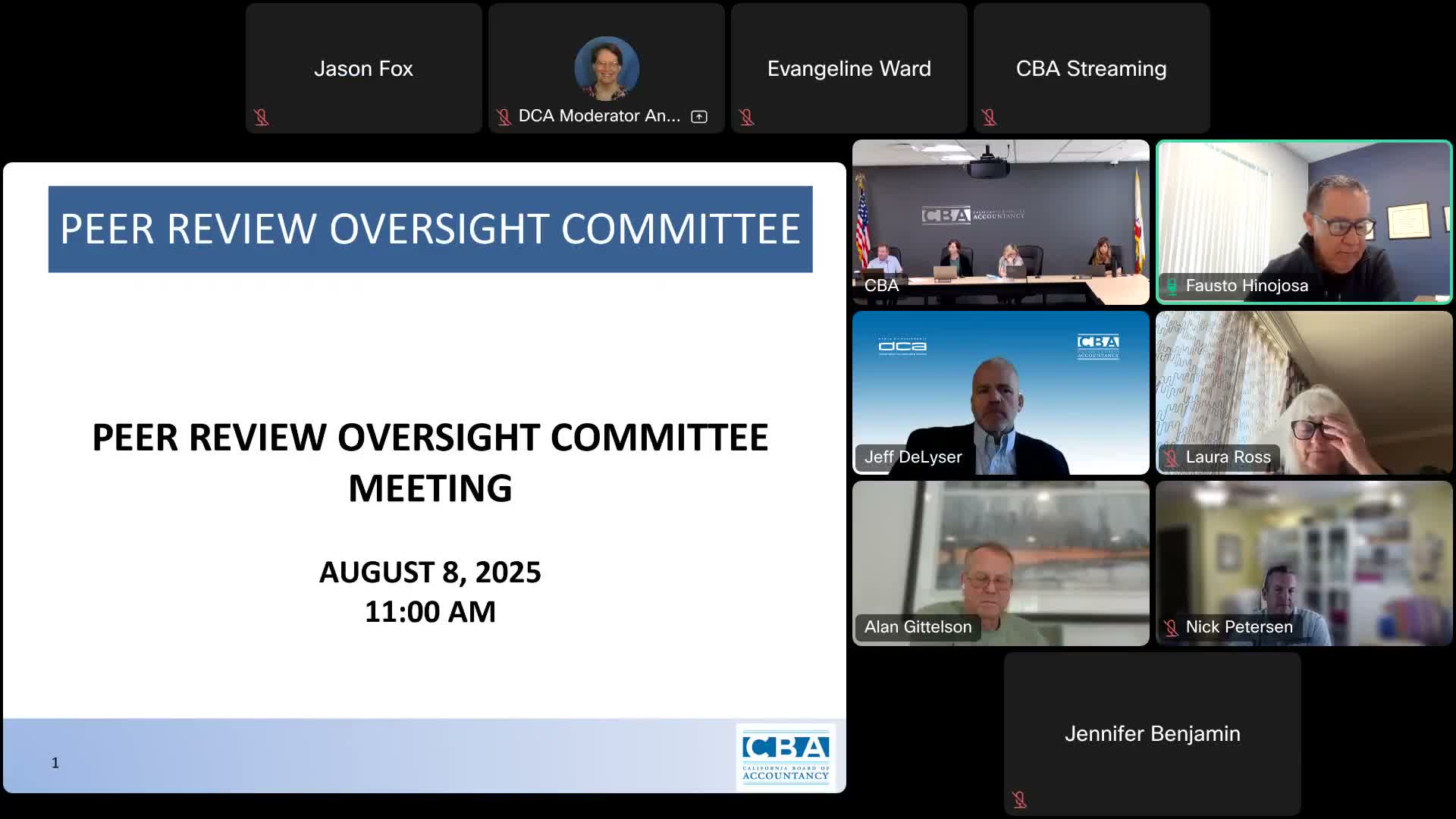
Summary
The PROC reviewed AICPA peer-review statistics showing reviewer-concentration concerns (top reviewers doing a large share of reviews) and asked staff and Cal CPA to pursue demographic and workload breakdowns and consider a roundtable to assess risk and succession planning.
The California Board of Accountancy’s Peer Review Oversight Committee on Aug. 8 examined AICPA peer review statistics for 2023–24 and raised concerns about concentration of peer-review work among a small number of reviewers. Sarah Benedict presented the data and members pressed staff for more disaggregated information to assess risk.
Why it matters: PROC members said a heavy concentration of peer reviews in the hands of a few reviewers or firms could present continuity and quality risks if those reviewers retire or reduce participation. The committee is responsible for oversight and requested follow-up to determine whether the distribution of reviews is a material risk to program integrity.
During the presentation Benedict noted table totals and trends, including a 22% decrease in "must select" engagements from 2023 to 2024 and the record showing a high-volume reviewer(s). Member Jeff DeLeiser asked for confirmation that the top reviewer "did 76 peer reviews" in 2024; Benedict confirmed the figure in the data set but said the reports are anonymized. "We get the information anonymously," Benedict said, and staff and Cal CPA explained a top reviewer entry could represent a firm whose team captain is a partner rather than a single individual.
Committee members proposed targeted follow-up questions for Cal CPA/AICPA to disaggregate data by reviewer demographics (firm size versus sole practitioner), reviewer role (team captain versus other), and retirement/succession indicators. "That could be a firm," DeLeiser said. "The team captain has to be a partner," he added, illustrating why raw counts alone may not show the underlying staffing model.
Cal CPA's Jason Fox said he will confer with peer-review staff to clarify the data and return with context; PROC staff agreed that a roundtable with Cal CPA could help identify the most relevant risk indicators. The committee did not adopt formal remedial measures at the meeting but directed staff to pursue additional data and consider a future agenda item for deeper review.