
County officials summarize WCA legislative priorities: food-share changes, PFAS, courts, renewable energy and transportation funding
Get AI-powered insights, summaries, and transcripts
Sign Up Free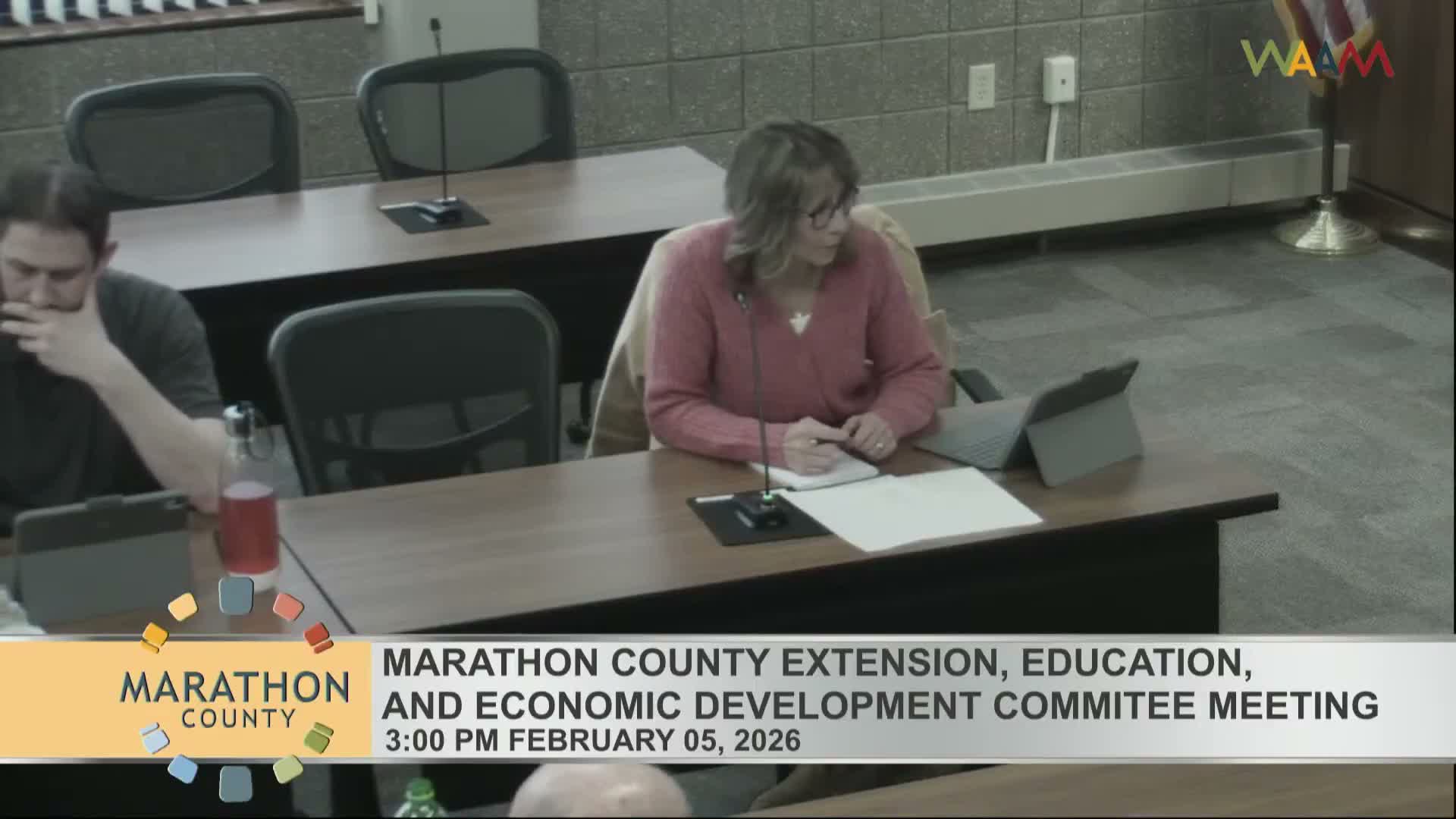
Summary
Committee members reviewed takeaways from the Wisconsin Counties Association legislative exchange: food-share eligibility and penalty concerns for counties, likely PFAS legislation, supplemental court funding, maternal-health bills, renewable-energy siting and battery energy storage regulation, and renewed attention to sustainable transportation funding and affordability data from Forward Analytics.
A committee member summarized key takeaways from the Wisconsin Counties Association (WCA) legislative exchange and legislative updates presented to attendees.
On the food-share program, committee members heard counties are closely following changes to eligibility and the frequency of eligibility determinations; one presenter noted that counties bear responsibility for eligibility determinations and that changes could increase staff time and potential financial penalties if error rates rise.
The presenter said a PFAS bill aimed at liability and funding allocation has been discussed for years and appeared likely to move forward, and that supplemental court funding discussed in the last biennial budget should provide additional county resources for court support staff.
The committee also heard about a maternal-health bill that had been under discussion for some time and was expected to advance. Renewable energy and data-center siting were prominent topics: the committee was told counties are among a minority that have battery energy storage system (BES) ordinances on the books and staff are reviewing recent ordinance updates from other counties for potential improvements. The presenter cautioned that large data-center projects can substantially increase regional energy demand; he recalled an estimate for a single site that could use roughly 1.3% of the state's total energy consumption.
Transportation funding and the need for more sustainable revenue were another theme. The presenter referenced WCA's template resolution supporting sustained transportation funding and said the state gas-tax base is not indexed, which complicates long-term funding for routine maintenance.
Forward Analytics' data framed the affordability conversation: while median income and CPI increases can look similar in aggregate, the presenter said costs for essentials such as rent, medical services and college have risen far faster for many households. Committee members were invited to think about these statewide trends when setting future committee agendas.
The committee scheduled a follow-up presentation at its March meeting from WCA representatives (attorney Andy Phillips and legislative lead Colin Driscoll) to go into more detail about county regulatory authority and renewable-energy siting.