
Washington House approves bill tightening qualifications and decertification rules for sheriffs
Get AI-powered insights, summaries, and transcripts
Subscribe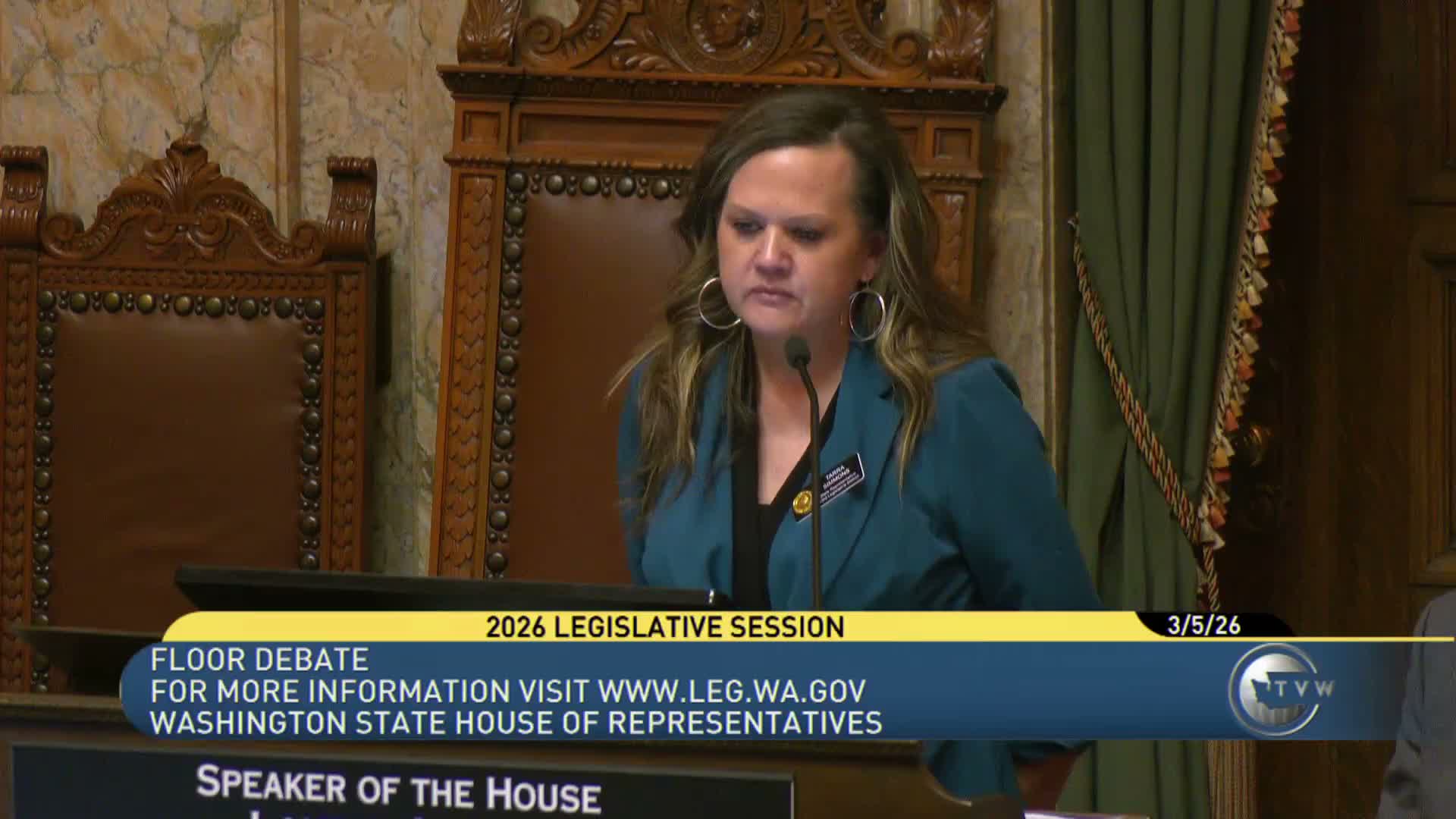
Summary
After hours of debate, the Washington House passed a revised substitute of Senate Bill 59 74 that updates eligibility and decertification processes for sheriffs, narrows subjective checks for candidates and clarifies volunteer and background-check provisions; the final House vote was 54-42.
The Washington State House on March 5 passed a revised substitute of Senate Bill 59 74, a measure that changes how sheriffs and certain law-enforcement leaders are certified and how they may be decertified, concluding a day of extended debate and dozens of roll-call votes.
Representative Nickie Goodman, the bill’s floor sponsor, said the measure aims to strengthen public trust in law-enforcement leadership and to align licensing and accountability standards. “This bill will build confidence and community trust between community and law enforcement,” Goodman said on the floor, asking members to support the amended text.
Supporters argued the bill standardizes eligibility and accountability across agencies and limits subjectivity in candidate screening. The House adopted a key amendment removing polygraph and psychological testing from the eligibility verification for persons running for elected sheriff; that change was described on the floor as an effort to limit intrusive, subjective barriers to candidacy.
Opponents characterized the bill as an inappropriate expansion of unelected power over locally elected officials. Representative Walsh urged a no vote, saying the measure “would substantially, foundationally, and devastatingly change the law” and risk transferring authority away from the voters who elect sheriffs. Lawmakers who opposed the bill repeatedly pressed concerns that an unelected administrative board could be used to override local choice.
Debate on the House floor ranged widely. Several amendments sought to address unfunded-mandate concerns by shifting costs for new background checks to the state; others aimed to protect volunteers and clarify the differences between volunteers and specially commissioned officers. Proponents of state-funded background checks said the change would ease burdens on small counties; opponents warned of new statewide costs.
On the central question of decertification and vacancy, the adopted version clarifies that decertification does not create a vacancy until the commission’s action is final on appeal — including the appellate process — a provision supporters said protects due process while opponents said it still gives an unelected body outsized power. The House rejected multiple attempts to require that removal of an elected sheriff be limited to a superior-court conviction or that vacancies be limited by local opt-out ordinances.
House members also debated timing and oversight provisions, including proposals for sunsets, JLARC reviews and whether counties could opt out of removal provisions; those amendments were not adopted.
The second substitute passed the House on a final roll call of 54 yeas and 42 nays, with two members recorded excused. The bill as amended now proceeds to the next procedural step for enactment.
Supporters said the measure balances accountability and due process for law-enforcement leaders; critics said it risks politicizing certification and undermining local voters’ choices. The bill’s text, as amended on the floor, narrows certain candidate-screening elements and clarifies when decertification becomes final, but leaves in place an administrative decertification pathway that some lawmakers called constitutionally problematic.
The House debate produced several narrowly adopted technical fixes and numerous defeated amendments, but the final package kept the core structure that ties certification standards and a commission-led discipline process to the authority of sheriffs and other leaders named in the bill. The legislature’s record and the floor transcript list each roll-call result for the amendments and for final passage.
The bill now moves forward from the House with the changes adopted on the floor; any further legal or procedural steps, including possible judicial review of disputed provisions, will play out if and when the bill is enacted.
Ending: The House advanced and adopted the second substitute of Senate Bill 59 74 as amended; the clerk announced the final tally and the bill was declared passed by the required constitutional majority.