
House passes amended emissions bill after heated debate over protections for energy‑intensive industries
Get AI-powered insights, summaries, and transcripts
Subscribe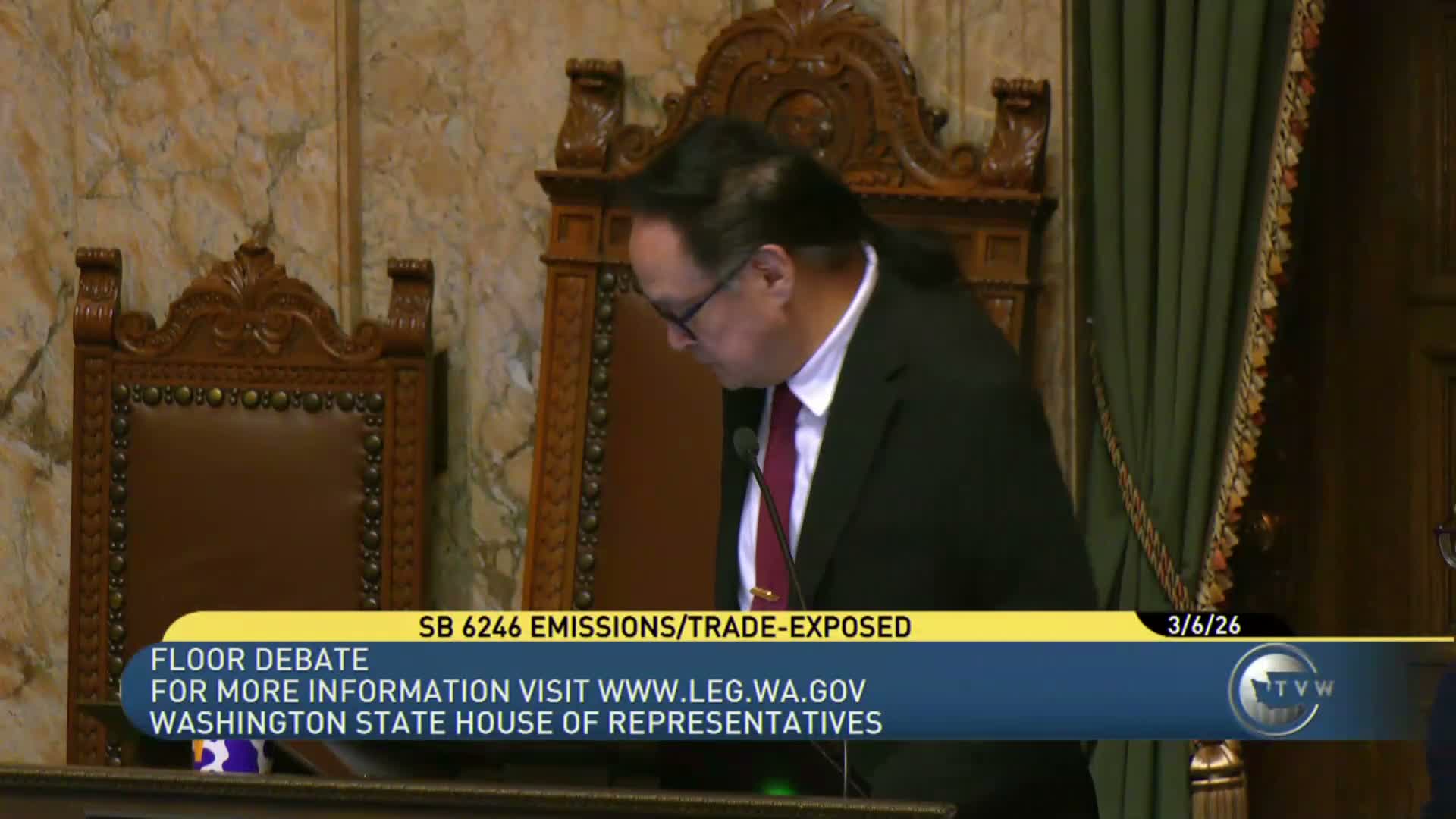
Summary
The Washington State House advanced and passed engrossed S.B. 62‑46 after floor amendments that create carve‑outs and study provisions for energy‑intensive, trade‑exposed (EITE) industries. Supporters said the changes protect jobs; opponents warned the amendments could undermine the Climate Commitment Act’s greenhouse‑gas goals.
The Washington State House voted to pass engrossed S.B. 62‑46, an emissions bill that was amended on the floor to address impacts on energy‑intensive, trade‑exposed industries.
Representative Fitzgibbon, who opened debate on the motion to bring the measures to the floor, told colleagues the finance committee had already reviewed the bills and urged the full House to act: “The finance committee has reported out the 2 bills subject to this motion… the finance committee is a fiscal committee that is entrusted with the authority to report out bills that do have a fiscal impact,” she said.
The floor fight centered on amendments proponents said would shield about 40 EITE facilities—including timber, pulp and paper, aerospace suppliers and refineries—from regulatory penalties that could accelerate plant closures and job losses. Supporters pointed to negotiated terms with major employers and argued the changes guard against “leakage,” in which production moves out of state. Representative D'Oleo said members and industry “sat around the table and rolled up our sleeves and figured out how to craft this bill,” recommending the amended bill as a first step toward decarbonizing hard‑to‑abate sectors.
Opponents argued the changes risked gutting statutory climate targets and, in some cases, raised constitutional concerns. Representative Connors urged caution, saying, “This bill in my personal opinion is unconstitutional for our voters in Washington state,” and urged returning the measure to committee. Other members warned the proposed exemptions could weaken incentives for emissions reductions and make it harder for the state to meet greenhouse‑gas mandates.
Floor votes on a series of amendments were mixed. The striking amendment that ultimately shaped the bill was adopted after a division (56 yays, 31 nays, 3 excused). On final passage the clerk recorded 57 yeas, 38 nays, 3 excused and the bill was declared passed as amended by the House.
The action advances S.B. 62‑46 to the next steps in enrollment and transmittal. Supporters framed the floor changes as a negotiated compromise to protect Washington jobs while creating mechanisms to study and limit leakage; opponents said the legislature should not weaken the Climate Commitment Act without clearer evidence that doing so will preserve both jobs and emissions outcomes.