
Monterey County officials warn HR 1 could shrink Medi‑Cal coverage and strain hospitals
Get AI-powered insights, summaries, and transcripts
Sign Up Free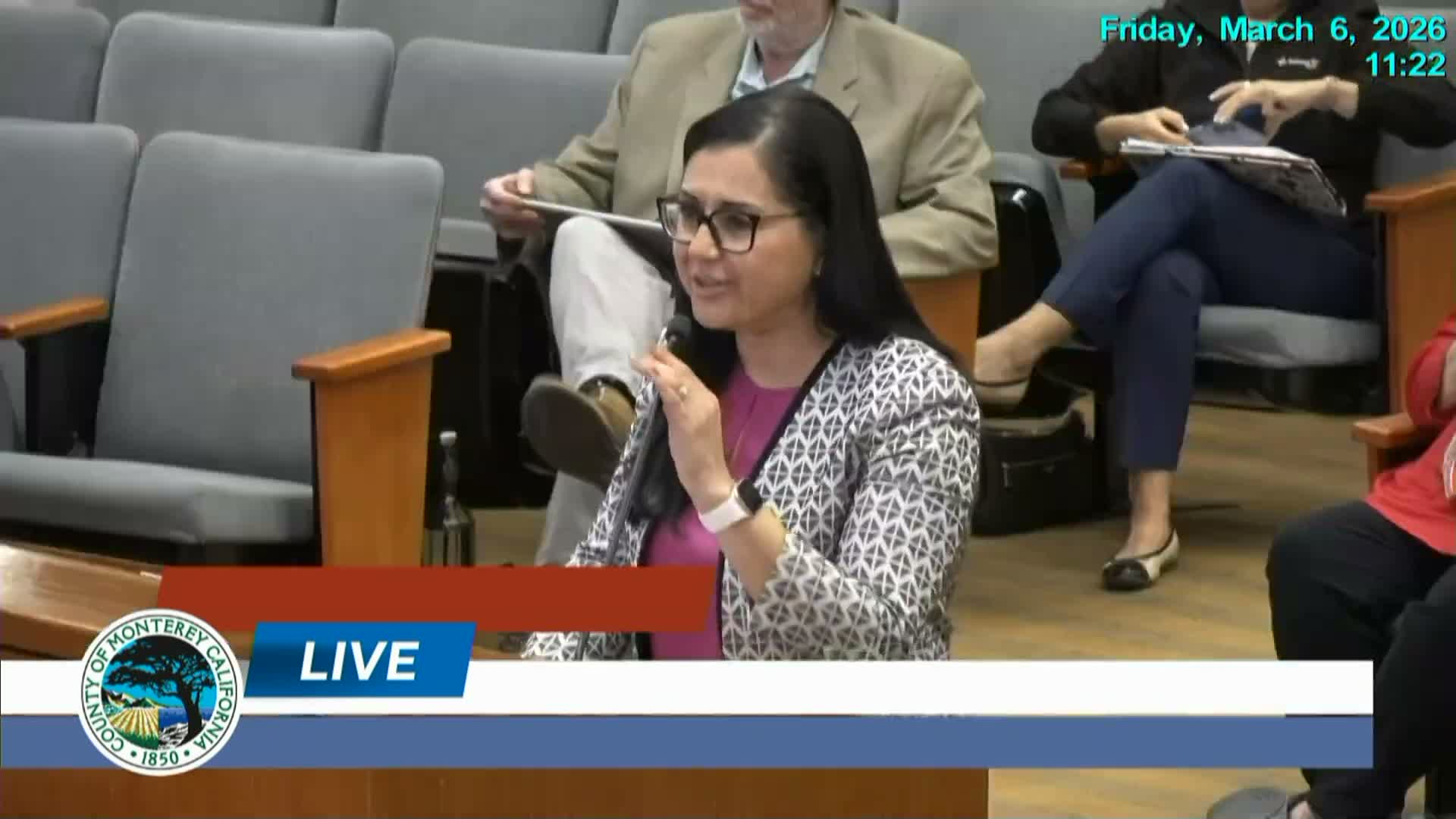
Summary
County health and social-services leaders told state and federal lawmakers that HR 1’s eligibility and payment-change provisions threaten Medi‑Cal and CalFresh access for thousands of Monterey residents and could cut public-hospital funding, urging state and federal interventions.
County health and social-services leaders warned state and federal lawmakers at Monterey County’s legislative workshop that changes in federal law known as HR 1 could reduce health coverage and funding for local hospitals and social programs.
At a presentation focused on HR 1, Elsa Jimenez, Monterey County health department director, said recent federal policy changes eliminated two public-health grants the county relied on — the CalFresh Healthy Living program (about $600,000 annually) and a teen pregnancy-prevention program — leaving only rollover funds to sustain limited programming this year. "We no longer have access to those grant dollars," Jimenez said, adding that the county will try to continue some services at a smaller scale.
Roderick Franks, director of Monterey County Social Services, told the board the law’s phased implementation through 2028 will alter CalFresh and Medi‑Cal eligibility by raising asset thresholds, adding citizenship documentation requirements and reinstating work requirements for certain adults. He said roughly 51,000 local residents fall into the population affected by the work‑requirement expansion (people up to 138% of the federal poverty level), and estimated county technology might auto‑exempt about half of them. "Of the remaining 50%, about 25,000 persons here in the county of Monterey we will have to hand determine whether they have an exemption or are eligible through the work requirements," Franks said. He added a statewide payment‑error metric could expose California to a requirement to fund up to 15% of benefits if error rates exceed the national threshold.
Dr. Chad Harris, CEO of Natividad Hospital, described the potential hospital finance impacts as "profound." He thanked local federal lawmakers for a short‑term extension of disproportionate‑share payments that he said translated to about $14 million for Natividad, and warned of broader reductions in public‑hospital funding tied to HR 1. "We are talking $2,300,000,000 across all the publics from 2028 through 2032…that translates to $76,000,000 over those 5 years for Natividad," Harris said, urging continued state and federal support to avoid cuts to services and staffing.
County and state officials pressed legislators for partnership and funding to blunt the changes. Assemblymember Dawn Addis (joining by Zoom) and Assembly Speaker Robert Rivas both described state hearings and budget steps designed to protect safety‑net programs, including targeted subsidies and legal defenses to preserve federal funds.
The presenters emphasized that many effects will unfold over several years as requirements phase in and as counties train staff and build new systems to administer eligibility. County staff asked lawmakers to consider grant and budget support to cover increased administrative workload and to protect critical programs while the state pursues policy and budget responses.
The workshop did not include any formal board motions or votes on HR 1 responses; supervisors and legislative staff said they will continue working with state and federal offices to seek funding and policy relief.