
Public commenter demands board member resign over character letter for convicted offender
Get AI-powered insights, summaries, and transcripts
Sign Up Free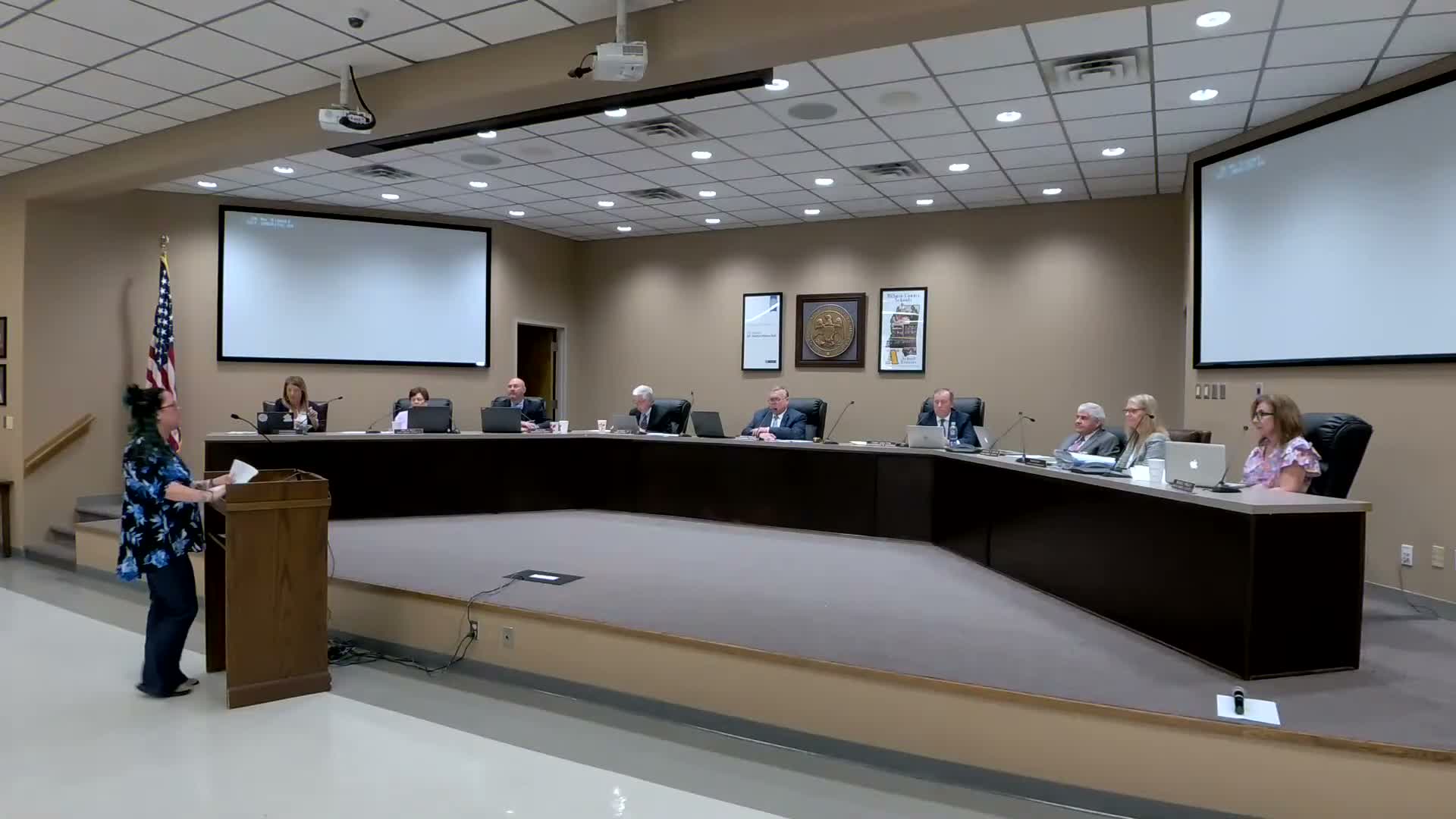
Summary
During public comment, Katie Sassa accused board member Michelle Henley of writing a character letter on behalf of a convicted predator named in the comment and urged Henley to resign; the comment prompted no recorded response from the named board member and was scheduled for executive-session follow-up where personnel or student matters apply.
At the public-comment portion of the DeSoto County School District board meeting, Katie Sassa used her allotted time to demand the resignation of board member Michelle Henley and to call attention to a character letter Henley allegedly wrote on behalf of a person Sassa identified as an ‘‘admitted … convicted predator, Lindsay Whiteside.’'
Sassa said Henley had declined an opportunity to retract the letter and that Henley’s continued presence on the board was harming community trust. "You wrote a character letter for an admitted … convicted predator, Lindsay Whiteside," Sassa said during her remarks, and later asked whether Henley would resign "for the good of the community." She added that fellow board members had asked Henley to step down and that recall would be an option if Henley did not voluntarily leave.
The board’s public-comment instructions, read earlier in the meeting, state that student- or personnel-related matters will be heard in executive session; meeting staff confirmed they would hear specific student- or personnel-related requests in executive session at a later point in the meeting. The transcript records no immediate response by the board member named in the comment and no formal board vote on resignation during the public session. The board later moved to consider an executive session on several matters, including student-discipline and personnel contract issues.
The complaint made during public comment raises an allegation about a specific board member’s conduct on the public record. The allegation is presented here as reported by a public commenter; the meeting transcript does not record a response or a formal finding by the board during the open session.